Schoenmaekers Catho, De Laet Chloë, Kornilova Ludmila, Glukhikh Dmitrii, Moore Steven, MacDougall Hamish, Naumov Ivan, Fransen Erik, Wille Leander, Jillings Steven, Wuyts Floris L
Lab for Equilibrium Investigations and Aerospace, University of Antwerp, Antwerpen, Belgium.
Institute of Biomedical Problems, Moscow, Russia.
NPJ Microgravity. 2022 Jul 20;8(1):27. doi: 10.1038/s41526-022-00208-5.
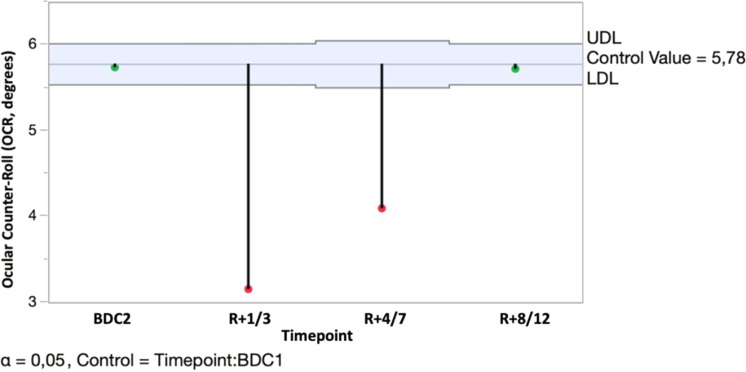
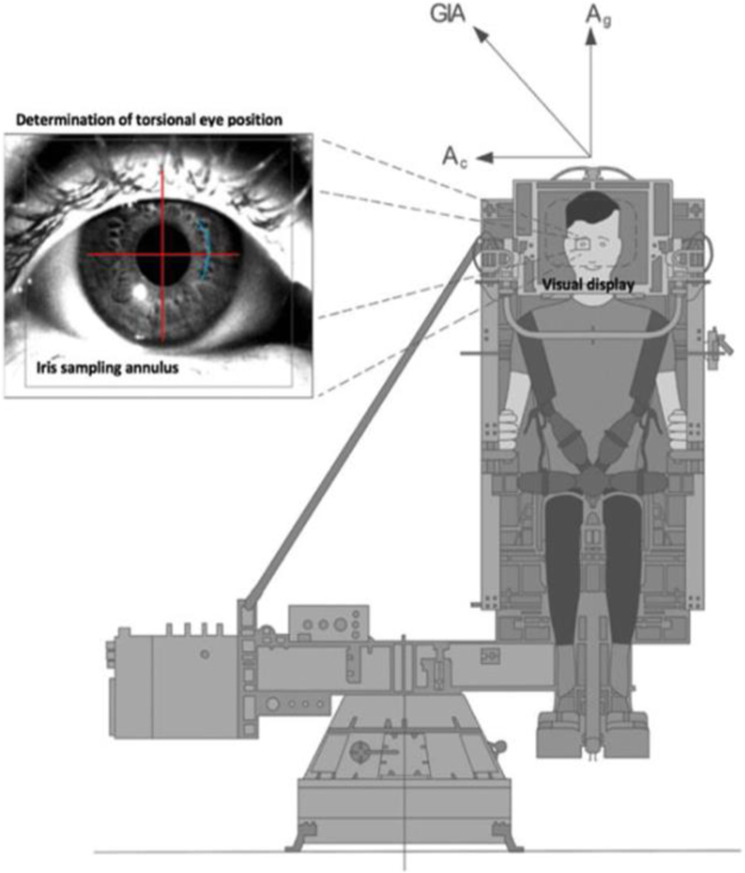
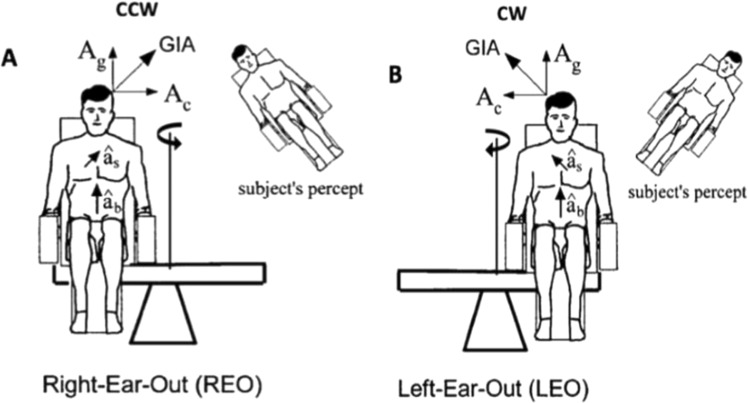
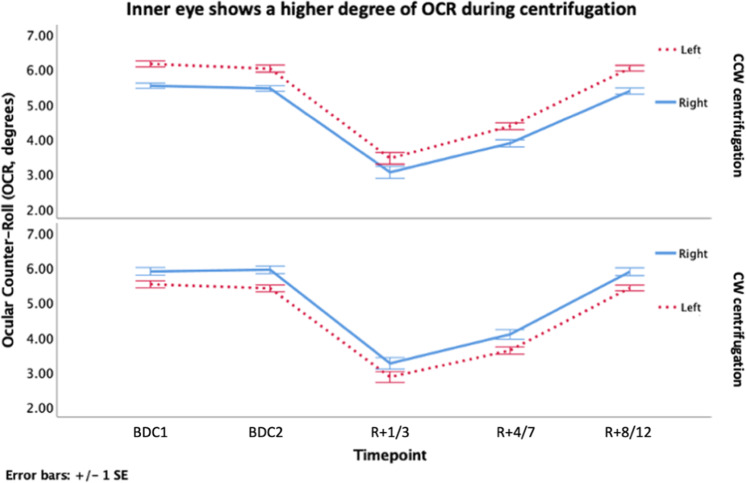
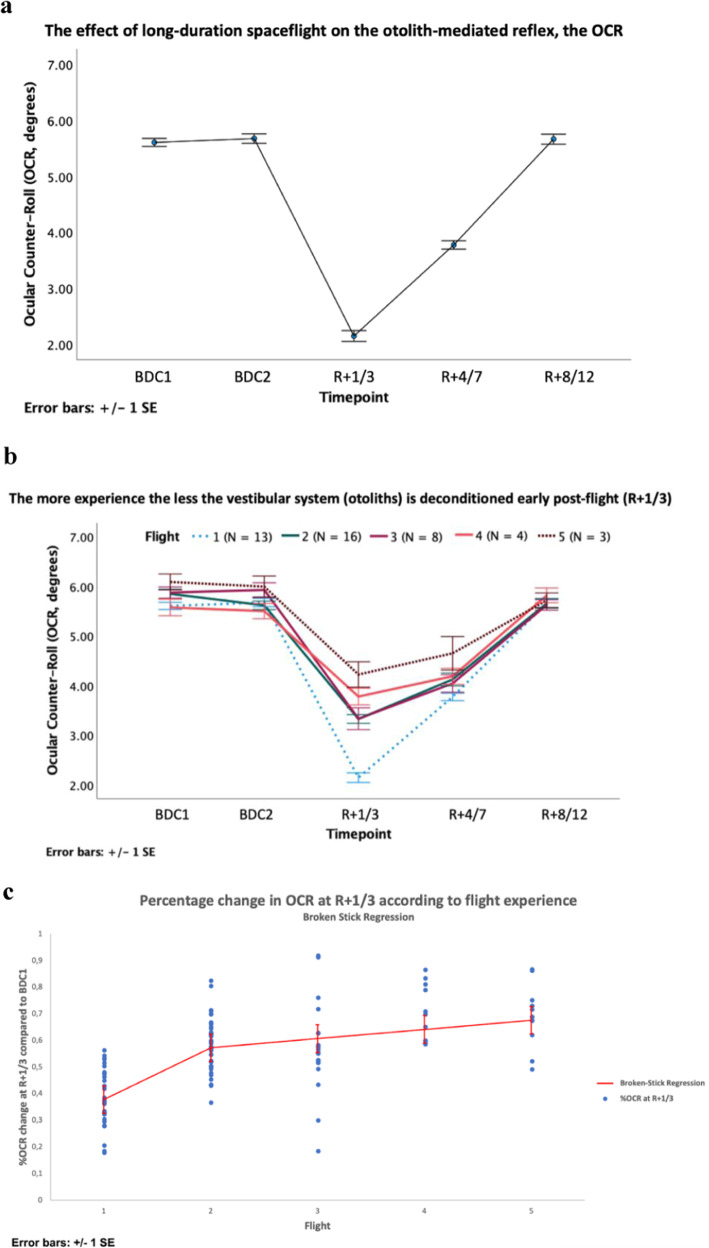
Otoliths are the primary gravity sensors of the vestibular system and are responsible for the ocular counter-roll (OCR). This compensatory eye torsion ensures gaze stabilization and is sensitive to a head roll with respect to gravity and the Gravito-Inertial Acceleration vector during, e.g., centrifugation. To measure the effect of prolonged spaceflight on the otoliths, we quantified the OCR induced by off-axis centrifugation in a group of 27 cosmonauts in an upright position before and after their 6-month space mission to the International Space Station. We observed a significant decrease in OCR early postflight, larger for first-time compared to experienced flyers. We also found a significantly larger torsion for the inner eye, the eye closest to the rotation axis. Our results suggest that experienced cosmonauts have acquired the ability to adapt faster after G-transitions. These data provide a scientific basis for sending experienced cosmonauts on challenging missions that include multiple g-level transitions.
耳石是前庭系统的主要重力传感器,负责眼对抗翻滚(OCR)。这种代偿性眼扭转可确保注视稳定,并且在例如离心过程中,对于相对于重力和重力惯性加速度矢量的头部翻滚很敏感。为了测量长期太空飞行对耳石的影响,我们在一组27名宇航员前往国际空间站执行6个月太空任务之前和之后,对他们直立状态下离轴离心诱导的OCR进行了量化。我们观察到飞行后早期OCR显著降低,首次飞行的宇航员比有经验的宇航员降低幅度更大。我们还发现,最靠近旋转轴的内眼扭转明显更大。我们的结果表明,有经验的宇航员在重力转换后能够更快地适应。这些数据为派遣有经验的宇航员执行包括多次重力水平转换的具有挑战性的任务提供了科学依据。