Takeda Takashi, Yoshimi Kana, Kai Sayaka, Inoue Fumi
Research Institute of Traditional Asian Medicine, Kindai University, Osaka-Sayama, Japan.
Int J Womens Health. 2022 Jul 14;14:899-911. doi: 10.2147/IJWH.S369151. eCollection 2022.
The Premenstrual Symptoms Questionnaire (PSQ) is a patient-reported outcome measurement tool for premenstrual symptoms. Although the PSQ is a very useful tool with 14 items to screen for a wide variety of premenstrual symptoms, not everyone will respond to all the questions. Fewer questions would be less burdensome on the respondents. We aimed to develop and analyze the psychometric properties of a short-form of the PSQ (PSQ-S).
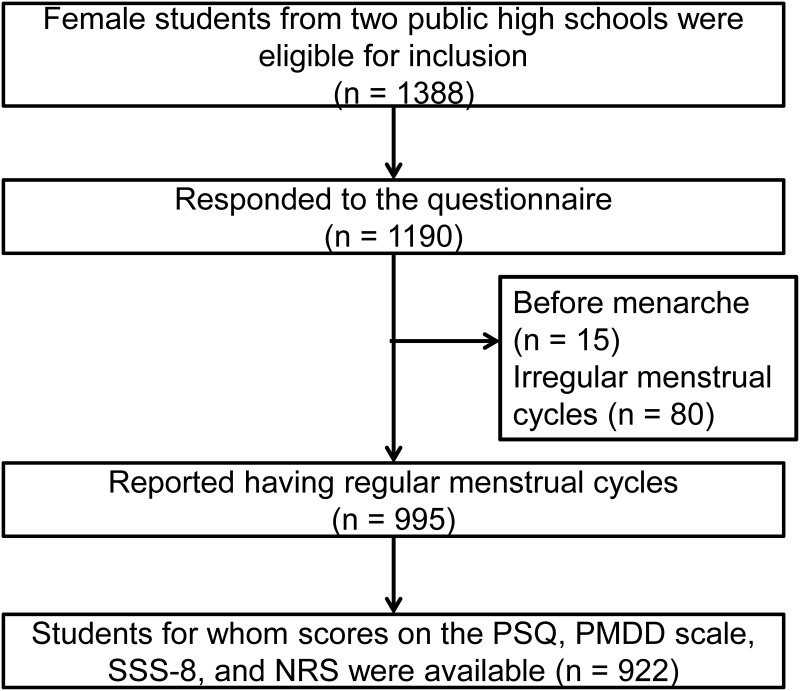
The study participants were from an earlier study with a sample of 1388 female students. We reanalyzed data collected from 922 students with regular menstrual cycles who completed the PSQ, premenstrual dysphoric disorder (PMDD) scale, Somatic Symptom Scale-8 (SSS-8), and numerical rating scale (NRS) for menstrual pain. First, we selected nine items for the PSQ-S based on the results of the corrected item-total correlation analysis. The PSQ-S was then analyzed for reliability and validity using the classical test theory. Moreover, item response theory was applied to test the psychometric properties of the PSQ-S.
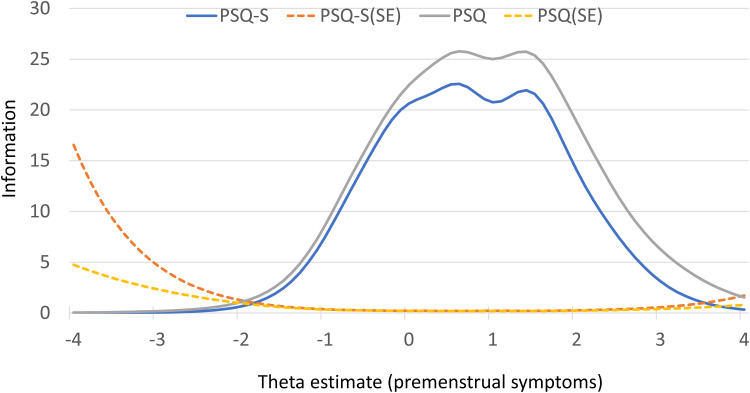
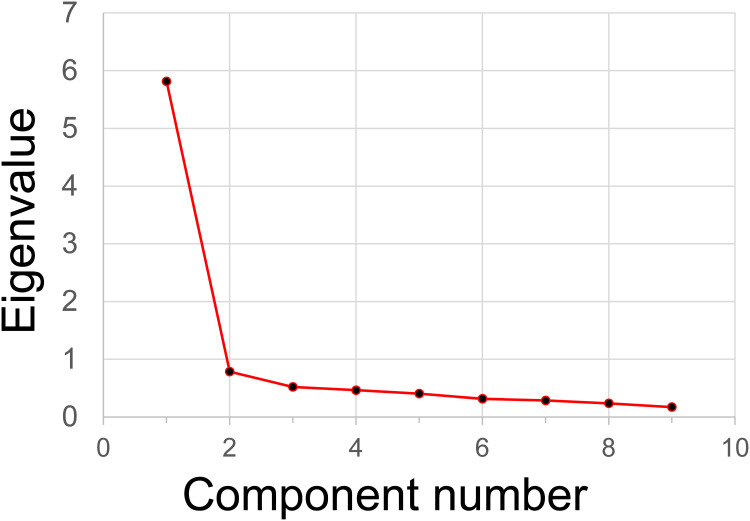
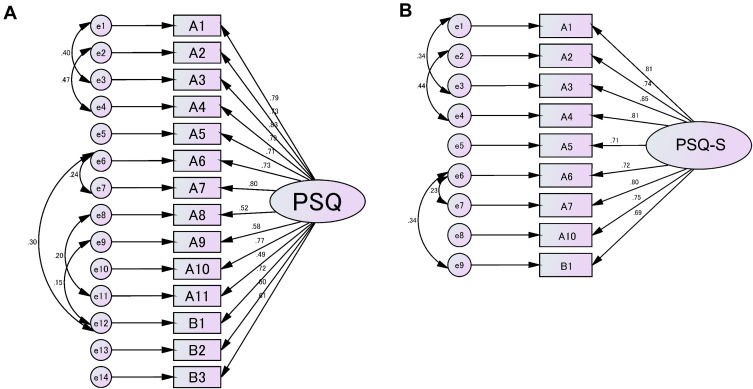
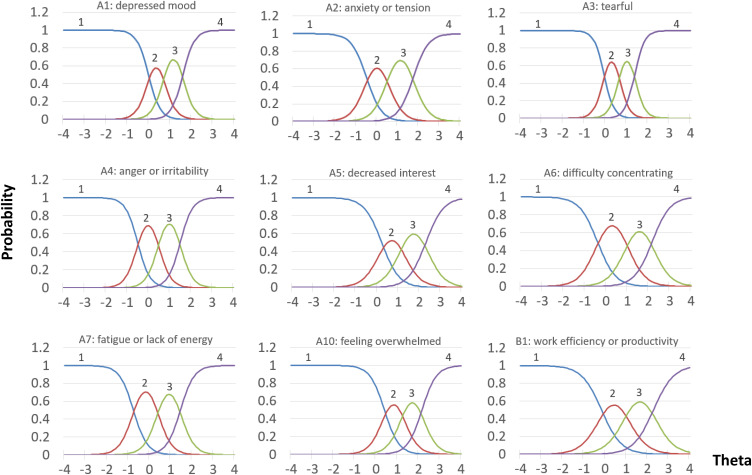
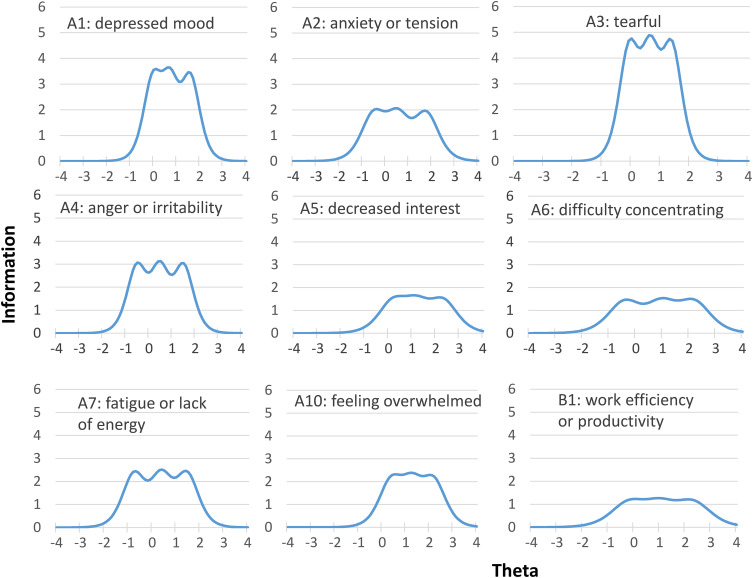
Cronbach's α for the PSQ-S score was 0.93. Principal component factor analysis revealed a one-factor model. Confirmatory factor analysis showed that the one-factor model was a good fit. The PSQ-S total score was strongly correlated with the PSQ total score, PMDD scale score, and SSS-8 score (r=0.978, 0.854, and 0.648, respectively) and moderately correlated with the NRS (r=0.437). Item response theory analyses showed that the constructs and items of the PSQ-S had satisfactory discrimination, difficulty parameters, item information curves, and test information curves. Receiver operating characteristic curve analysis revealed a cut-off score of ≥22 for suspected premenstrual disorders based on the total PSQ-S score.
The PSQ-S, consisting of nine items from the PSQ, had sufficient reliability and validity and could be a convenient assessment tool for premenstrual symptoms in routine clinical practice.
经前症状问卷(PSQ)是一种用于评估经前症状的患者报告结局测量工具。尽管PSQ是一个非常有用的工具,有14个项目可用于筛查多种经前症状,但并非每个人都会回答所有问题。问题越少,对受访者的负担就越小。我们旨在开发并分析PSQ简版(PSQ-S)的心理测量特性。
研究参与者来自一项早期研究,样本为1388名女学生。我们重新分析了从922名月经周期规律且完成了PSQ、经前烦躁障碍(PMDD)量表、躯体症状量表-8(SSS-8)以及痛经数字评定量表(NRS)的学生收集的数据。首先,基于校正后的项目与总分相关性分析结果,我们为PSQ-S选择了9个项目。然后使用经典测试理论对PSQ-S进行信度和效度分析。此外,应用项目反应理论来检验PSQ-S的心理测量特性。
PSQ-S得分的Cronbach's α为0.93。主成分因子分析揭示了一个单因子模型。验证性因子分析表明该单因子模型拟合良好。PSQ-S总分与PSQ总分、PMDD量表得分和SSS-8得分高度相关(分别为r = 0.978、0.854和0.648),与NRS中度相关(r = 0.437)。项目反应理论分析表明,PSQ-S的结构和项目具有令人满意的区分度、难度参数、项目信息曲线和测试信息曲线。受试者工作特征曲线分析显示,基于PSQ-S总分,疑似经前疾病的截断分数≥22。
由PSQ中的9个项目组成的PSQ-S具有足够的信度和效度,在常规临床实践中可能是一种方便的经前症状评估工具。