Brown Foundation Institute of Molecular Medicine McGovern Medical School, University of Texas Health Science Center at Houston Houston TX.
Department of Medicine University of Mississippi Jackson MS.
J Am Heart Assoc. 2022 Aug 2;11(15):e025703. doi: 10.1161/JAHA.122.025703. Epub 2022 Jul 20.
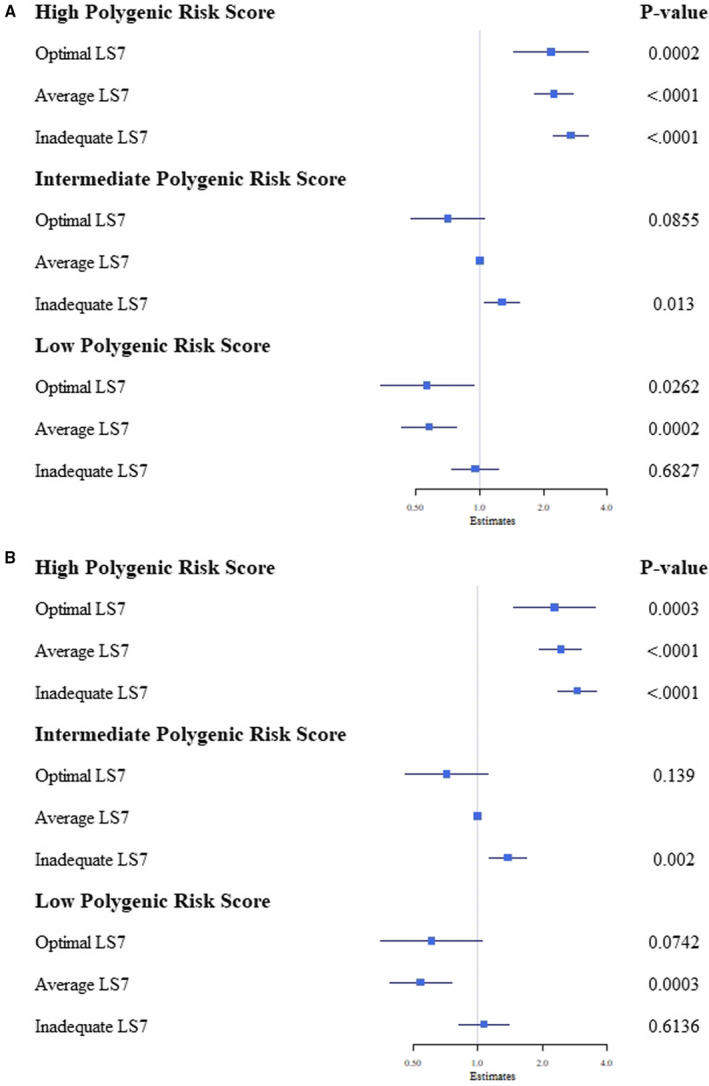
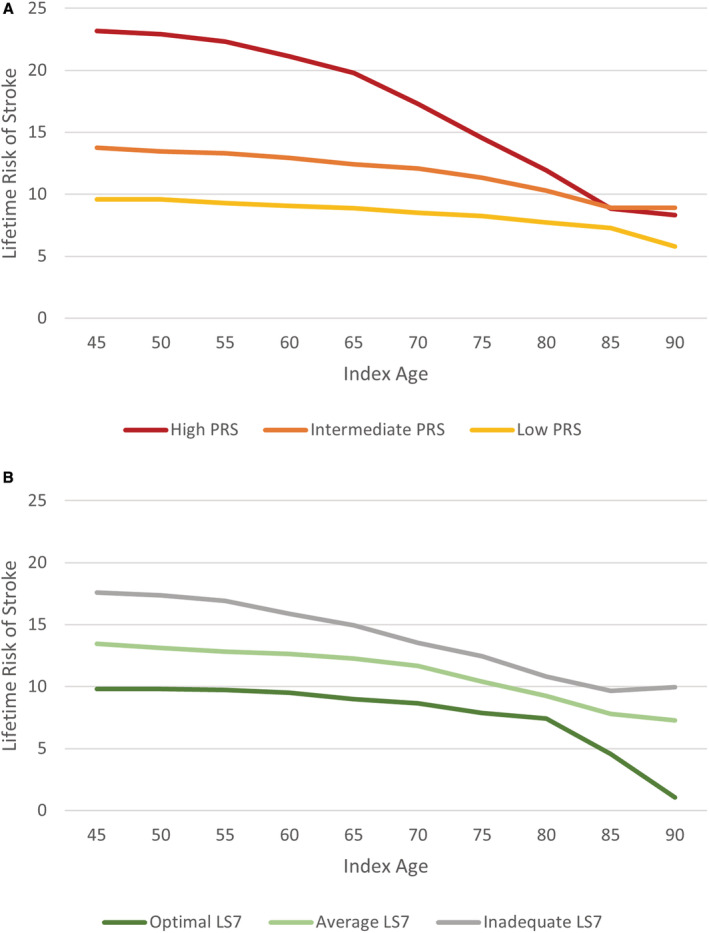
Background Recent genetic discoveries in stroke have unleashed the potential of using genetic information for risk prediction and health interventions aimed at disease prevention. We sought to estimate the lifetime risk of stroke (LTRS) by levels of genetic risk and to investigate whether optimal cardiovascular health can offset the negative impact of high genetic risk on lifetime risk of stroke. Methods and Results Study participants were 11 568 middle-aged adults (56% women, 23% Black adults), who were free of stroke at baseline and were followed up for a median of 28 years. The remaining LTRS was estimated according to levels of genetic risk based on a validated stroke polygenic risk score, and to levels of cardiovascular health based on the American Heart Association Life's Simple 7 recommendations. At age 45, individuals with high, intermediate, and low polygenic risk score had a remaining LTRS of 23.2% (95% CI, 20.8%-25.5%), 13.8% (95% CI, 11.7%-15.8%), and 9.6% (95% CI, 7.3%-11.8%), respectively. Those with both a high genetic risk and an inadequate Life's Simple 7 experienced the highest LTRS: 24.8% (95% CI, 22.0%-27.6%). Across all polygenic risk score categories, those with an optimal Life's Simple 7 had a ≈30% to 43% lower LTRS than those with an inadequate Life's Simple 7. This corresponded to almost 6 additional years lived free of stroke. Conclusions The LTRS varies by levels of polygenic risk and cardiovascular health. Maintaining an optimal cardiovascular health can partially offset a high genetic risk, emphasizing the importance of modifiable risk factors and illustrating the potential of personalizing genetic risk information to motivate lifestyle changes for stroke prevention.
最近在中风领域的遗传发现,为利用遗传信息进行风险预测和旨在预防疾病的健康干预提供了可能。我们旨在根据遗传风险水平估计中风的终生风险(LTRS),并研究优化心血管健康是否可以抵消高遗传风险对中风终生风险的负面影响。
研究参与者为 11568 名中年成年人(56%为女性,23%为黑人成年人),在基线时无中风病史,并随访中位数为 28 年。根据基于验证的中风多基因风险评分的遗传风险水平和基于美国心脏协会生命的简单 7 项建议的心血管健康水平,估算剩余的 LTRS。在 45 岁时,具有高、中、低多基因风险评分的个体的剩余 LTRS 分别为 23.2%(95%CI,20.8%-25.5%)、13.8%(95%CI,11.7%-15.8%)和 9.6%(95%CI,7.3%-11.8%)。那些既有高遗传风险又有不适当的生命的简单 7 项的个体经历了最高的 LTRS:24.8%(95%CI,22.0%-27.6%)。在所有多基因风险评分类别中,具有最佳生命的简单 7 项的个体的 LTRS 比具有不适当生命的简单 7 项的个体低约 30%至 43%。这相当于多活了近 6 年无中风。
LTRS 随多基因风险和心血管健康水平而变化。保持最佳心血管健康可以部分抵消高遗传风险,强调了可改变的风险因素的重要性,并说明了个性化遗传风险信息以激励预防中风的生活方式改变的潜力。