Department of Electrical Engineering and Computer Science, University of Missourigrid.134936.a, Columbia, Missouri, USA.
Department of Christopher S Bond Life Sciences Center, University of Missourigrid.134936.a, Columbia, Missouri, USA.
mSystems. 2022 Aug 30;7(4):e0033622. doi: 10.1128/msystems.00336-22. Epub 2022 Jul 7.
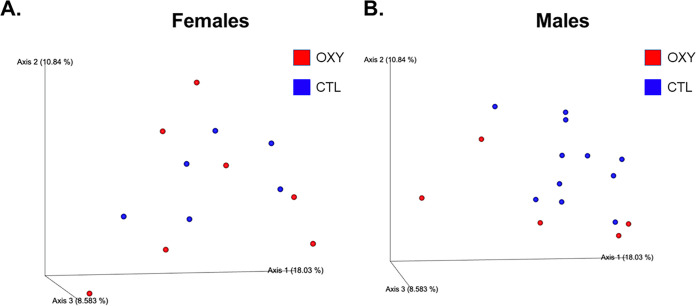
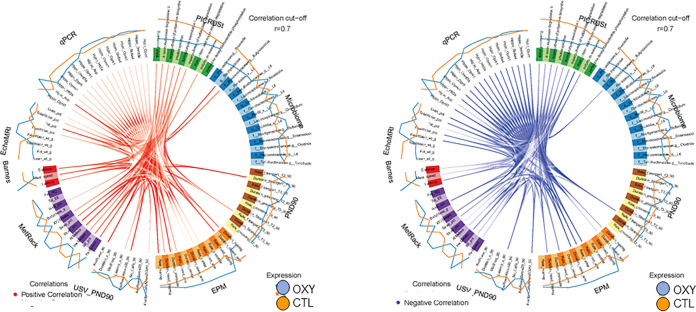
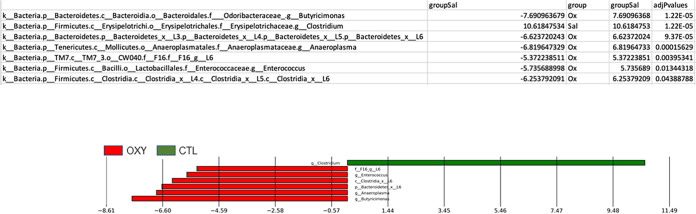
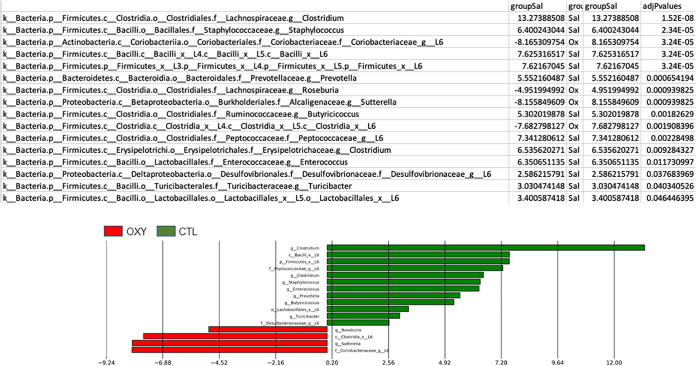
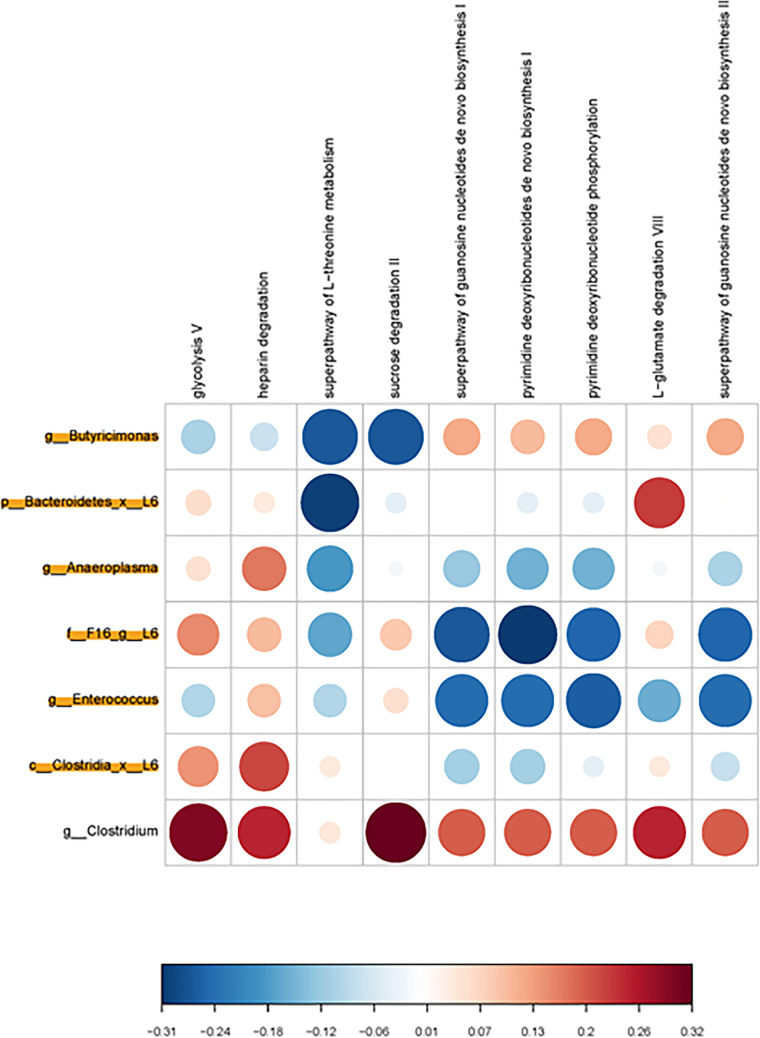
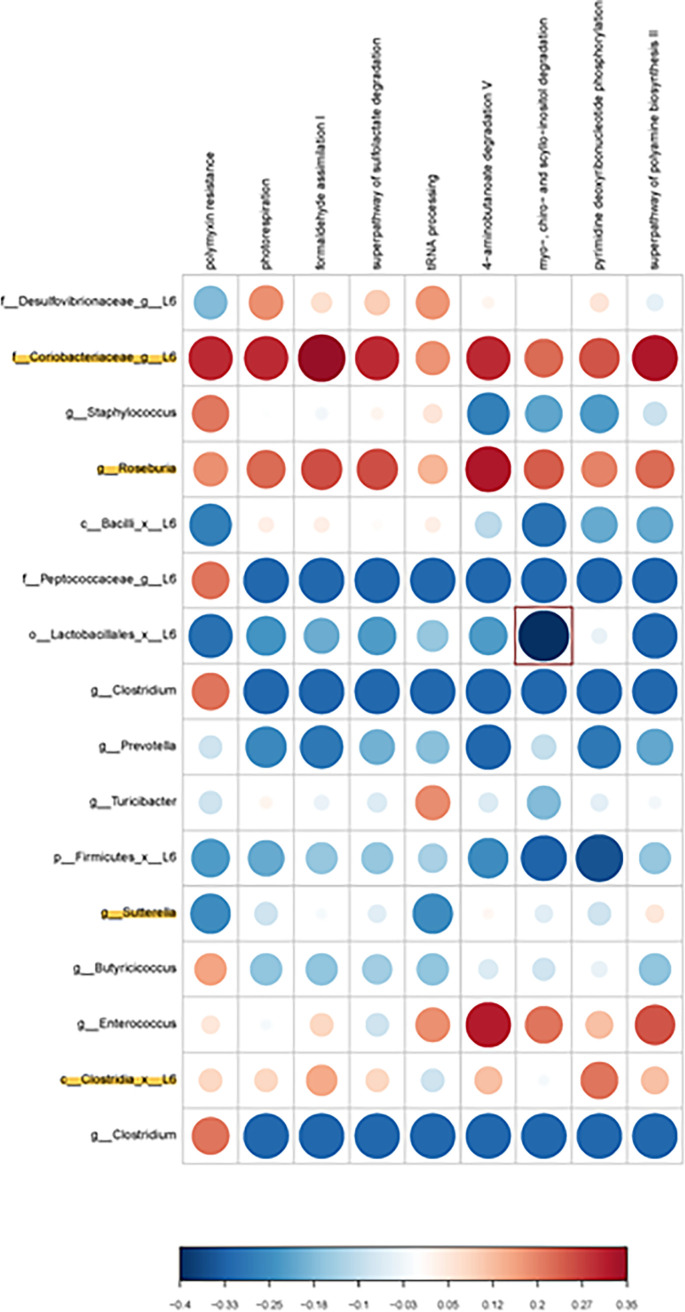
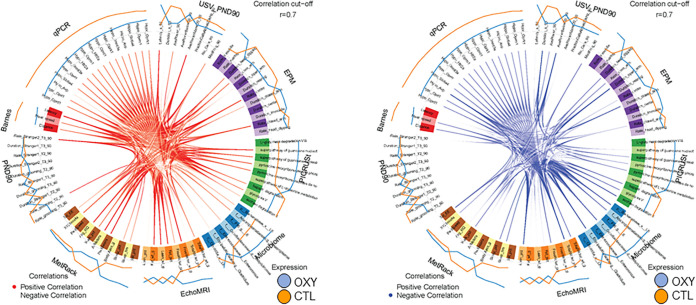
Opioid drugs are commonly prescribed analgesic to pregnant women. Direct exposure to such drugs may slow gut motility, alter gut permeability, and affect the gut microbiome. While such drugs affect gut microbiome in infants, no study to date has determined whether developmental exposure to such drugs results in longstanding effects on gut microbiota and correspondingly on host responses. We hypothesized developmental exposure to oxycodone (OXY) leads to enduring effects on gut microbiota and such changes are associated with adult neurobehavioral and metabolic changes. Female mice were treated daily with 5 mg OXY/kg or saline solution (control [CTL]) for 2 weeks prior to breeding and then throughout gestation. Male and female offspring pups were weaned, tested with a battery of behavioral and metabolic tests, and fecal boli were collected adulthood (120 days of age). In females, relative abundance of spp., Bacteroidetes, spp., TM7, spp., and Clostridia were greater in OXY versus CTL individuals. In males, relative abundance of Coriobacteriaceae, spp., spp., and Clostridia were elevated in OXY exposed individuals. Bacterial changes were also associated with predictive metabolite pathway alterations that also varied according to sex. In males and females, affected gut microbiota correlated with metabolic but not behavioral alterations. The findings suggest that developmental exposure to OXY leads to lasting effects on adult gut microbiota that might affect host metabolism, possibly through specific bacterial metabolites or other bacterial-derived products. Further work is needed to characterize how developmental exposure to OXY affects host responses through the gut microbiome. This is the first work to show in a rodent model that exposure to an opioid drug can lead to longstanding effects on the gut microbiota when examined at adulthood. Further, such bacterial changes are associated with metabolic host responses. Given the similarities between rodent and human microbiomes, it raises cause for concern that similar effects may become evident in children born to mothers taking oxycodone and other opioid drugs.
阿片类药物通常被开给孕妇作为止痛剂。直接接触此类药物可能会减缓肠道蠕动,改变肠道通透性,并影响肠道微生物组。虽然此类药物会影响婴儿的肠道微生物组,但迄今为止,尚无研究确定在发育过程中接触此类药物是否会对肠道微生物群产生持久影响,以及相应地对宿主反应产生持久影响。我们假设,发育过程中接触羟考酮(OXY)会对肠道微生物群产生持久影响,而这种变化与成年后的神经行为和代谢变化有关。在繁殖前和整个妊娠期,雌性小鼠每天用 5mg OXY/kg 或生理盐水(对照[CTL])处理 2 周。雄性和雌性幼崽断奶后,用一系列行为和代谢测试进行测试,并在成年期(120 天龄)收集粪便球。在雌性中,OXY 个体中的 spp.、拟杆菌门、 spp.、TM7、 spp. 和梭菌的相对丰度高于 CTL 个体。在雄性中,OXY 暴露个体中的 Coriobacteriaceae、 spp.、 spp. 和梭菌的相对丰度升高。细菌变化也与预测代谢途径的改变有关,这些改变也根据性别而变化。在雄性和雌性中,受影响的肠道微生物群与代谢变化有关,但与行为变化无关。研究结果表明,发育过程中接触 OXY 会导致成年后肠道微生物群的持久变化,这可能会通过特定的细菌代谢物或其他细菌衍生产物影响宿主代谢。需要进一步的工作来描述发育过程中接触 OXY 如何通过肠道微生物群影响宿主反应。这是第一项在啮齿动物模型中表明,接触阿片类药物可能会导致成年后肠道微生物群的长期影响的工作。此外,这种细菌变化与宿主的代谢反应有关。鉴于啮齿动物和人类微生物组之间的相似性,令人担忧的是,在母亲服用羟考酮和其他阿片类药物的儿童中,可能会出现类似的影响。