Division of Surgical Research, Department of Surgery, Mayo Clinic, Rochester, MN, 55905, USA.
Microbiome Program, Center for Individulized Medicine, Mayo Clinic, Rochester, MN, 55905, USA.
Sci Rep. 2022 Jul 22;12(1):12580. doi: 10.1038/s41598-022-16789-w.
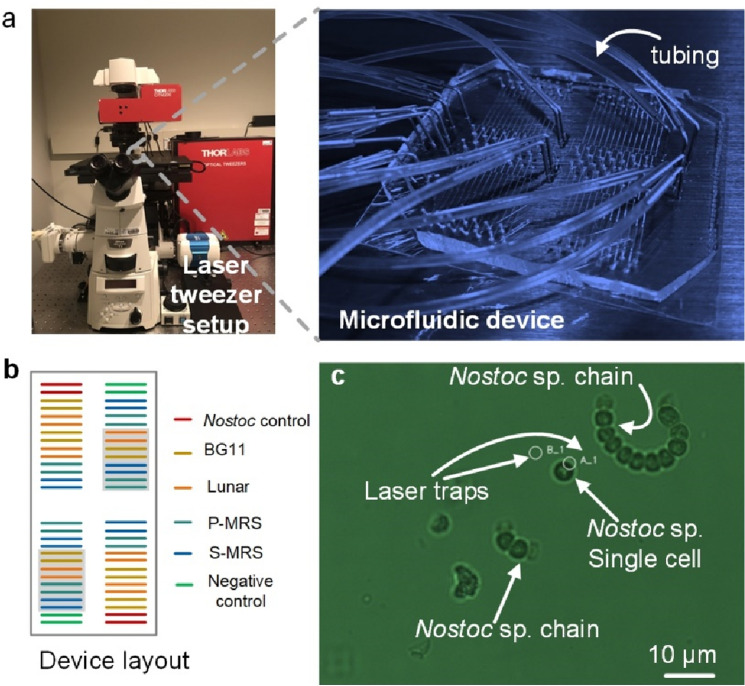
Understanding the impact of long-term exposure of microorganisms to space is critical in understanding how these exposures impact the evolution and adaptation of microbial life under space conditions. In this work we subjected Nostoc sp. CCCryo 231-06, a cyanobacterium capable of living under many different ecological conditions, and also surviving in extreme ones, to a 23-month stay at the International Space Station (the Biology and Mars Experiment, BIOMEX, on the EXPOSE-R2 platform) and returned it to Earth for single-cell genome analysis. We used microfluidic technology and single cell sequencing to identify the changes that occurred in the whole genome of single Nostoc cells. The variant profile showed that biofilm and photosystem associated loci were the most altered, with an increased variant rate of synonymous base pair substitutions. The cause(s) of these non-random alterations and their implications to the evolutionary potential of single bacterial cells under long-term cosmic exposure warrants further investigation.
了解微生物在太空中长期暴露的影响对于理解这些暴露如何影响微生物在太空条件下的进化和适应至关重要。在这项工作中,我们将能够在许多不同生态条件下生存,也能在极端条件下生存的蓝藻 Nostoc sp. CCCryo 231-06 暴露在国际空间站 23 个月(在 EXPOSE-R2 平台上的生物学和火星实验 BIOMEX),然后将其带回地球进行单细胞基因组分析。我们使用微流控技术和单细胞测序来确定单个 Nostoc 细胞的整个基因组中发生的变化。变体图谱显示,生物膜和光合系统相关基因座变化最大,同义碱基替换的变异率增加。这些非随机改变的原因及其对长期宇宙暴露下单个细菌细胞进化潜力的影响值得进一步研究。