Shen Chwan-Li, Wang Rui, Yakhnitsa Vadim, Santos Julianna Maria, Watson Carina, Kiritoshi Takaki, Ji Guangchen, Hamood Abdul Naji, Neugebauer Volker
Department of Pathology, Lubbock, TX, United States.
Center of Excellence for Integrative Health, Lubbock, TX, United States.
Front Pharmacol. 2022 Jul 8;13:912609. doi: 10.3389/fphar.2022.912609. eCollection 2022.
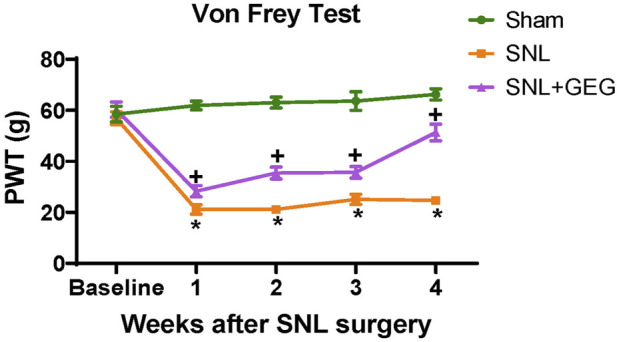
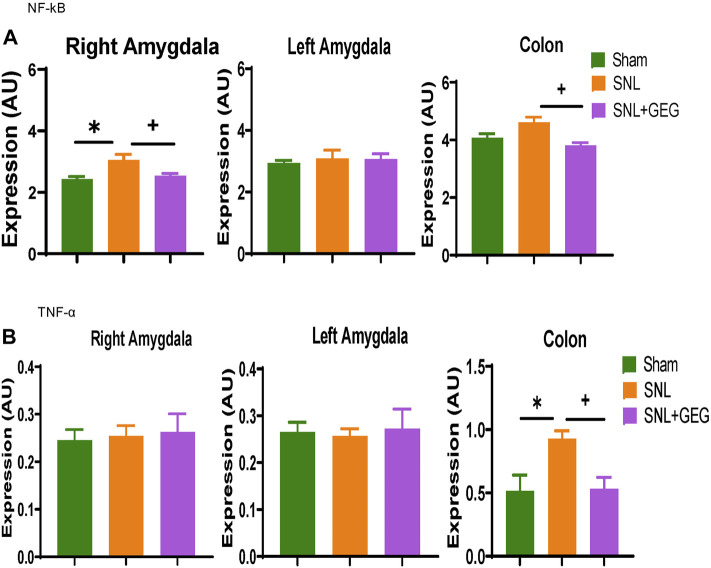
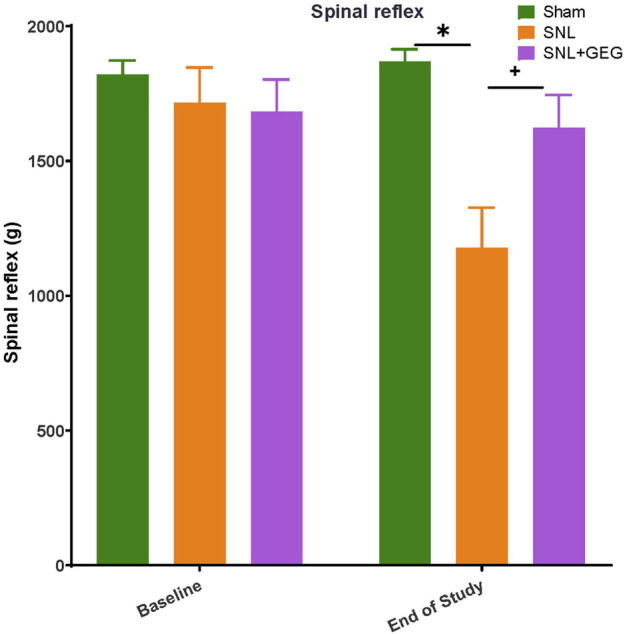
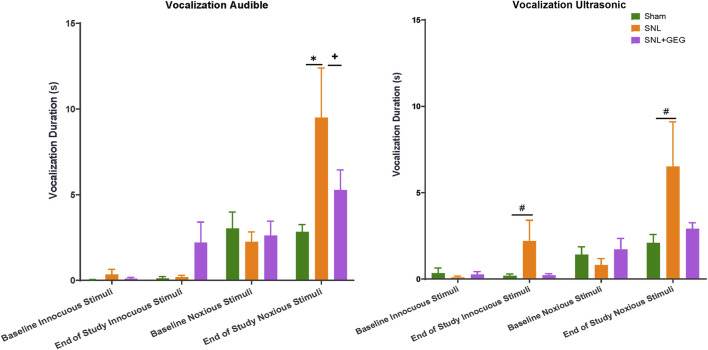
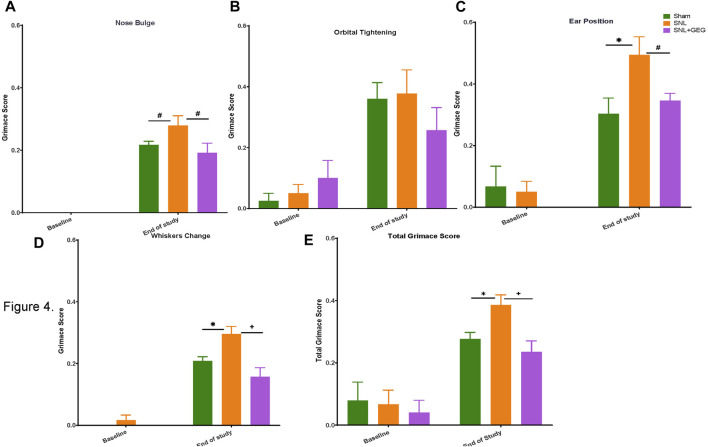
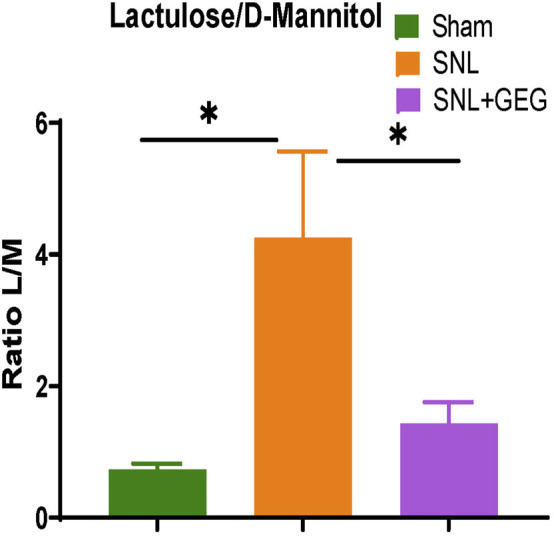
Emerging evidence suggests an important role of the gut-brain axis in the development of neuropathic pain (NP). We investigated the effects of gingerol-enriched ginger (GEG) on pain behaviors, as well as mRNA expressions of inflammation tight junction proteins in GI tissues (colon) and brain tissues (amygdala, both left and right) in animals with NP. Seventeen male rats were randomly divided into three groups: Sham, spinal nerve ligation (SNL, pain model), and SNL+0.375% GEG (wt/wt in diet) for 4 weeks. Mechanosensitivity was assessed by von Frey filament tests and hindpaw compression tests. Emotional responsiveness was measured from evoked audible and ultrasonic vocalizations. Ongoing spontaneous pain was measured in rodent grimace tests. Intestinal permeability was assessed by the lactulose/D-mannitol ratio in urine. The mRNA expression levels of neuroinflammation (NF-κB, TNF-α) in the colon and amygdala (right and left) were determined by qRT-PCR. Data was analyzed statistically. Compared to the sham group, the SNL group had significantly greater mechanosensitivity (von Frey and compression tests), emotional responsiveness (audible and ultrasonic vocalizations to innocuous and noxious mechanical stimuli), and spontaneous pain (rodent grimace tests). GEG supplementation significantly reduced mechanosensitivity, emotional responses, and spontaneous pain measures in SNL rats. GEG supplementation also tended to decrease SNL-induced intestinal permeability markers. The SNL group had increased mRNA expression of NF-κB and TNF-α in the right amygdala and colon; GEG supplementation mitigated these changes in SNL-treated rats. This study suggests GEG supplementation palliated a variety of pain spectrum behaviors in a preclinical NP animal model. GEG also decreased SNL-induced intestinal permeability and neuroinflammation, which may explain the behavioral effects of GEG.
新出现的证据表明,肠-脑轴在神经性疼痛(NP)的发展中起重要作用。我们研究了富含姜辣素的生姜(GEG)对NP动物疼痛行为的影响,以及胃肠道组织(结肠)和脑组织(双侧杏仁核)中炎症和紧密连接蛋白的mRNA表达。17只雄性大鼠被随机分为三组:假手术组、脊神经结扎组(SNL,疼痛模型组)和SNL + 0.375% GEG组(饮食中重量/重量),持续4周。通过von Frey细丝试验和后爪压迫试验评估机械敏感性。通过诱发的可听声和超声发声测量情绪反应。在啮齿动物面部表情试验中测量持续性自发疼痛。通过尿中乳果糖/D-甘露醇比值评估肠道通透性。通过qRT-PCR测定结肠和杏仁核(左右)中神经炎症(NF-κB、TNF-α)的mRNA表达水平。对数据进行统计学分析。与假手术组相比,SNL组具有显著更高的机械敏感性(von Frey和压迫试验)、情绪反应(对无害和有害机械刺激的可听声和超声发声)和自发疼痛(啮齿动物面部表情试验)。补充GEG显著降低了SNL大鼠的机械敏感性、情绪反应和自发疼痛指标。补充GEG也倾向于降低SNL诱导的肠道通透性标志物。SNL组右侧杏仁核和结肠中NF-κB和TNF-α的mRNA表达增加;补充GEG减轻了SNL处理大鼠的这些变化。这项研究表明,在临床前NP动物模型中,补充GEG可减轻多种疼痛谱行为。GEG还降低了SNL诱导的肠道通透性和神经炎症,这可能解释了GEG的行为效应。