
溶胶-凝胶合成过程在生物医学领域的作用及其用于提高可生物吸收镁植入物的性能
The Role of the Sol-Gel Synthesis Process in the Biomedical Field and Its Use to Enhance the Performance of Bioabsorbable Magnesium Implants.
作者信息
Fernández-Hernán Juan Pablo, Torres Belén, López Antonio Julio, Rams Joaquín
机构信息
Área de Ciencia e Ingeniería de Materiales, ESCET, Universidad Rey Juan Carlos, C/Tulipán s/n, 28933 Móstoles, Spain.
出版信息
Gels. 2022 Jul 7;8(7):426. doi: 10.3390/gels8070426.
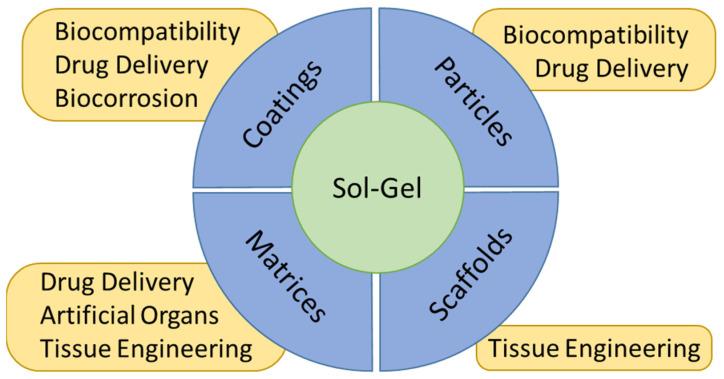
In the present day, the increment in life expectancy has led to the necessity of developing new biomaterials for the restoration or substitution of damaged organs that have lost their functionalities. Among all the research about biomaterials, this review paper aimed to expose the main possibilities that the sol-gel synthesis method can provide for the fabrication of materials with interest in the biomedical field, more specifically, when this synthesis method is used to improve the biological properties of different magnesium alloys used as biomaterials. The sol-gel method has been widely studied and used to generate ceramic materials for a wide range of purposes during the last fifty years. Focused on biomedical research, the sol-gel synthesis method allows the generation of different kinds of biomaterials with diverse morphologies and a high potential for the biocompatibility improvement of a wide range of materials commonly used in the biomedical field such as metallic implants, as well as for the generation of drug delivery systems or interesting biomaterials for new tissue engineering therapies.
在当今时代,预期寿命的增加导致了开发新生物材料的必要性,以修复或替代失去功能的受损器官。在所有关于生物材料的研究中,这篇综述论文旨在揭示溶胶 - 凝胶合成方法可为制备在生物医学领域具有应用价值的材料提供的主要可能性,更具体地说,当这种合成方法用于改善用作生物材料的不同镁合金的生物学性能时。在过去的五十年里,溶胶 - 凝胶法已被广泛研究并用于制备各种用途的陶瓷材料。专注于生物医学研究,溶胶 - 凝胶合成方法能够生成具有不同形态的各种生物材料,并且对于提高生物医学领域常用的各种材料(如金属植入物)的生物相容性具有很大潜力,同时也可用于生成药物递送系统或用于新型组织工程疗法的有趣生物材料。









 Zotero 插件