Shah Harsh D, Nazli Khatib Mahalaqua, Syed Zahiruddin Quazi, Gaidhane Abhay M, Yasobant Sandul, Narkhede Kiran, Bhavsar Priya, Patel Jay, Sinha Anish, Puwar Tapasvi, Saha Somen, Saxena Deepak
Department of Public Health Science, Indian Institute of Public Health Gandhinagar (IIPHG), Gandhinagar 382042, India.
Global Evidence Synthesis Initiative, School of Epidemiology and Public Health, Jawaharlal Nehru Medical College, Datta Meghe Institute of Medical Sciences, Wardha 442004, India.
Trop Med Infect Dis. 2022 Jul 15;7(7):136. doi: 10.3390/tropicalmed7070136.
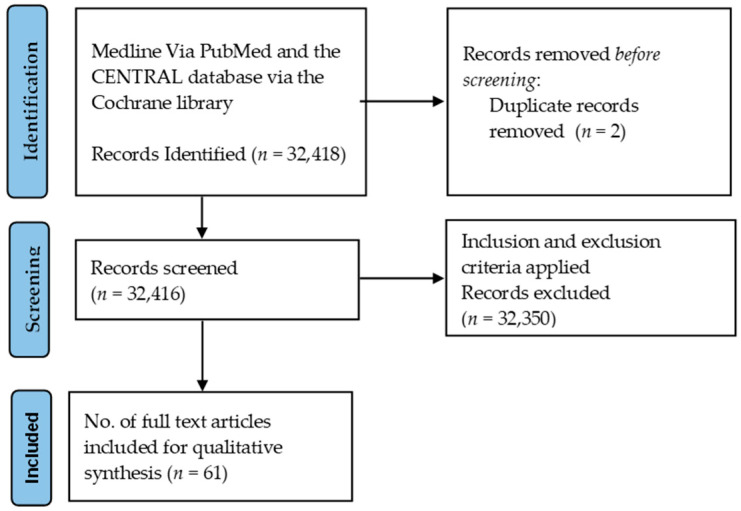
Tuberculosis (TB) continues to be one of the important public health concerns globally, and India is among the seven countries with the largest burden of TB. There has been a consistent increase in the notifications of TB cases across the globe. However, the 2018 estimates envisage a gap of about 30% between the incident and notified cases of TB, indicating a significant number of patients who remain undiagnosed or 'missed'. It is important to understand who is 'missed', find this population, and provide quality care. Given these complexities, we reviewed the diagnostic gaps in the care cascade for TB. We searched Medline via PubMed and CENTRAL databases via the Cochrane Library. The search strategy for PubMed was tailored to individual databases and was as: ((((((tuberculosis[Title/Abstract]) OR (TB[Title/Abstract])) OR (koch *[Title/Abstract])) OR ("tuberculosis"[MeSH Terms]))) AND (((diagnos *) AND ("diagnosis"[MeSH Terms])))). Furthermore, we screened the references list of the potentially relevant studies to seek additional studies. Studies retrieved from these electronic searches and relevant references included in the bibliography of those studies were reviewed. Original studies in English that assessed the causes of diagnostic gaps and interventions used to address them were included. Delays in diagnosis were found to be attributable to both the individuals' and the health system's capacity to diagnose and promptly commence treatment. This review provides insights into the diagnostic gaps in a cascade of care for TB and different interventions adopted in studies to close this gap. The major diagnostic gaps identified in this review are as follows: people may not have access to TB diagnostic tests, individuals are at a higher risk of missed diagnosis, services are available but people may not seek care with a diagnostic facility, and patients are not diagnosed despite reaching health facilities. Therefore, reaching the goal to End TB requires putting in place models and methods to provide prompt and quality assured diagnosis to populations at par.
结核病(TB)仍然是全球重要的公共卫生问题之一,印度是结核病负担最重的七个国家之一。全球结核病病例通报数量持续增加。然而,2018年的估计显示,结核病的发病病例与通报病例之间存在约30%的差距,这表明有相当数量的患者仍未被诊断或“漏诊”。了解哪些人“漏诊”、找到这群人并提供优质护理非常重要。鉴于这些复杂性,我们回顾了结核病治疗流程中的诊断差距。我们通过PubMed检索了Medline,并通过Cochrane图书馆检索了CENTRAL数据库。PubMed的检索策略是根据各个数据库量身定制的,如下所示:((((((结核病[标题/摘要]) 或 (TB[标题/摘要])) 或 (koch *[标题/摘要])) 或 ("结核病"[医学主题词]))) 且 (((诊断 *) 且 ("诊断"[医学主题词]))))。此外,我们筛选了潜在相关研究的参考文献列表以寻找其他研究。对从这些电子检索中获取的研究以及这些研究的参考文献中包含的相关文献进行了综述。纳入了评估诊断差距原因及用于解决这些差距的干预措施的英文原创研究。发现诊断延误既归因于个人诊断和及时开始治疗的能力,也归因于卫生系统的能力。本综述深入探讨了结核病治疗流程中的诊断差距以及研究中为缩小这一差距而采用的不同干预措施。本综述确定的主要诊断差距如下:人们可能无法获得结核病诊断检测,个体漏诊风险较高,有服务但人们可能不前往诊断机构就医,以及患者虽前往医疗机构但仍未被诊断。因此,要实现终结结核病的目标,需要建立模型和方法,为同等人群提供及时且质量有保证的诊断。