Li Yi-Nan, Chen Chih-Wei, Trinh-Minh Thuong, Zhu Honglin, Matei Alexandru-Emil, Györfi Andrea-Hermina, Kuwert Frederic, Hubel Philipp, Ding Xiao, Manh Cuong Tran, Xu Xiaohan, Liebel Christoph, Fedorchenko Vladyslav, Liang Ruifang, Huang Kaiyue, Pfannstiel Jens, Huang Min-Chuan, Lin Neng-Yu, Ramming Andreas, Schett Georg, Distler Jörg H W
Department of Internal Medicine 3 - Rheumatology and Immunology, Friedrich Alexander University Erlangen-Nürnberg and Universitätsklinikum Erlangen, Erlangen, Germany.
Deutsches Zentrum für Immuntherapie, Friedrich Alexander University Erlangen-Nuremberg and Universitaetsklinikum Erlangen, Erlangen, Germany.
Bone Res. 2022 Jul 26;10(1):51. doi: 10.1038/s41413-022-00218-9.
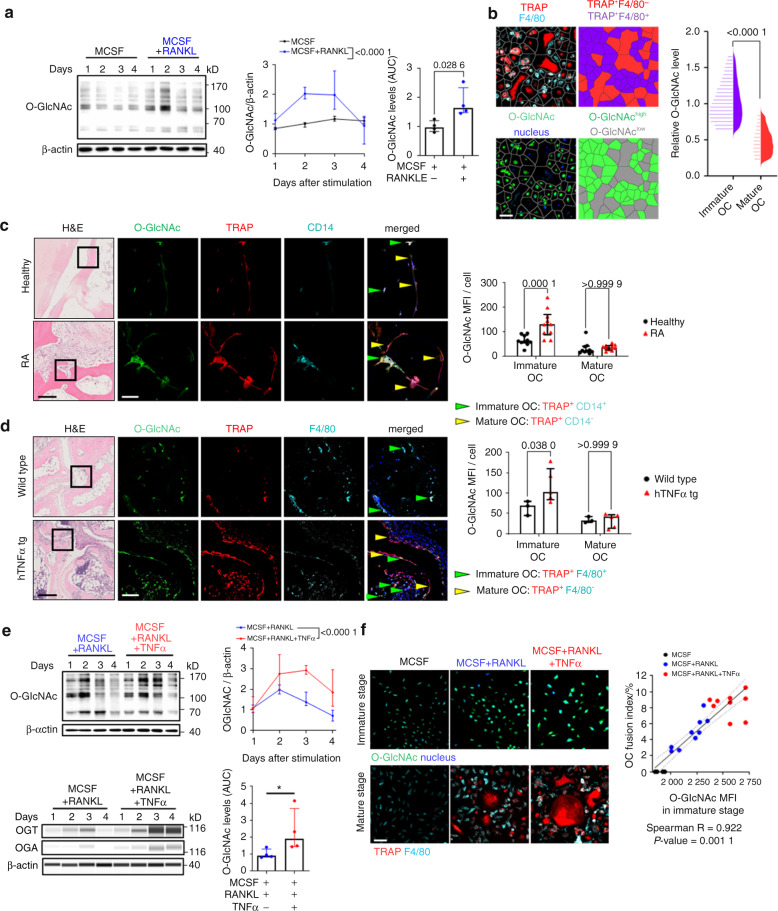
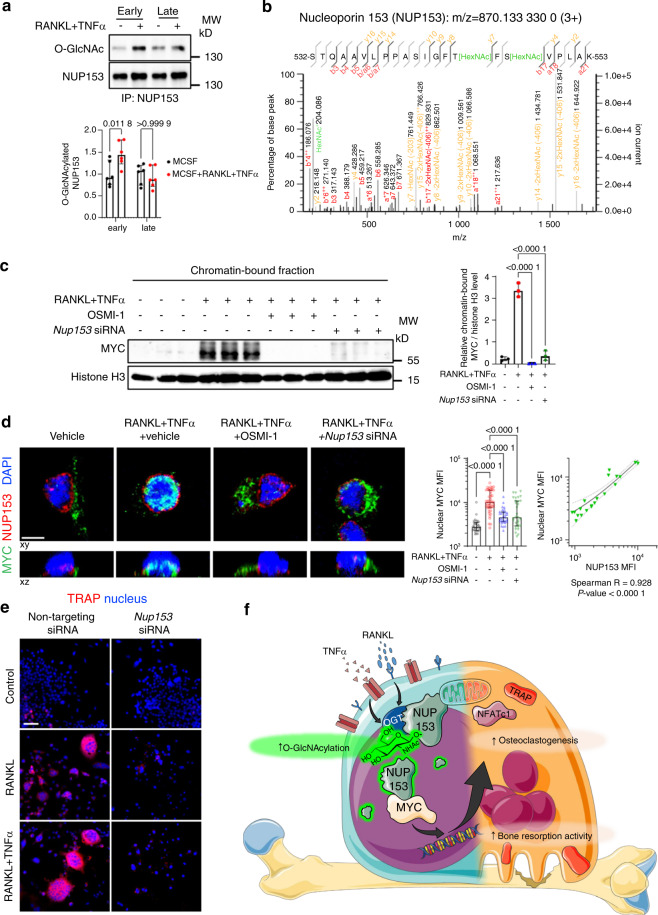
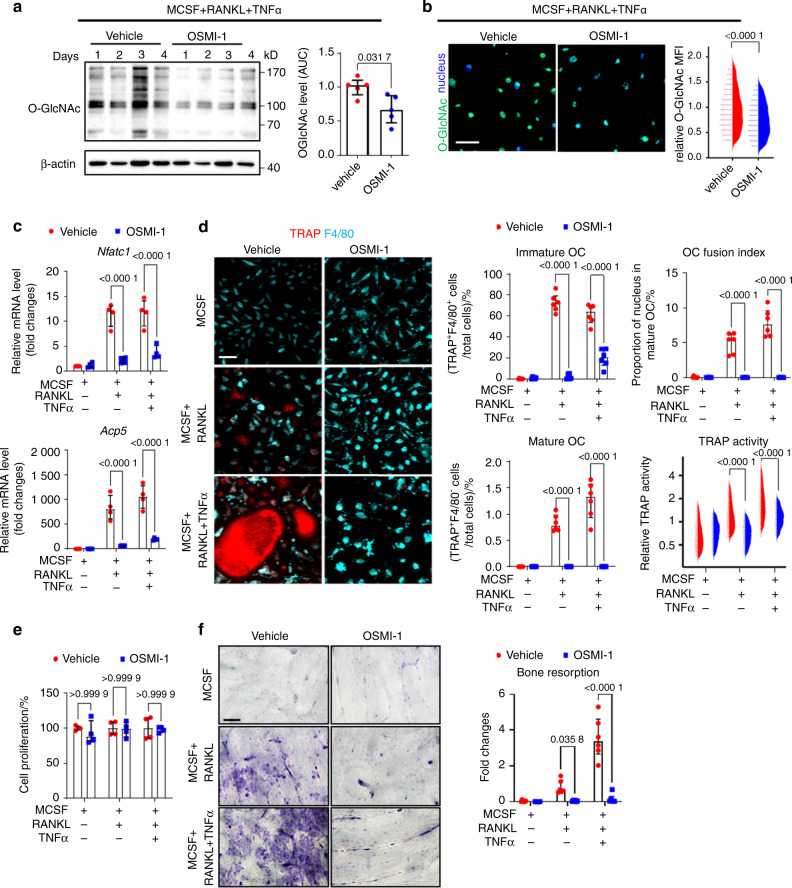
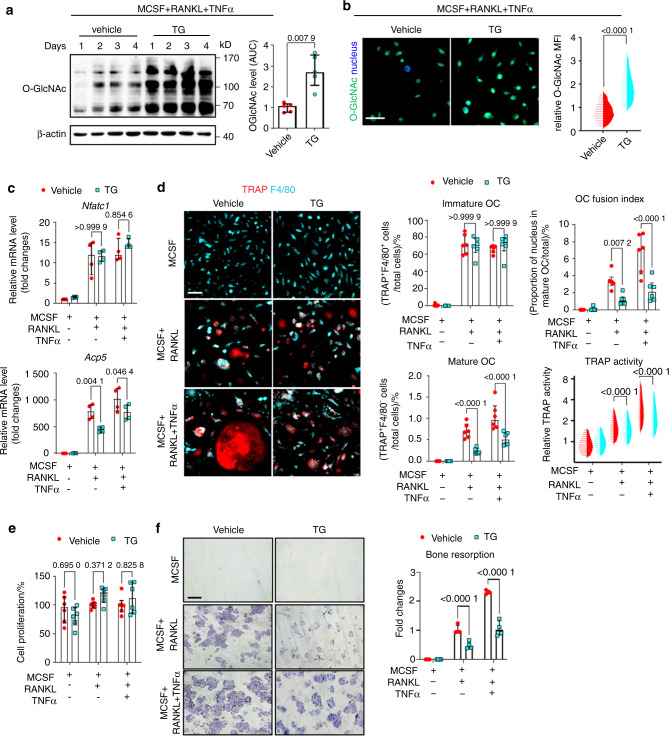
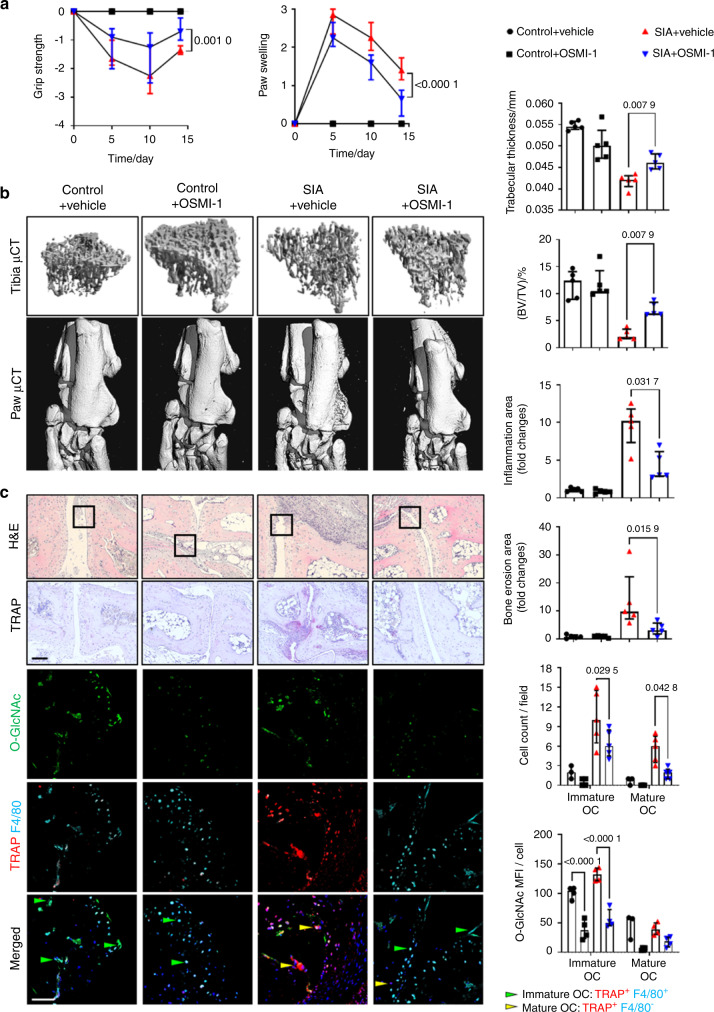
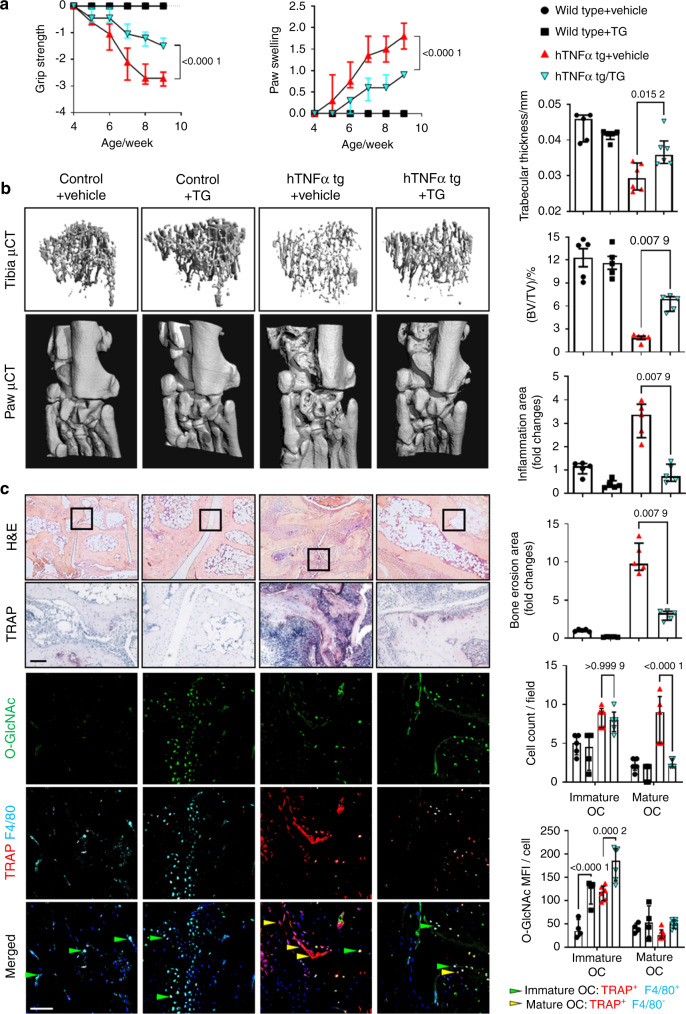
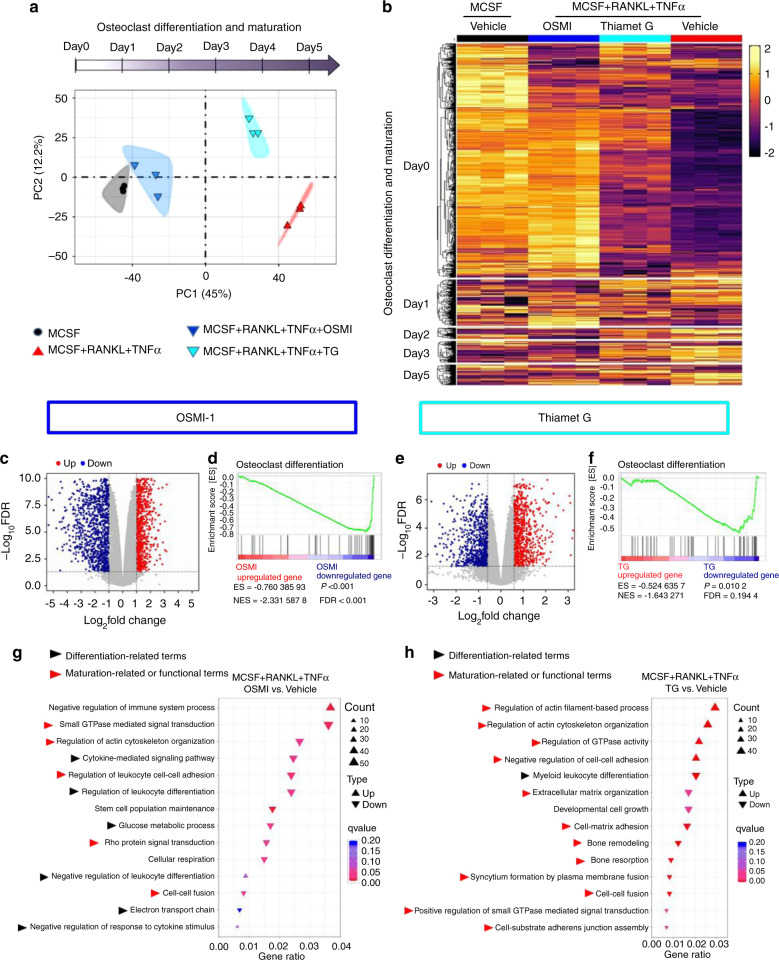
Bone mass is maintained by the balance between osteoclast-induced bone resorption and osteoblast-triggered bone formation. In inflammatory arthritis such as rheumatoid arthritis (RA), however, increased osteoclast differentiation and activity skew this balance resulting in progressive bone loss. O-GlcNAcylation is a posttranslational modification with attachment of a single O-linked β-D-N-acetylglucosamine (O-GlcNAc) residue to serine or threonine residues of target proteins. Although O-GlcNAcylation is one of the most common protein modifications, its role in bone homeostasis has not been systematically investigated. We demonstrate that dynamic changes in O-GlcNAcylation are required for osteoclastogenesis. Increased O-GlcNAcylation promotes osteoclast differentiation during the early stages, whereas its downregulation is required for osteoclast maturation. At the molecular level, O-GlcNAcylation affects several pathways including oxidative phosphorylation and cell-cell fusion. TNFα fosters the dynamic regulation of O-GlcNAcylation to promote osteoclastogenesis in inflammatory arthritis. Targeted pharmaceutical or genetic inhibition of O-GlcNAc transferase (OGT) or O-GlcNAcase (OGA) arrests osteoclast differentiation during early stages of differentiation and during later maturation, respectively, and ameliorates bone loss in experimental arthritis. Knockdown of NUP153, an O-GlcNAcylation target, has similar effects as OGT inhibition and inhibits osteoclastogenesis. These findings highlight an important role of O-GlcNAcylation in osteoclastogenesis and may offer the potential to therapeutically interfere with pathologic bone resorption.
骨量由破骨细胞诱导的骨吸收和成骨细胞触发的骨形成之间的平衡维持。然而,在类风湿关节炎(RA)等炎性关节炎中,破骨细胞分化和活性增加会打破这种平衡,导致进行性骨质流失。O-连接的N-乙酰葡糖胺糖基化(O-GlcNAcylation)是一种翻译后修饰,单个O-连接的β-D-N-乙酰葡糖胺(O-GlcNAc)残基连接到靶蛋白的丝氨酸或苏氨酸残基上。尽管O-GlcNAcylation是最常见的蛋白质修饰之一,但其在骨稳态中的作用尚未得到系统研究。我们证明,O-GlcNAcylation的动态变化是破骨细胞生成所必需的。O-GlcNAcylation增加在早期促进破骨细胞分化,而其下调是破骨细胞成熟所必需的。在分子水平上,O-GlcNAcylation影响包括氧化磷酸化和细胞-细胞融合在内的多种途径。肿瘤坏死因子α(TNFα)促进O-GlcNAcylation的动态调节,以促进炎性关节炎中的破骨细胞生成。靶向药物或基因抑制O-连接的N-乙酰葡糖胺转移酶(OGT)或O-连接的N-乙酰葡糖胺酶(OGA)分别在分化早期和后期成熟阶段阻止破骨细胞分化,并改善实验性关节炎中的骨质流失。敲低作为O-GlcNAcylation靶点的核孔蛋白153(NUP153)具有与抑制OGT相似的作用,并抑制破骨细胞生成。这些发现突出了O-GlcNAcylation在破骨细胞生成中的重要作用,并可能为治疗性干预病理性骨吸收提供潜力。