Department of Applied Social Sciences, Munich University of Applied Sciences, Am Stadtpark 20, 81243, Munich, Germany.
BMC Public Health. 2022 Jul 25;22(1):1413. doi: 10.1186/s12889-022-13777-7.
Statistics show that the number of received psychosocial counselling sessions remains at a constantly high level or has even increased since the COVID-19 pandemic situation in 2020. The objective of this work is to identify factors associated with students' mental health to improve prevention and promotion in mental health at universities.
The analyses were based on a cross-sectional data set collected by an online survey among 1,842 students from a German University of Applied Sciences in 2014. Descriptive statistics as well as nine different multiple linear regression models were calculated with IBM® SPSS® Statistics software. Mental health indicators used were mental health-related quality of life (mental HRQOL), depression, and anxiety, which were analysed in a gender-specific manner.
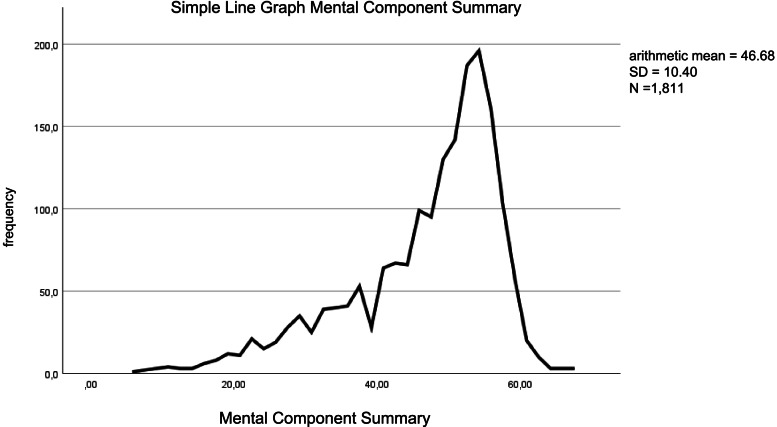
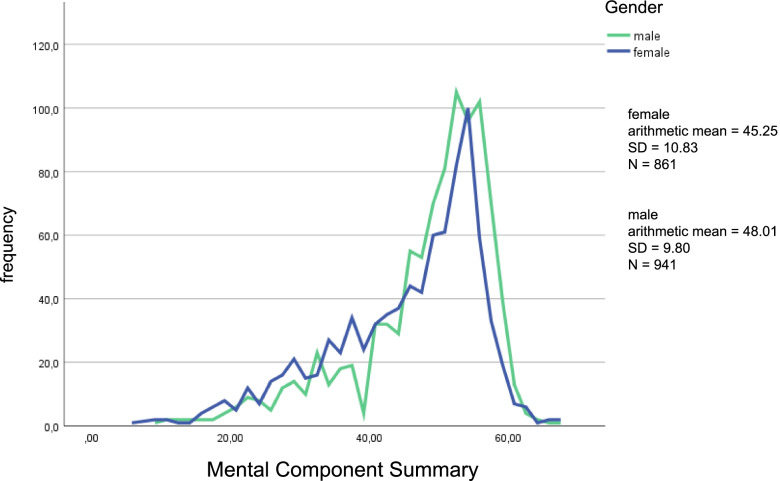
The analyses showed that the mean of the mental HRQOL score of the SF-36 for the student sample (46.68) was lower than the values for German (48.76) or American (51.34) norm samples. A key finding was the differences in mental health indicators between male and female students. Women reported worse mental health status in comparison to men. Female gender (ß of -.09; p < 0.01), age (ß of -1.05; p < 0.01), underweight (ß of -.09; p < 0.05), smoking (ß of -.10; p < 0.05) and drug consumption (ß of -.15; p < 0.001) were negatively associated with mental health indicators. In our sample, a moderate consumption of alcohol within the female population (ß of .12; p < 0.01) and physical activity within the male sample (ß of .09; p < 0.05) were positively associated with mental health indicators.
The gender-specific differences of students' mental health and its associations could be an important result for counselling services at universities to adjust methods according to gender. Contrary to the general societal perception, students have lower mental health than a norm sample even before the pandemic. Due to the additional mental stress caused by the pandemic, it can be assumed that mental health problems have increased even more. Universities should therefore pay more attention to the mental health of their students.
统计数据显示,自 2020 年 COVID-19 大流行以来,接受心理社会咨询的次数一直保持在较高水平,甚至有所增加。本研究的目的是确定与学生心理健康相关的因素,以改善大学心理健康的预防和促进。
本研究基于德国应用科学大学 2014 年通过在线调查收集的横断面数据集,对 1842 名学生进行了分析。使用 IBM® SPSS® Statistics 软件计算了描述性统计和九个不同的多元线性回归模型。所分析的心理健康指标包括与心理健康相关的生活质量(心理健康 HRQOL)、抑郁和焦虑,这些指标分别按性别进行了分析。
分析结果显示,学生样本的 SF-36 心理健康 HRQOL 得分平均值(46.68)低于德国(48.76)或美国(51.34)常模样本。一个重要的发现是男女学生之间心理健康指标的差异。与男性相比,女性报告的心理健康状况更差。女性(β=-.09;p<0.01)、年龄(β=-1.05;p<0.01)、体重过轻(β=-.09;p<0.05)、吸烟(β=-.10;p<0.05)和药物使用(β=-.15;p<0.001)与心理健康指标呈负相关。在我们的样本中,女性适度饮酒(β=0.12;p<0.01)和男性体育活动(β=0.09;p<0.05)与心理健康指标呈正相关。
学生心理健康的性别差异及其相关性可能是大学咨询服务的一个重要结果,可以根据性别调整方法。与普遍的社会认知相反,即使在大流行之前,学生的心理健康水平也低于常模样本。由于大流行带来的额外心理压力,可以假设心理健康问题甚至更多。因此,大学应该更加关注学生的心理健康。