Department of Physiology, Shiga University of Medical Science, Otsu 520-2192, Shiga, Japan.
Biomolecules. 2022 Jun 27;12(7):896. doi: 10.3390/biom12070896.
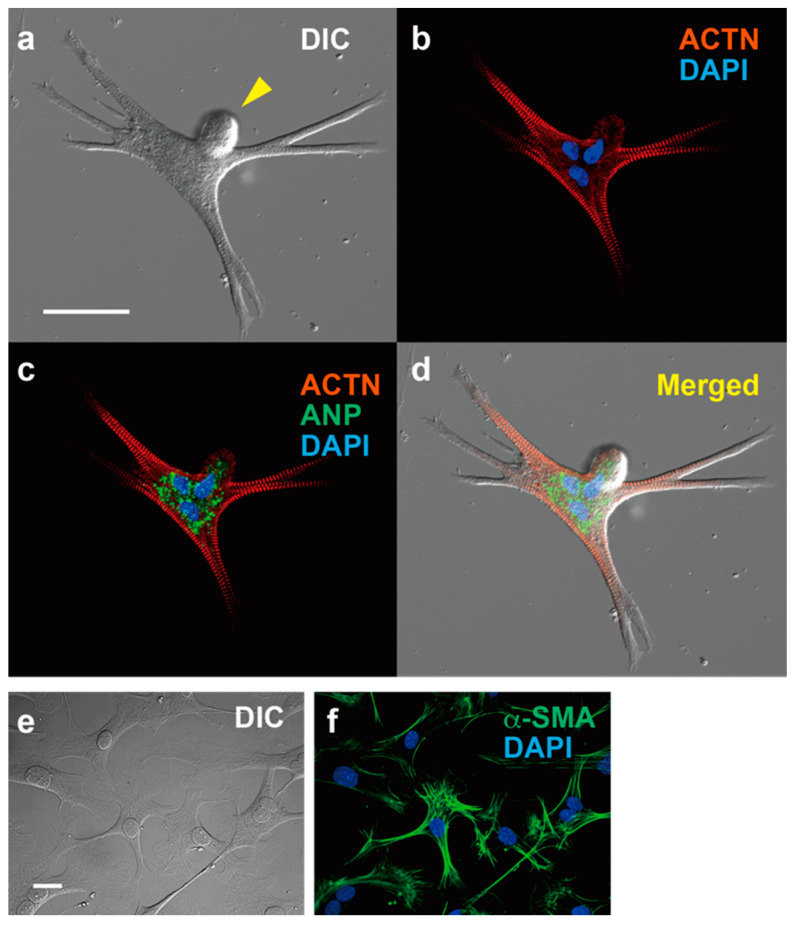
In the adult mammalian heart, no data have yet shown the existence of cardiomyocyte-differentiable stem cells that can be used to practically repair the injured myocardium. Atypically shaped cardiomyocytes (ACMs) are found in cultures of the cardiomyocyte-removed fraction obtained from cardiac ventricles from neonatal to aged mice. ACMs are thought to be a subpopulation of cardiomyocytes or immature cardiomyocytes, most closely resembling cardiomyocytes due to their spontaneous beating, well-organized sarcomere and the expression of cardiac-specific proteins, including some fetal cardiac gene proteins. In this review, we focus on the characteristics of ACMs compared with ventricular myocytes and discuss whether these cells can be substitutes for damaged cardiomyocytes. ACMs reside in the interstitial spaces among ventricular myocytes and survive under severely hypoxic conditions fatal to ventricular myocytes. ACMs have not been observed to divide or proliferate, similar to cardiomyocytes, but they maintain their ability to fuse with each other. Thus, it is worthwhile to understand the role of ACMs and especially how these cells perform cell fusion or function independently in vivo. It may aid in the development of new approaches to cell therapy to protect the injured heart or the clarification of the pathogenesis underlying arrhythmia in the injured heart.
在成年哺乳动物心脏中,尚无数据表明存在可用于实际修复受损心肌的心肌细胞可分化干细胞。在从新生到老年小鼠的心室中去除心肌细胞后获得的心肌细胞去除部分的培养物中发现了形状异常的心肌细胞 (ACMs)。ACMs 被认为是心肌细胞的一个亚群或未成熟的心肌细胞,由于其自发搏动、组织良好的肌节和心脏特异性蛋白的表达,包括一些胎儿心脏基因蛋白,与心肌细胞最为相似。在这篇综述中,我们重点介绍了 ACMs 与心室肌细胞的特征比较,并讨论了这些细胞是否可以替代受损的心肌细胞。ACMs 位于心室肌细胞之间的间隙中,并在对心室肌细胞致命的严重缺氧条件下存活。与心肌细胞一样,ACMs 未观察到分裂或增殖,但它们保持彼此融合的能力。因此,了解 ACMs 的作用,特别是这些细胞如何在体内进行细胞融合或独立发挥功能,是值得的。这可能有助于开发新的细胞治疗方法来保护受损的心脏,或阐明受损心脏中心律失常的发病机制。