Weiss Astrid, Alack Katharina, Klatt Stephan, Zukunft Sven, Schermuly Ralph, Frech Torsten, Mooren Frank-Christoph, Krüger Karsten
German Center for Lung Research (DZL), Cardio-Pulmonary Institute (CPI), Justus-Liebig-University, 35390 Giessen, Germany.
Center for Translational and Clinical Research Aachen, RWTH Aachen, 52074 Aachen, Germany.
Metabolites. 2022 Jul 16;12(7):658. doi: 10.3390/metabo12070658.
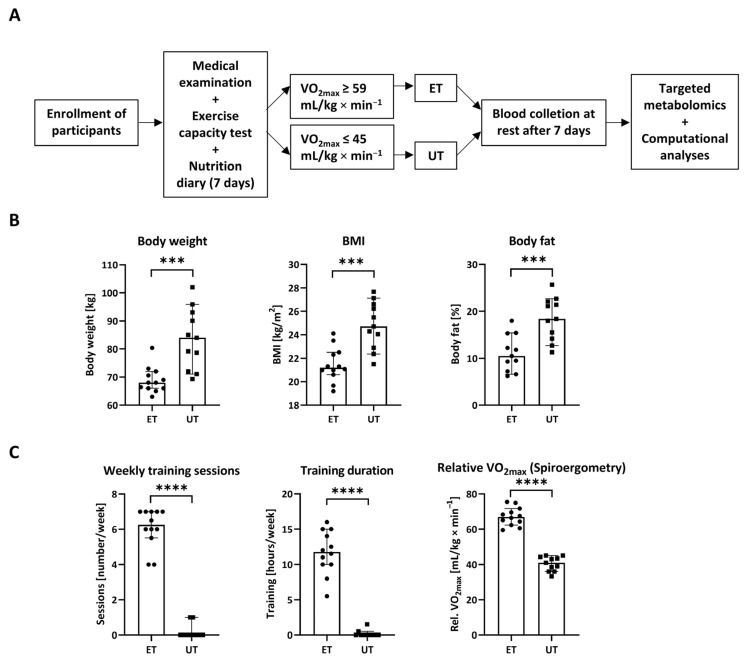
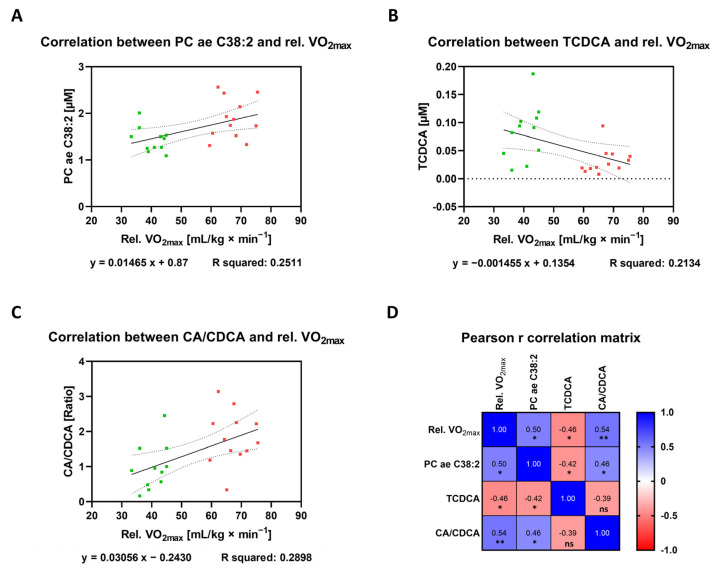
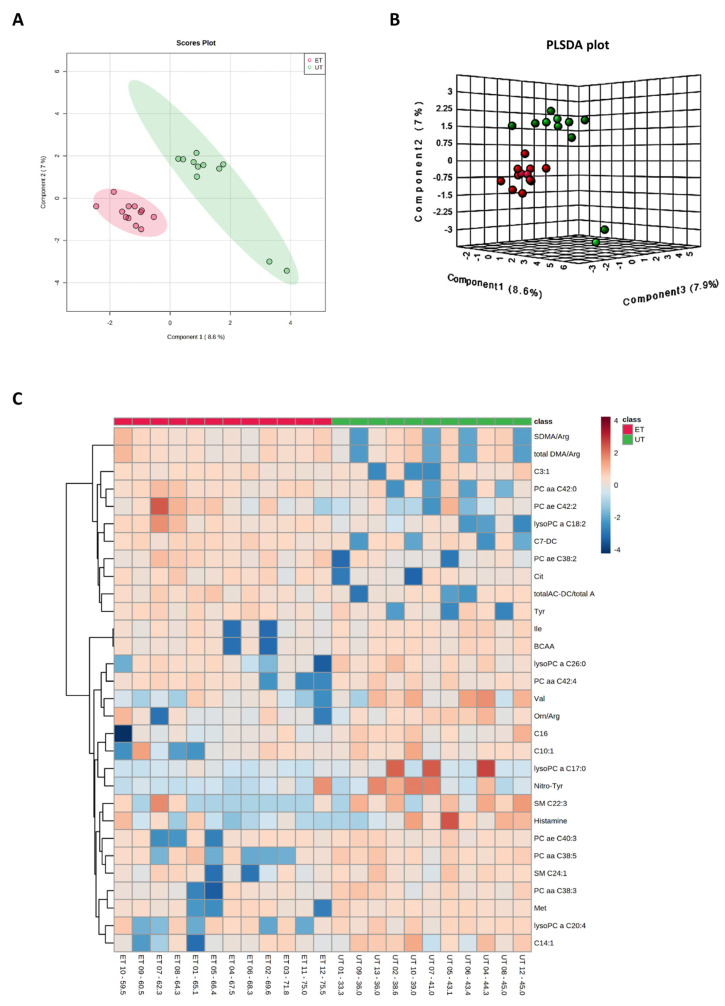
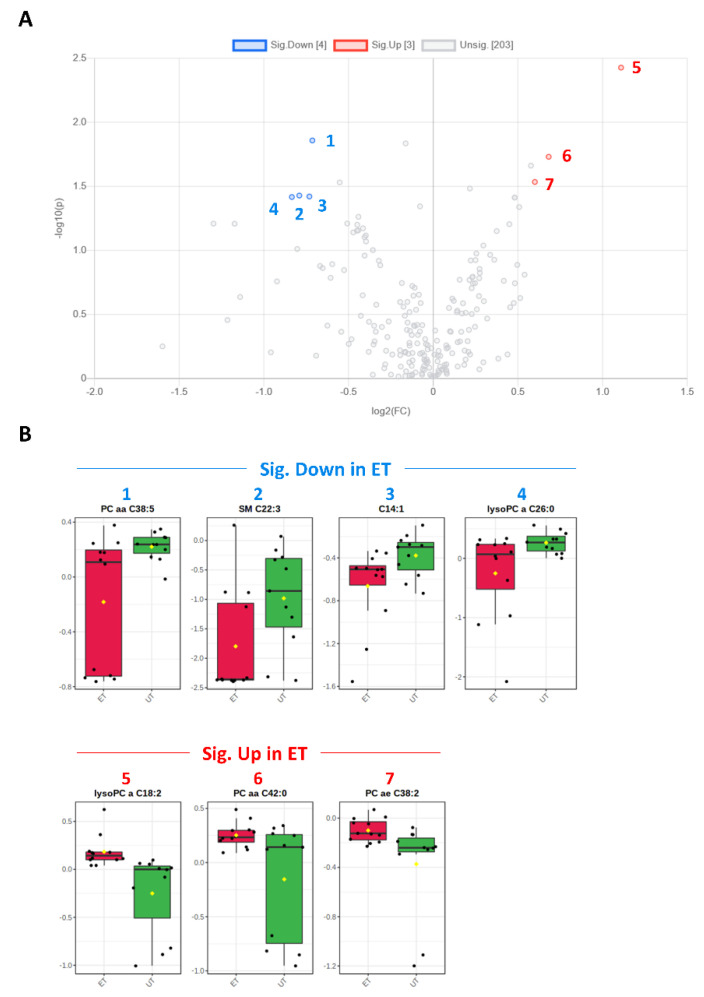
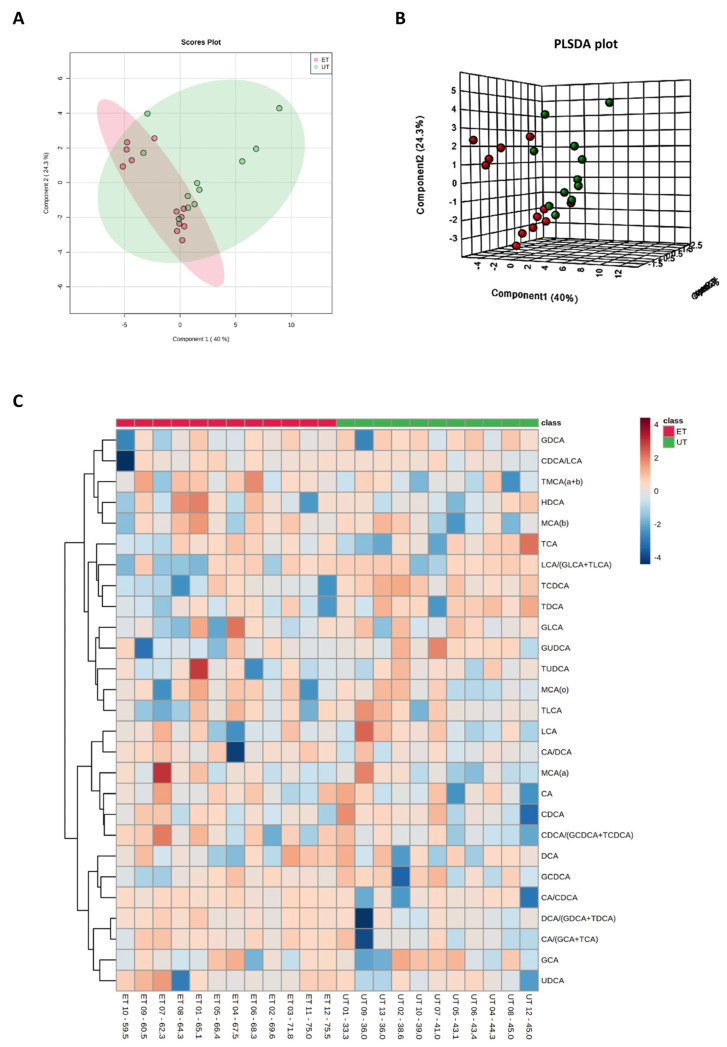
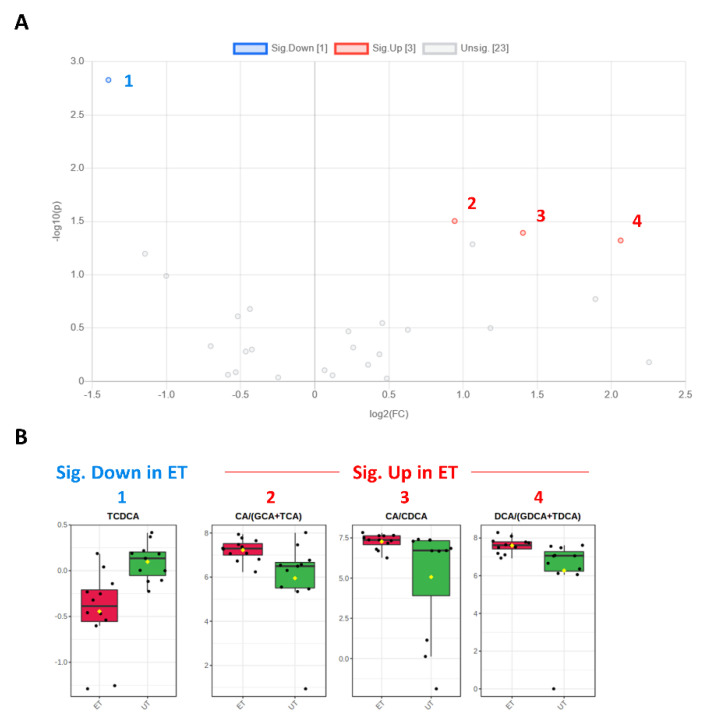
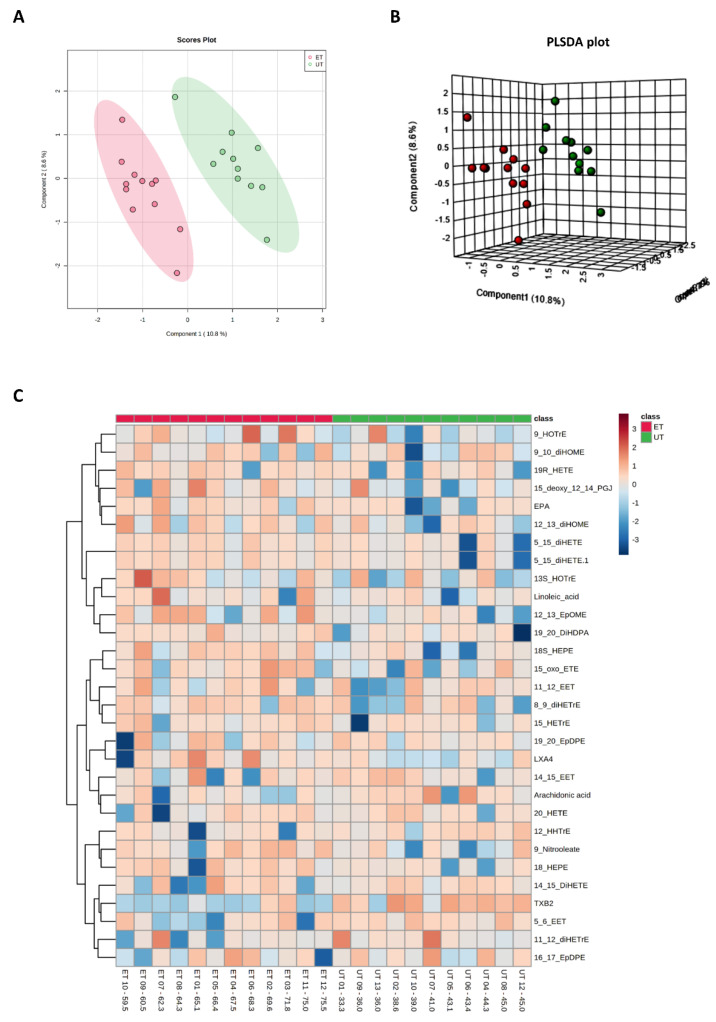
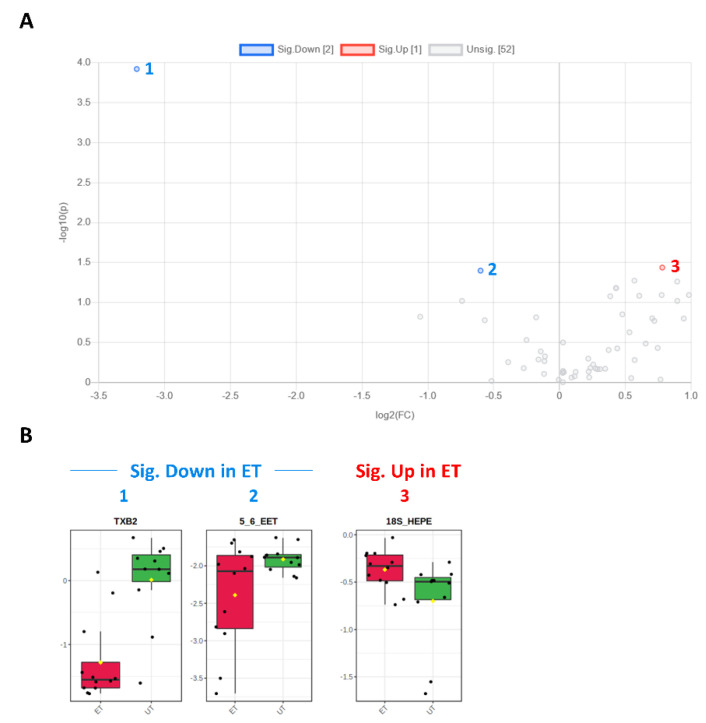
Endurance training induces several adaptations in substrate metabolism, especially in relation to glycogen conservation. The study aimed to investigate differences in the metabolism of lipids, lipid-like substances, and amino acids between highly trained and untrained subjects using targeted metabolomics. Depending on their maximum relative oxygen uptake (VO), subjects were categorized as either endurance-trained (ET) or untrained (UT). Resting blood was taken and plasma isolated. It was screened for changes of 345 metabolites, including amino acids and biogenic amines, acylcarnitines, glycerophosphocholines (GPCs), sphingolipids, hexoses, bile acids, and polyunsaturated fatty acids (PUFAs) by using liquid chromatography coupled to tandem mass spectrometry. Acylcarnitine (C14:1, down in ET) and five GPCs (lysoPC a C18:2, up in ET; PC aa C42:0, up in ET; PC ae C38:2, up in ET; PC aa C38:5, down in ET; lysoPC a C26:0, down in ET) were differently regulated in ET compared to UT. TCDCA was down-regulated in athletes, while for three ratios of bile acids CA/CDCA, CA/(GCA+TCA), and DCA/(GDCA+TDCA) an up-regulation was found. TXB2 and 5,6-EET were down-regulated in the ET group and 18S-HEPE, a PUFA, showed higher levels in 18S-HEPE in endurance-trained subjects. For PC ae C38:2, TCDCA, and the ratio of cholic acid to chenodeoxycholic acid, an association with VO was found. Numerous phospholipids, acylcarnitines, glycerophosphocholines, bile acids, and PUFAs are present in varying concentrations at rest in ET. These results might represent an adaptation of lipid metabolism and account for the lowered cardiovascular risk profile of endurance athletes.
耐力训练会引起底物代谢的多种适应性变化,尤其是在糖原保存方面。该研究旨在通过靶向代谢组学研究训练有素和未经训练的受试者在脂质、类脂物质和氨基酸代谢方面的差异。根据他们的最大相对摄氧量(VO),受试者被分为耐力训练组(ET)或未训练组(UT)。采集静息血并分离血浆。通过液相色谱-串联质谱法筛选了345种代谢物的变化,包括氨基酸和生物胺、酰基肉碱、甘油磷酸胆碱(GPC)、鞘脂、己糖、胆汁酸和多不饱和脂肪酸(PUFA)。与UT相比,ET组中酰基肉碱(C14:1,下降)和五种GPC(溶血磷脂酰胆碱a C18:2,ET组升高;磷脂酰胆碱aa C42:0,ET组升高;磷脂酰胆碱ae C38:2,ET组升高;磷脂酰胆碱aa C38:5,ET组下降;溶血磷脂酰胆碱a C26:0,ET组下降)的调节方式不同。运动员中牛磺鹅去氧胆酸(TCDCA)下调,而在三种胆汁酸比值胆酸/鹅去氧胆酸(CA/CDCA)、CA/(甘氨胆酸+牛磺胆酸)(CA/(GCA+TCA))和脱氧胆酸/(甘氨脱氧胆酸+牛磺脱氧胆酸)(DCA/(GDCA+TDCA))中发现上调。血栓素B2(TXB2)和5,6-环氧二十碳三烯酸(5,6-EET)在ET组中下调,一种PUFA 18S-羟二十碳五烯酸(18S-HEPE)在耐力训练受试者中的水平较高。对于磷脂酰胆碱ae C38:2、TCDCA以及胆酸与鹅去氧胆酸的比值,发现与VO有关。在ET组静息状态下,多种磷脂、酰基肉碱、甘油磷酸胆碱、胆汁酸和PUFA以不同浓度存在。这些结果可能代表了脂质代谢的一种适应性变化,并解释了耐力运动员心血管风险状况降低的原因。