Department of Natural Drugs, Faculty of Pharmacy, Masaryk University, Palackého 1946/1, 612 00 Brno, Czech Republic.
Department of Pharmacognosy and Botany, Faculty of Pharmacy, Comenius University in Bratislava, Odbojárov 10, 832 32 Bratislava, Slovakia.
Molecules. 2022 Jul 13;27(14):4491. doi: 10.3390/molecules27144491.
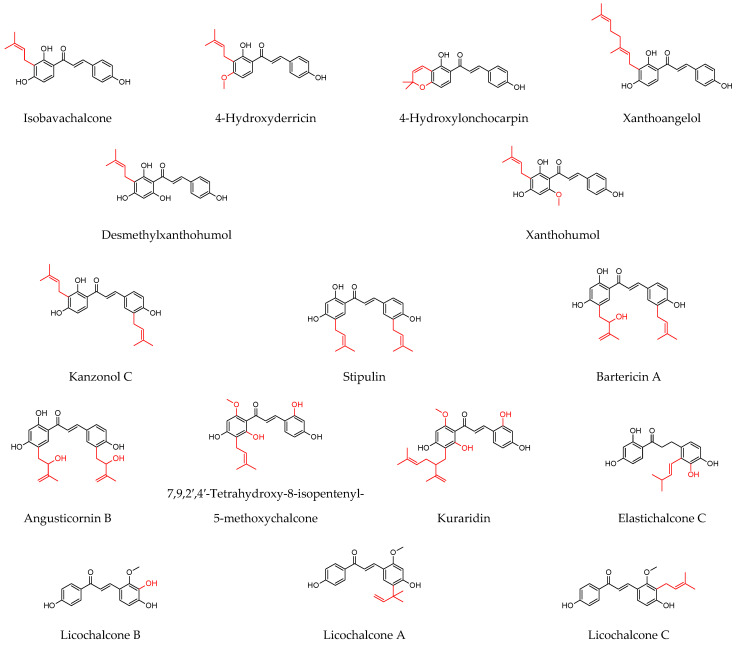
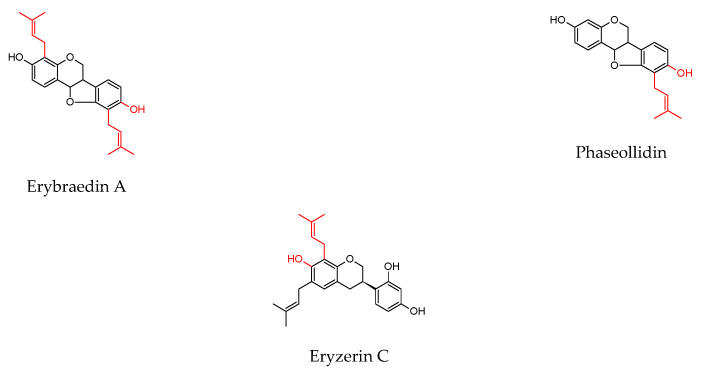
The review presents prenylated flavonoids as potential therapeutic agents for the treatment of topical skin infections and wounds, as they can restore the balance in the wound microenvironment. A thorough two-stage search of scientific papers published between 2000 and 2022 was conducted, with independent assessment of results by two reviewers. The main criteria were an MIC (minimum inhibitory concentration) of up to 32 µg/mL, a microdilution/macrodilution broth method according to CLSI (Clinical and Laboratory Standards Institute) or EUCAST (European Committee on Antimicrobial Susceptibility Testing), pathogens responsible for skin infections, and additional antioxidant, anti-inflammatory, and low cytotoxic effects. A total of 127 structurally diverse flavonoids showed promising antimicrobial activity against pathogens affecting wound healing, predominantly strains, but only artocarpin, diplacone, isobavachalcone, licochalcone A, sophoraflavanone G, and xanthohumol showed multiple activity, including antimicrobial, antioxidant, and anti-inflammatory along with low cytotoxicity important for wound healing. Although prenylated flavonoids appear to be promising in wound therapy of humans, and also animals, their activity was measured only in vitro and in vivo. Future studies are, therefore, needed to establish rational dosing according to MIC and MBC (minimum bactericidal concentration) values, test potential toxicity to human cells, measure healing kinetics, and consider formulation in smart drug release systems and/or delivery technologies to increase their bioavailability.
该综述认为,肉桂酰基化类黄酮可能成为治疗局部皮肤感染和创伤的潜在治疗药物,因为它们可以恢复创伤微环境的平衡。本研究对 2000 年至 2022 年期间发表的科学论文进行了彻底的两阶段检索,由两位评审员独立评估结果。主要标准是 MIC(最低抑菌浓度)不超过 32 µg/mL,采用 CLSI(临床和实验室标准协会)或 EUCAST(抗菌药物敏感性试验委员会)推荐的微量稀释/大稀释肉汤法,检测对象为引起皮肤感染的病原体,以及具有抗氧化、抗炎和低细胞毒性等附加效应。共有 127 种结构多样的类黄酮对影响伤口愈合的病原体表现出有前景的抗菌活性,主要是 菌株,但只有 artocarpin、diplacone、isobavachalcone、licochalcone A、sophoraflavanone G 和 xanthohumol 表现出多种活性,包括抗菌、抗氧化、抗炎以及低细胞毒性,这些活性对伤口愈合很重要。尽管肉桂酰基化类黄酮似乎在人类和动物的伤口治疗中具有很大的应用前景,但它们的活性仅在体外和体内进行了测量。因此,未来的研究需要根据 MIC 和 MBC(最低杀菌浓度)值确定合理的剂量,测试对人体细胞的潜在毒性,测量愈合动力学,并考虑将其配方制成智能药物释放系统和/或输送技术,以提高其生物利用度。