Research Unit, Physical Activity, Sport and Health, UR18JS01, National Observatory of Sport, Tunis 1003, Tunisia.
High Institute of Sport and Physical Education of Sfax, University of Sfax, Sfax 3000, Tunisia.
Nutrients. 2022 Jul 21;14(14):2996. doi: 10.3390/nu14142996.
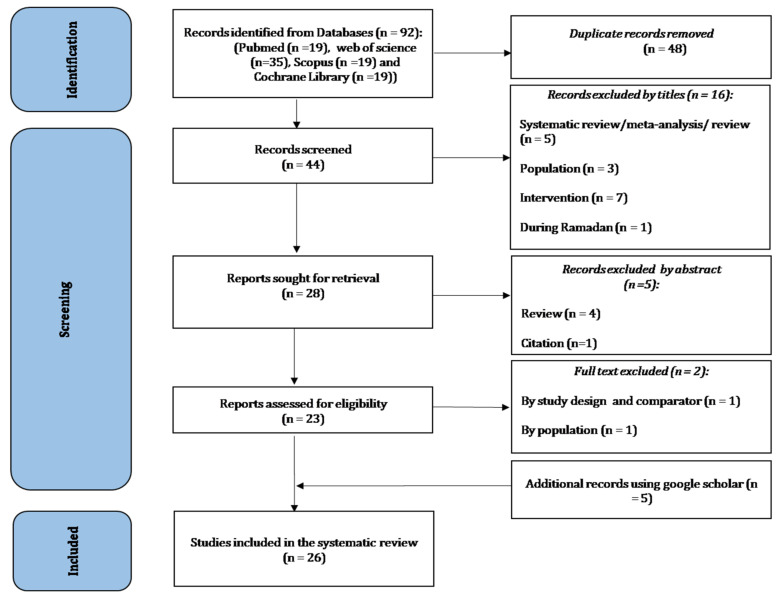
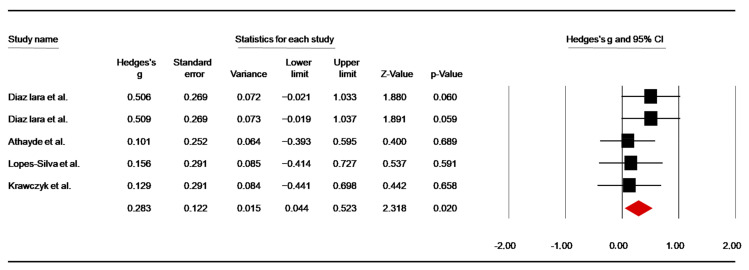
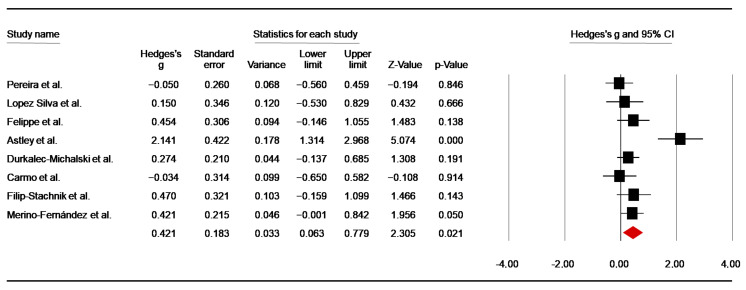
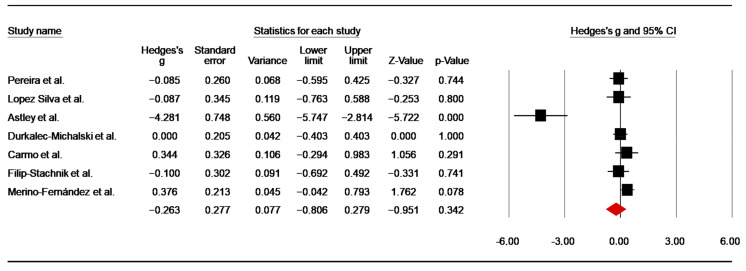
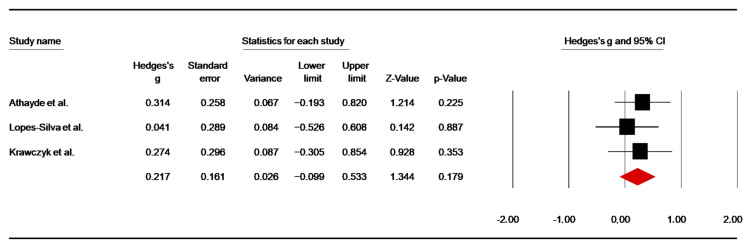
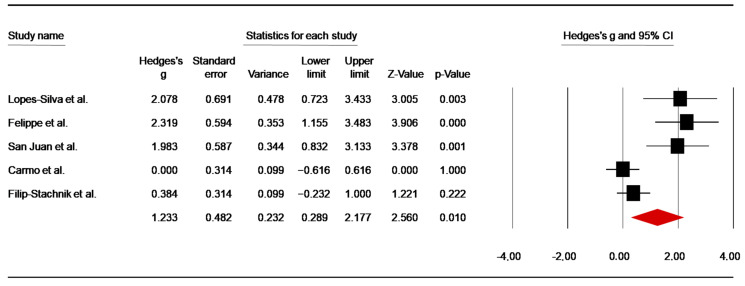
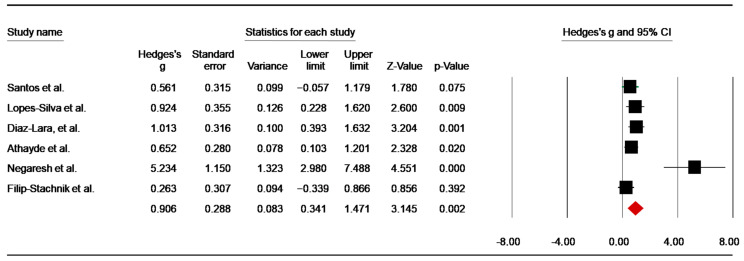
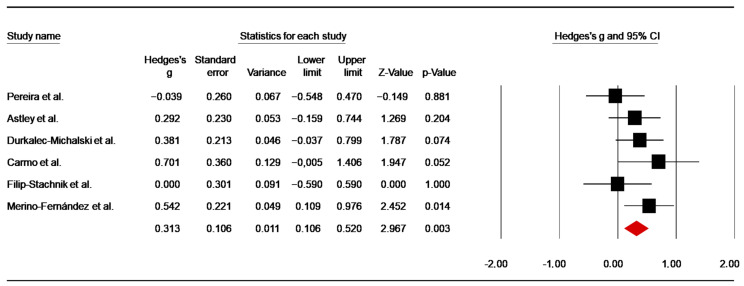
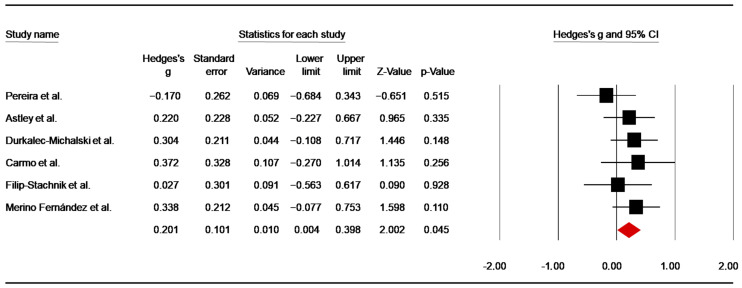
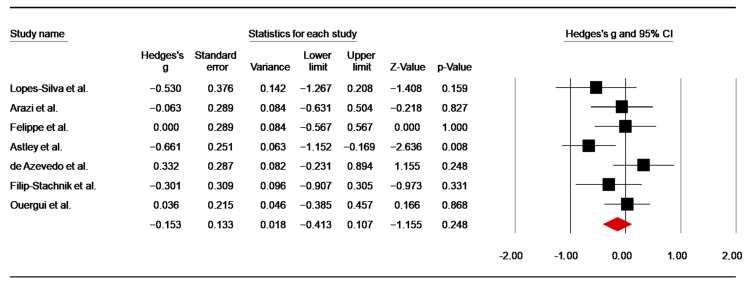
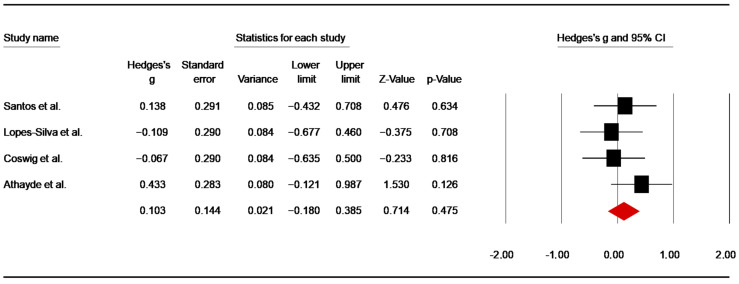
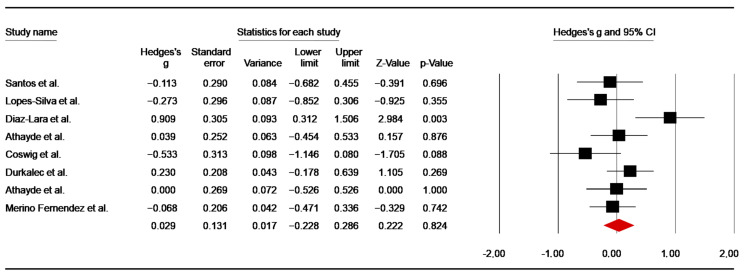
Although the effects of caffeine supplementation on combat sports performance have been extensively investigated, there is currently no consensus regarding its ergogenic benefits.This systematic review with meta-analysis aimed to summarize the studies investigating the effects of caffeine supplementation on different aspects of performance in combat sports and to quantitatively analyze the results of these studies to better understand the ergogenic effect of caffeine on combat sports outcomes. A systematic search for randomized placebo-controlled studies investigating the effects of caffeine supplementation on combat sports' performance was performed through Scopus, Pubmed, Web of Science and Cochrane Library databases up to 18 April 2022. Random-effects meta-analyses of standardized mean differences (Hedge's g) were performed to analyze the data. Twenty-six studies of good and excellent methodological quality (based on the Pedro scale) fulfilled the inclusion criteria. The meta-analysis results revealed caffeine has a small but evident effect size (ES) on handgrip strength (ES = 0.28; 95% CI: 0.04 to 0.52; = 0.02), and total number of throws during the special judo fitness test (SJFT) (ES = 0.42; 95% CI: 0.06 to 0.78; = 0.02). Regarding the physiological responses, caffeine increased blood lactate concentration ([La]) in anaerobic exercise (ES = 1.23; 95% CI: 0.29 to 2.18; = 0.01) and simulated combat (ES = 0.91; 95% CI: 0.34 to 1.47; = 0.002). For Heart Rate (HR), caffeine increased HR final (ES = 0.31; 95% CI: 0.11 to 0.52; = 0.003), and HR 1min (ES = 0.20; 95% CI 0.004 to 0.40; = 0.045). However, caffeine had no impact on the countermovement jump height, the SJFT index, the judogi strength-endurance test, the number and duration of offensive actions, HR at the end of the fight, and the rating of perceived exertion. Caffeine supplementation may be ergogenic for a range of combat sports aspects involving isometric strength, anaerobic power, reaction time, and anaerobic metabolism. However, supplementation effects might be ineffective under certain circumstances, indicating supplementation needs to take into account the performance metric in question prior to creating a dosing protocol.
虽然咖啡因补充对格斗运动表现的影响已经被广泛研究,但目前对于其增强运动表现的益处还没有共识。本系统评价和荟萃分析旨在总结研究咖啡因补充对格斗运动表现不同方面的影响,并对这些研究的结果进行定量分析,以更好地了解咖啡因对格斗运动结果的增强作用。通过 Scopus、PubMed、Web of Science 和 Cochrane Library 数据库,系统地检索了截至 2022 年 4 月 18 日研究咖啡因补充对格斗运动表现影响的随机安慰剂对照研究。使用标准化均数差(Hedge's g)进行随机效应荟萃分析来分析数据。有 26 项研究具有良好和优秀的方法学质量(基于 Pedro 量表),符合纳入标准。荟萃分析结果显示,咖啡因对握力(ES = 0.28;95%CI:0.04 至 0.52; = 0.02)和特殊柔道体能测试(SJFT)中总投掷次数(ES = 0.42;95%CI:0.06 至 0.78; = 0.02)具有较小但明显的效应量。关于生理反应,咖啡因增加了无氧运动(ES = 1.23;95%CI:0.29 至 2.18; = 0.01)和模拟战斗(ES = 0.91;95%CI:0.34 至 1.47; = 0.002)中的血乳酸浓度 ([La])。对于心率(HR),咖啡因增加了最终 HR(ES = 0.31;95%CI:0.11 至 0.52; = 0.003)和 1 分钟 HR(ES = 0.20;95%CI 0.004 至 0.40; = 0.045)。然而,咖啡因对反跳跳高度、SJFT 指数、柔道力量耐力测试、进攻动作的次数和持续时间、战斗结束时的心率以及感知用力评分没有影响。咖啡因补充可能对涉及等长力量、无氧能力、反应时间和无氧代谢的一系列格斗运动方面具有增强作用。然而,在某些情况下,补充效果可能无效,这表明在制定剂量方案之前,补充需要考虑到所研究的表现指标。