Chung Chih Kit, Beekmann Uwe, Kralisch Dana, Bierau Katja, Chan Alan, Ossendorp Ferry, Cruz Luis J
Department of Radiology, Division Translational Nanobiomaterials and Imaging, Leiden University Medical Center, 2333 ZA Leiden, The Netherlands.
Percuros B.V., Zernikedreef 8, 2333 CL Leiden, The Netherlands.
Pharmaceutics. 2022 Jun 25;14(7):1351. doi: 10.3390/pharmaceutics14071351.
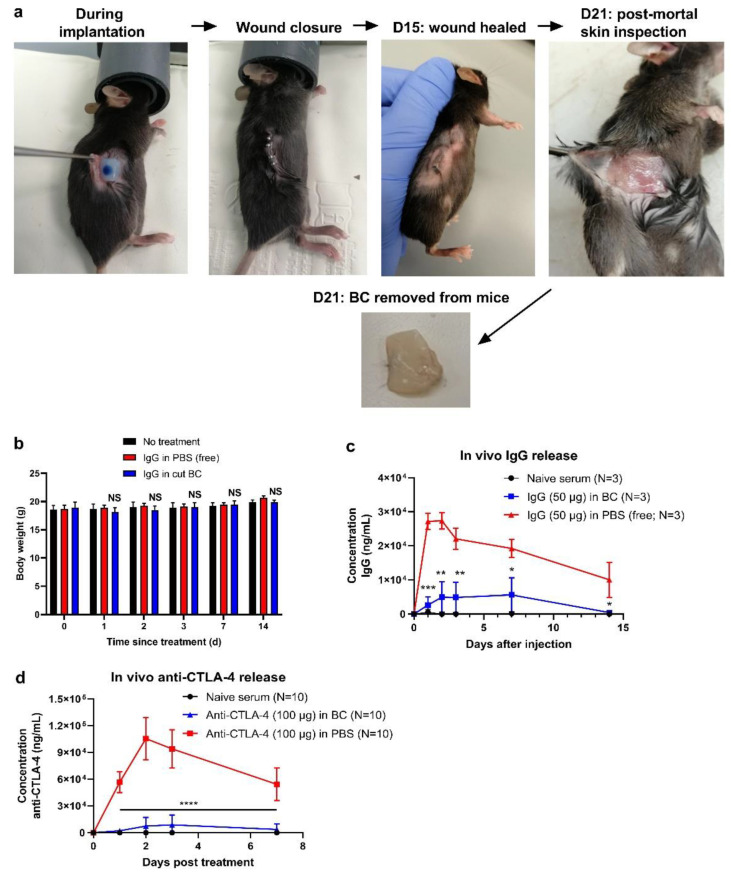
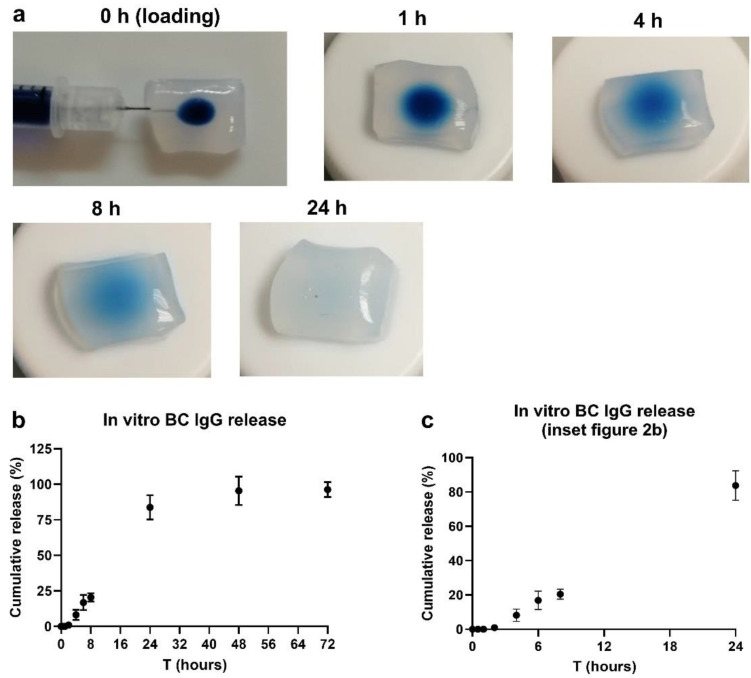
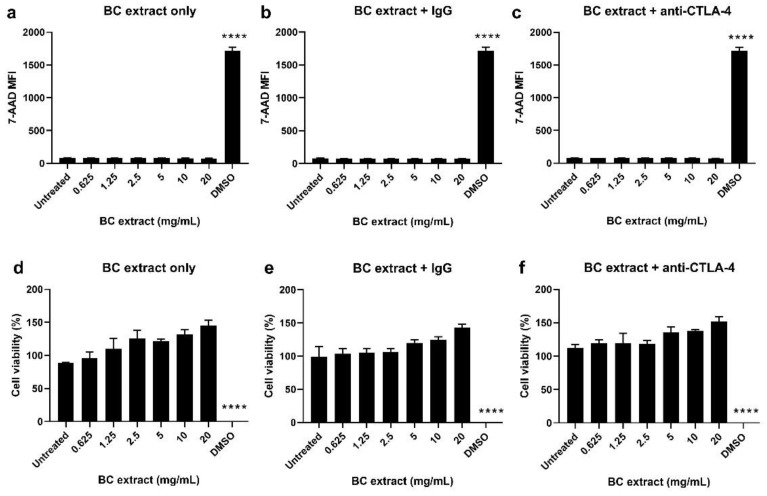
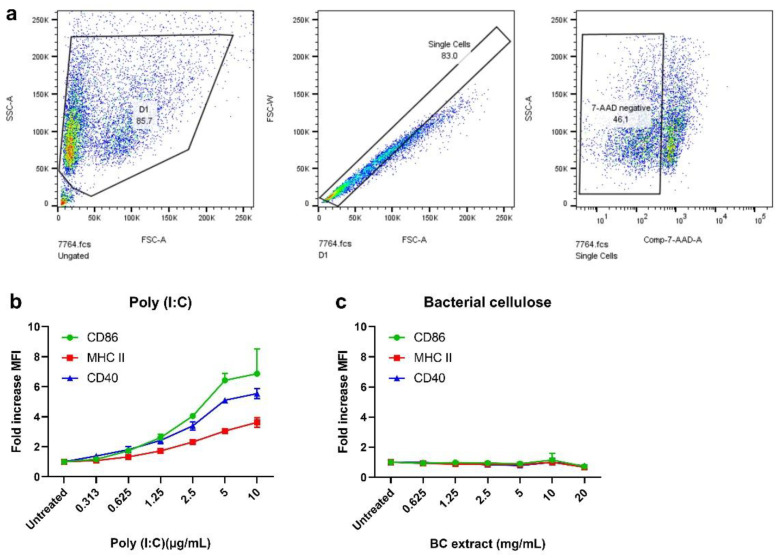
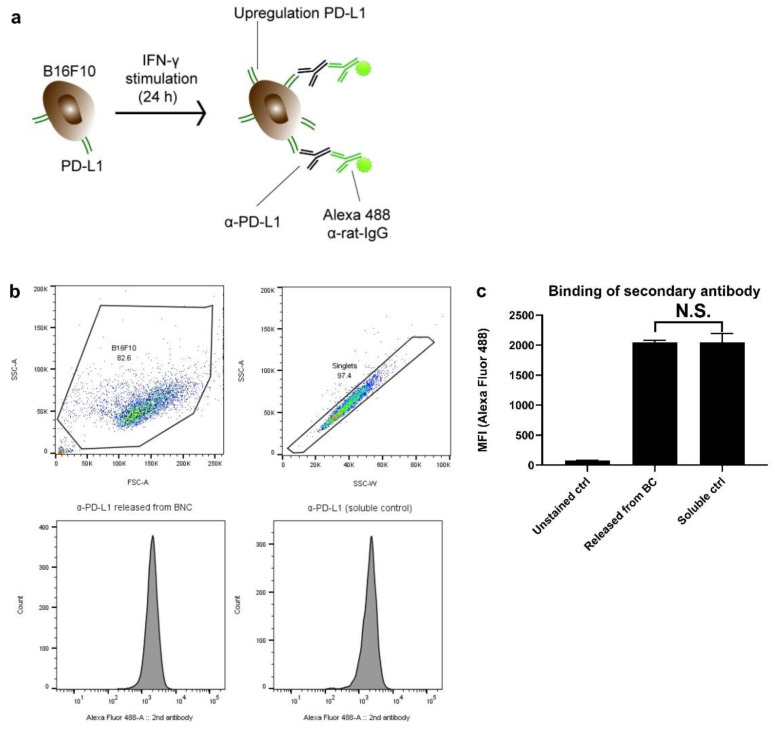
Immune checkpoint blocking therapy is a promising cancer treatment modality, though it has limitations such as systemic toxicity, which can often be traced to uncontrolled antibody spread. Controlling antibody release with delivery systems is, therefore, an attractive approach to reduce systemic antibody spread and potentially mitigate the side effects of checkpoint immunotherapy. Here, bacterial cellulose (BC) was produced and investigated as a delivery system for optimizing checkpoint-blocking antibody delivery. BC was produced in 24-well plates, and afterward, the edges were removed to obtain square-shaped BC samples with a surface of ~49 mm. This customization was necessary to allow smooth in vivo implantation. Scanning electron microscopy revealed the dense cellulose network within BC. Human IgG antibody was included as the model antibody for loading and release studies. IgG antibody solution was injected into the center of BC samples. In vitro, all IgG was released within 24 to 48 h. Cell culture experiments demonstrated that BC neither exerted cytotoxic effects nor induced dendritic cell activation. Antibody binding assays demonstrated that BC does not hamper antibody function. Finally, antibody-loaded BC was implanted in mice, and serum measurements revealed that BC significantly reduced IgG and anti-CTLA-4 spread in mice. BC implantation did not induce side effects in mice. Altogether, BC is a promising and safe delivery system for optimizing the delivery and release of checkpoint-blocking antibodies.
免疫检查点阻断疗法是一种很有前景的癌症治疗方式,尽管它存在一些局限性,比如全身毒性,这种毒性往往可追溯到抗体的不受控扩散。因此,利用递送系统控制抗体释放是一种有吸引力的方法,可减少抗体在全身的扩散,并有可能减轻检查点免疫疗法的副作用。在此,制备了细菌纤维素(BC)并将其作为一种递送系统进行研究,以优化检查点阻断抗体的递送。BC在24孔板中制备,之后去除边缘部分以获得表面面积约为49平方毫米的方形BC样品。这种定制对于实现体内平滑植入是必要的。扫描电子显微镜显示BC内部有致密的纤维素网络。将人IgG抗体作为模型抗体用于负载和释放研究。将IgG抗体溶液注入BC样品的中心。在体外,所有IgG在24至48小时内释放。细胞培养实验表明,BC既不产生细胞毒性作用,也不诱导树突状细胞活化。抗体结合试验表明,BC不会妨碍抗体功能。最后,将负载抗体的BC植入小鼠体内,血清检测显示BC显著降低了小鼠体内IgG和抗CTLA - 4的扩散。BC植入未在小鼠中诱导副作用。总之,BC是一种用于优化检查点阻断抗体递送和释放的有前景且安全的递送系统。