Sorbonne Université, INSERM, Centre de Recherche Saint-Antoine, CRSA, AP-HP, Saint Antoine Hospital, Gastroenterology Department, Paris, France.
Paris Centre for Microbiome Medicine (PaCeMM) FHU, Paris, France.
Gut Microbes. 2022 Jan-Dec;14(1):2105637. doi: 10.1080/19490976.2022.2105637.
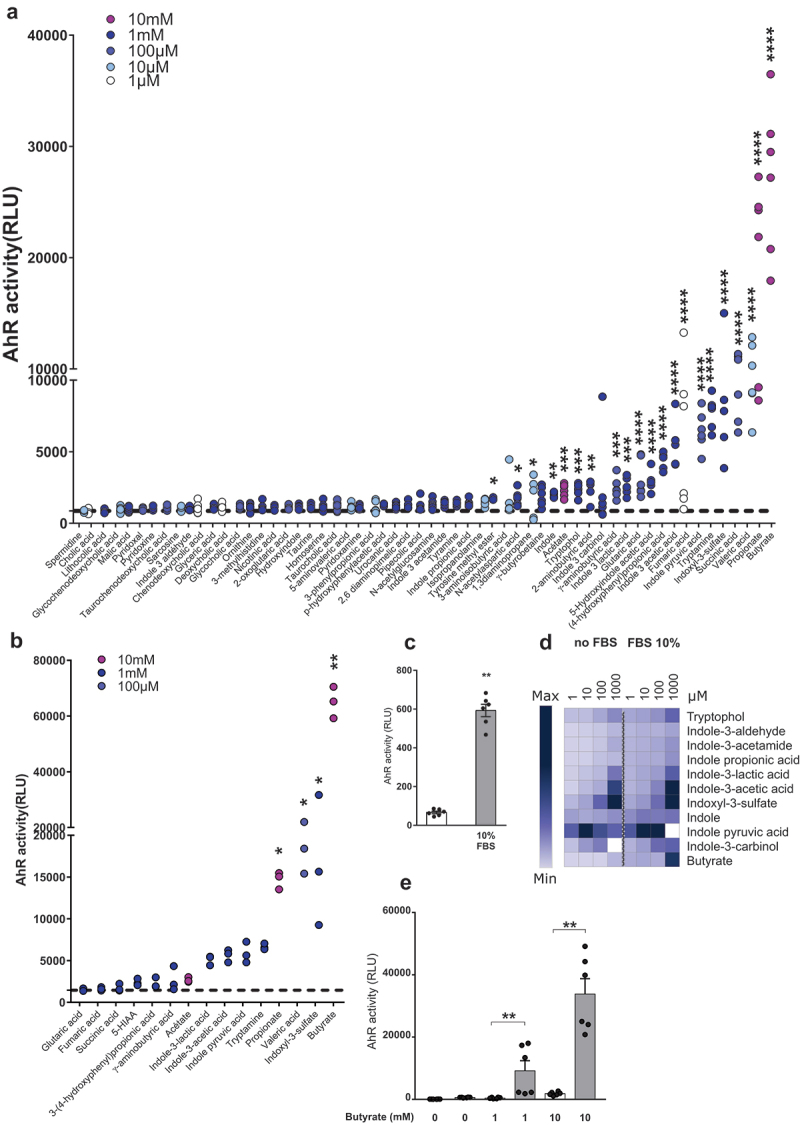
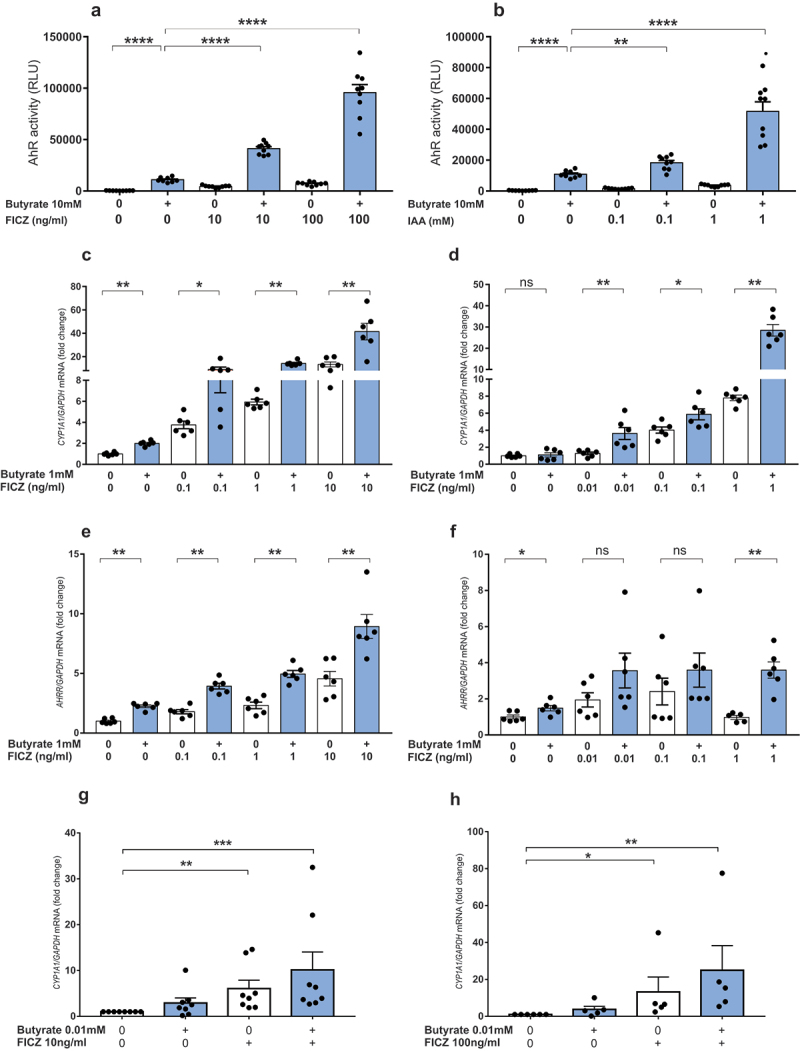
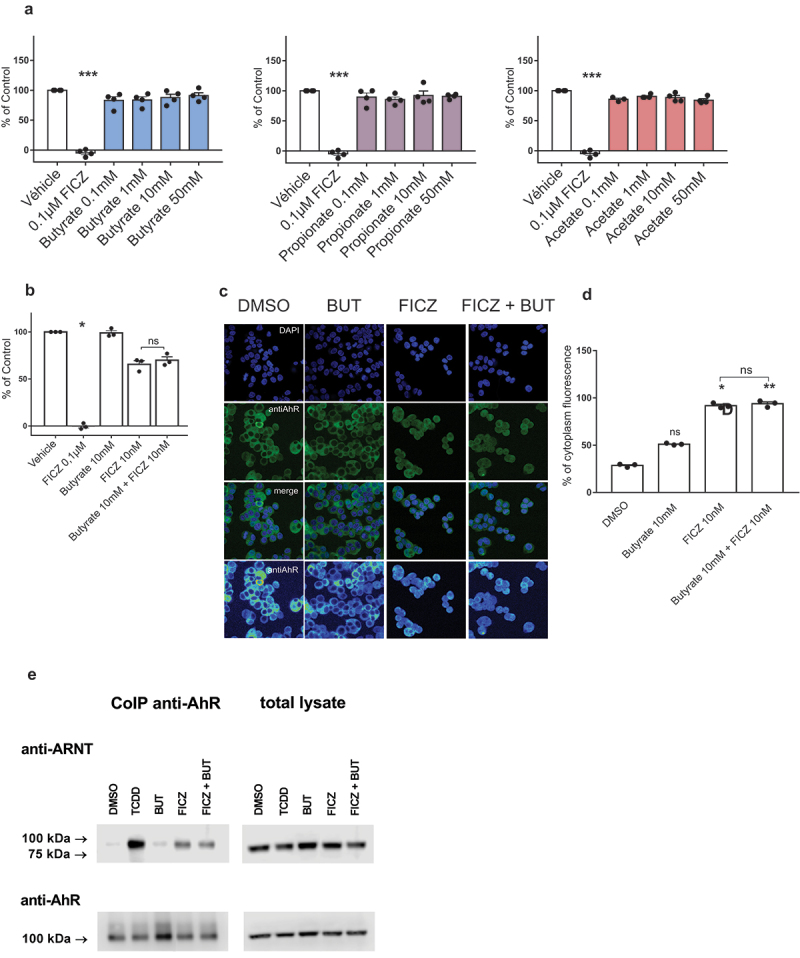
Aryl hydrocarbon receptor (AhR) is a critical player in the crosstalk between the gut microbiota and its host. However, factors regulating AhR within the gut, which is a complex metabolomic environment, are poorly understood. This study investigates the effect of a combination of metabolites on the activation mechanism of AhR. AhR activity was evaluated using both a luciferase reporter system and mRNA levels of AhR target genes on human cell lines and human colonic explants. AhR activation was studied by radioligand-binding assay, nuclear translocation of AhR by immuofluorescence and protein co-immunoprecipitation of AhR with ARNT. Indirect activation of AhR was evaluated using several tests and inhibitors. The promoter of the target gene was studied both by chromatin immunoprecipitation and by using an histone deacetylase HDAC inhibitor (iHDAC). Short-chain fatty acids, and butyrate in particular, enhance AhR activity mediated by endogenous tryptophan metabolites without binding to the receptor. This effect was confirmed in human intestinal explants and did not rely on activation of receptors targeted by SCFAs, inhibition of AhR degradation or clearance of its ligands. Butyrate acted directly on AhR target gene promoter to reshape chromatin through iHDAC activity. Our findings revealed that butyrate is not an AhR ligand but acts as iHDAC leading to an increase recruitment of AhR to the target gene promoter in the presence of tryptophan-derived AhR agonists. These data contribute to a novel understanding of the complex regulation of AhR activation by gut microbiota-derived metabolites.
芳香烃受体(AhR)是肠道微生物群与其宿主之间相互作用的关键调节因子。然而,在肠道这个复杂的代谢环境中,调节 AhR 的因素还知之甚少。本研究探讨了一组代谢物对 AhR 激活机制的影响。在人细胞系和人结肠外植体中,通过荧光素酶报告系统和 AhR 靶基因的 mRNA 水平评估 AhR 活性。通过放射性配体结合测定、AhR 的免疫荧光核转位和 AhR 与 ARNT 的蛋白共免疫沉淀研究 AhR 的激活。使用几种测试和抑制剂研究间接激活 AhR。通过染色质免疫沉淀和使用组蛋白去乙酰化酶(HDAC)抑制剂(iHDAC)研究靶基因 的启动子。短链脂肪酸,特别是丁酸盐,增强由内源性色氨酸代谢物介导的 AhR 活性,而不与受体结合。该效应在人肠道外植体中得到证实,并且不依赖于 SCFA 靶向受体的激活、AhR 降解的抑制或其配体的清除。丁酸盐通过 iHDAC 活性直接作用于 AhR 靶基因启动子,重塑染色质。我们的研究结果表明,丁酸盐不是 AhR 的配体,而是作为 iHDAC,在色氨酸衍生的 AhR 激动剂存在下,增加 AhR 募集到靶基因启动子。这些数据有助于深入了解肠道微生物群衍生代谢物对 AhR 激活的复杂调节。