Quantori, Cambridge, MA, USA.
Politecnico di Milano, Milan, Italy.
Sci Rep. 2022 Jul 27;12(1):12791. doi: 10.1038/s41598-022-15013-z.
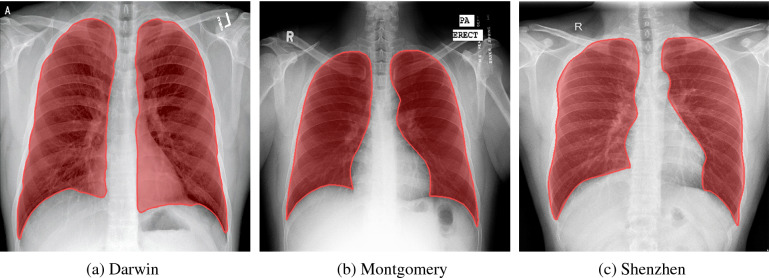
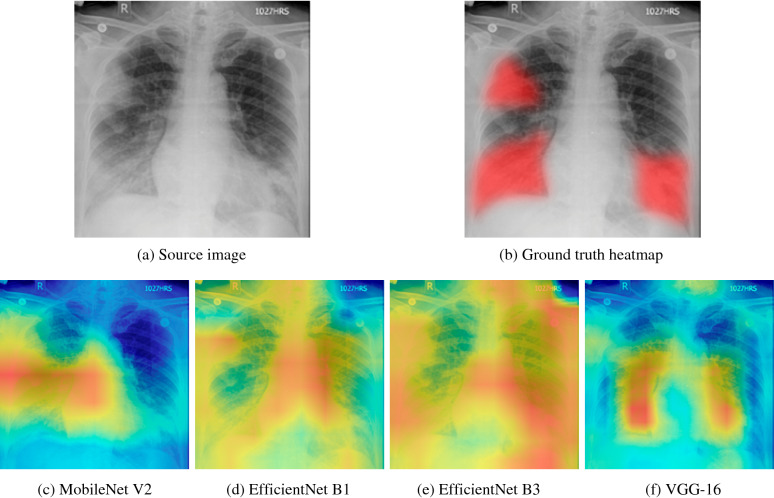
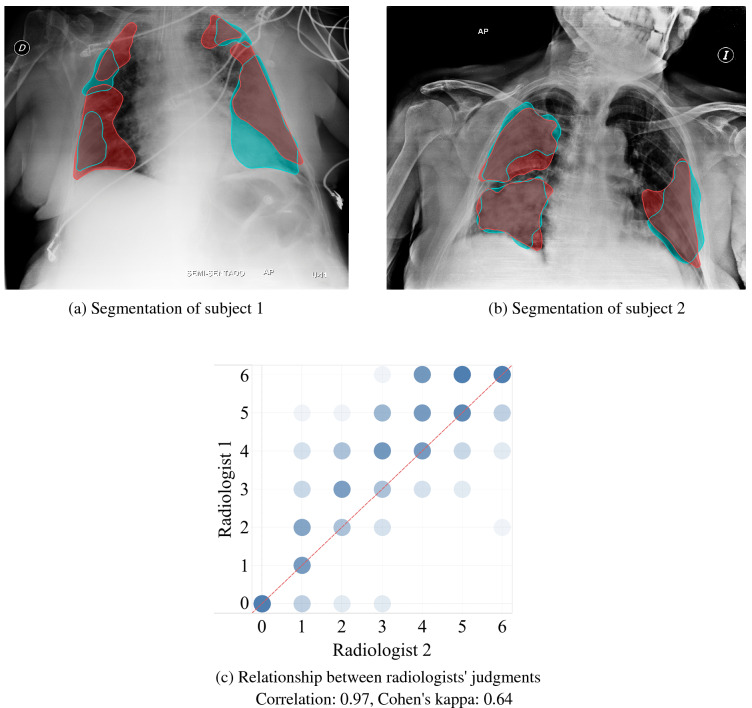
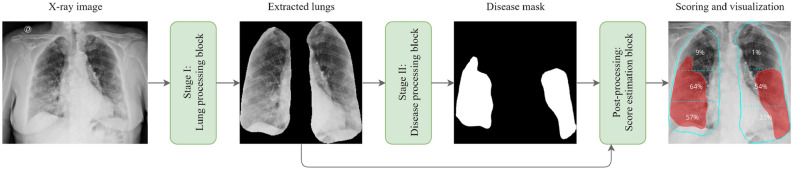
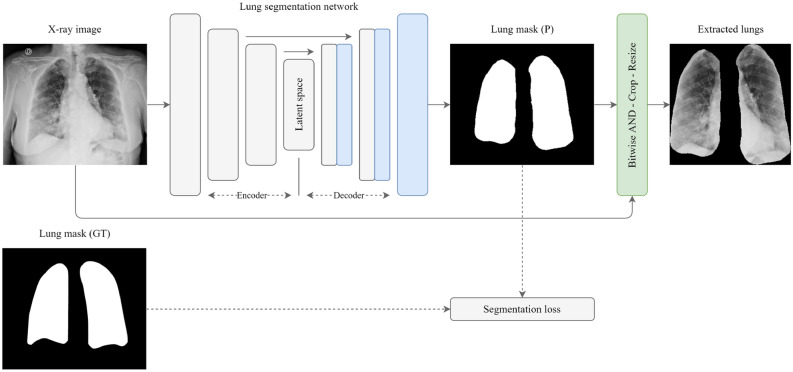
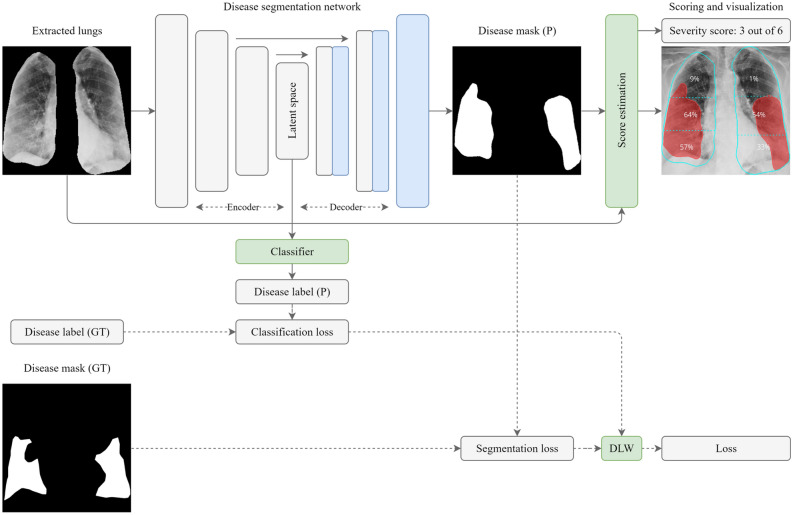
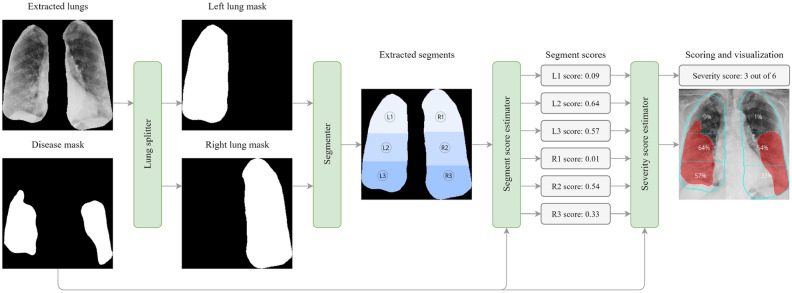
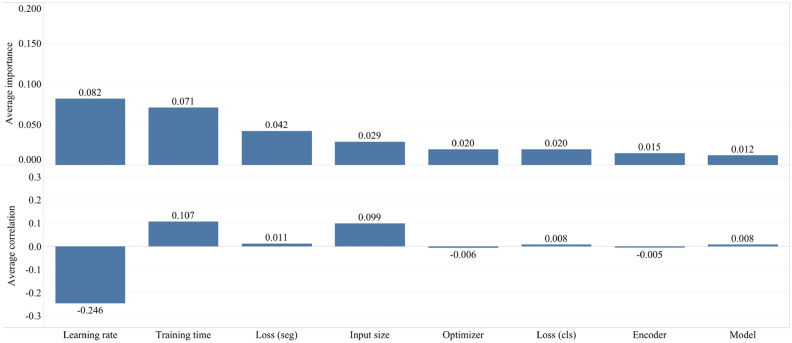
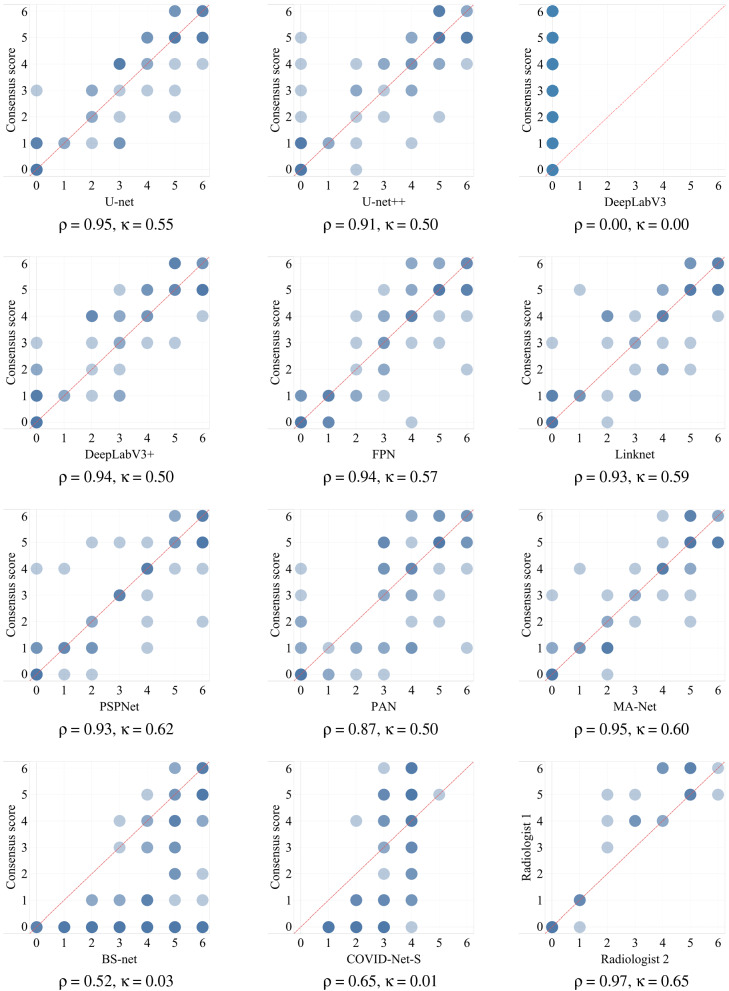
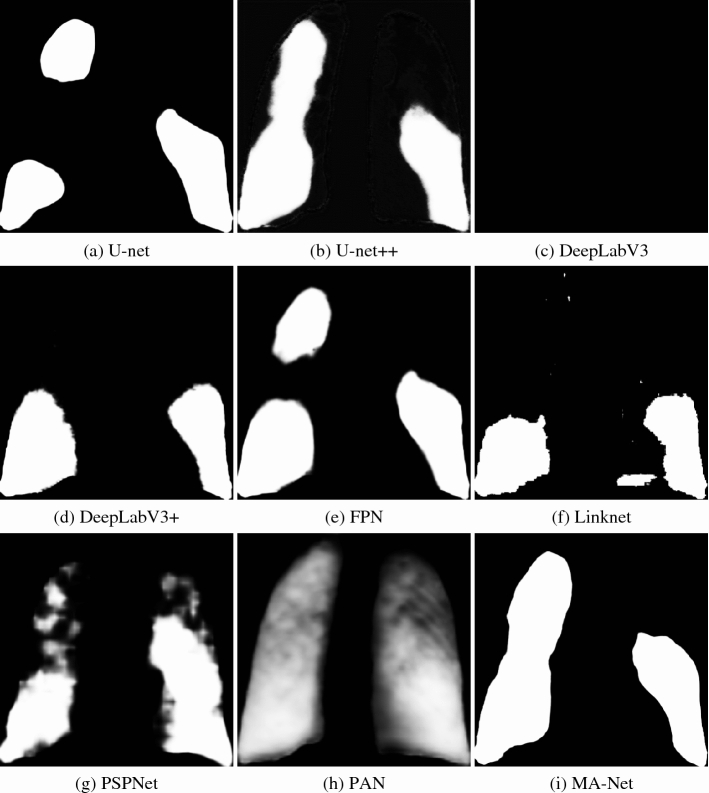
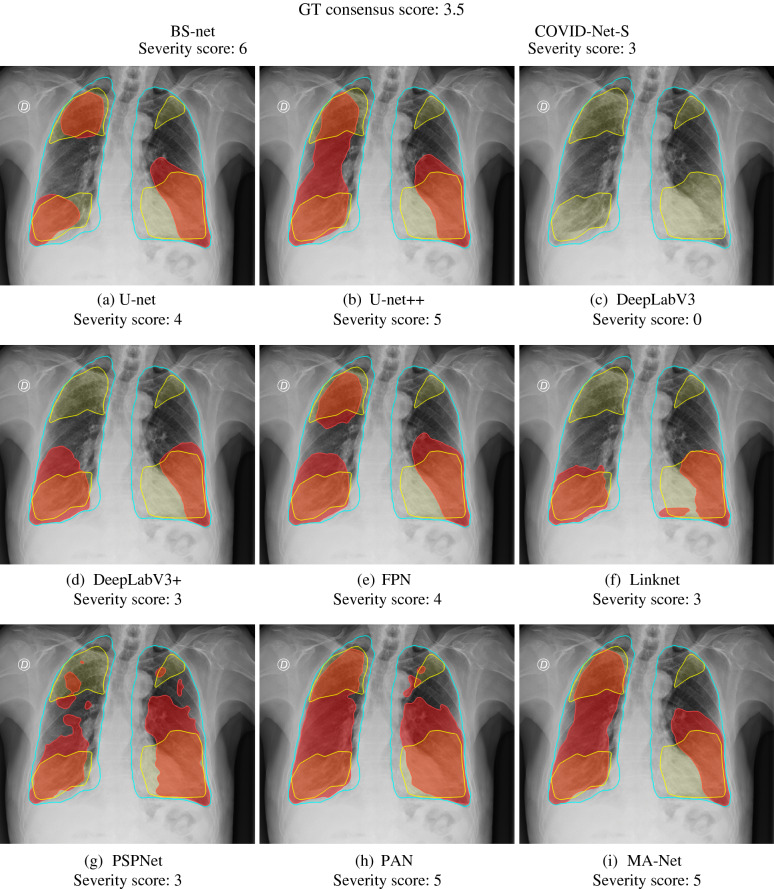
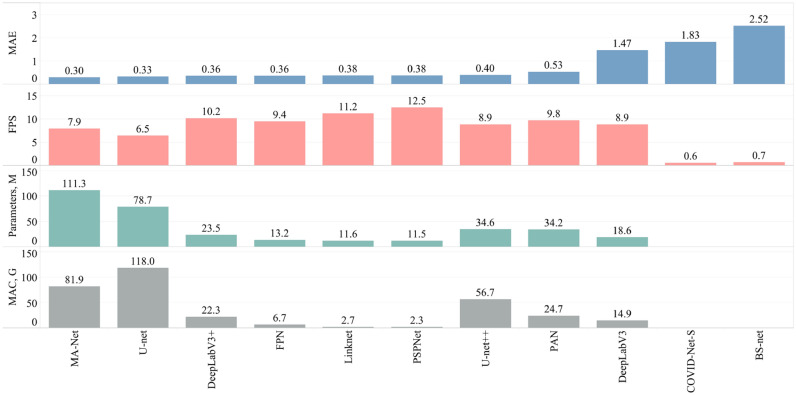
In this study, we propose a two-stage workflow used for the segmentation and scoring of lung diseases. The workflow inherits quantification, qualification, and visual assessment of lung diseases on X-ray images estimated by radiologists and clinicians. It requires the fulfillment of two core stages devoted to lung and disease segmentation as well as an additional post-processing stage devoted to scoring. The latter integrated block is utilized, mainly, for the estimation of segment scores and computes the overall severity score of a patient. The models of the proposed workflow were trained and tested on four publicly available X-ray datasets of COVID-19 patients and two X-ray datasets of patients with no pulmonary pathology. Based on a combined dataset consisting of 580 COVID-19 patients and 784 patients with no disorders, our best-performing algorithm is based on a combination of DeepLabV3 + , for lung segmentation, and MA-Net, for disease segmentation. The proposed algorithms' mean absolute error (MAE) of 0.30 is significantly reduced in comparison to established COVID-19 algorithms; BS-net and COVID-Net-S, possessing MAEs of 2.52 and 1.83 respectively. Moreover, the proposed two-stage workflow was not only more accurate but also computationally efficient, it was approximately 11 times faster than the mentioned methods. In summary, we proposed an accurate, time-efficient, and versatile approach for segmentation and scoring of lung diseases illustrated for COVID-19 and with broader future applications for pneumonia, tuberculosis, pneumothorax, amongst others.
在这项研究中,我们提出了一种两阶段工作流程,用于对肺部疾病进行分割和评分。该工作流程继承了放射科医生和临床医生对 X 光图像进行的肺部疾病的量化、定性和视觉评估。它需要完成两个核心阶段,分别用于肺部和疾病分割,以及一个额外的后处理阶段,用于评分。后者集成的模块主要用于估计分割分数,并计算患者的整体严重程度分数。所提出的工作流程模型在四个公开的 COVID-19 患者 X 射线数据集和两个无肺部病理患者 X 射线数据集上进行了训练和测试。基于一个包含 580 名 COVID-19 患者和 784 名无疾病患者的综合数据集,我们表现最好的算法是基于 DeepLabV3+的组合,用于肺部分割,和 MA-Net,用于疾病分割。与 COVID-19 算法相比,所提出算法的平均绝对误差(MAE)为 0.30,显著降低;BS-net 和 COVID-Net-S 的 MAE 分别为 2.52 和 1.83。此外,所提出的两阶段工作流程不仅更准确,而且计算效率更高,大约比上述方法快 11 倍。总之,我们提出了一种准确、高效、通用的肺部疾病分割和评分方法,用于 COVID-19,并且具有更广泛的未来应用,例如肺炎、肺结核、气胸等。