School of Health and Life Sciences, Glasgow Caledonian University, 70 Cowcaddens Road, Glasgow, Scotland, G4 0BA, UK.
Geriatric Medicine, Usher Institute, University of Edinburgh, 51 Little France Crescent, Edinburgh, Scotland, EH16 4SA, UK.
Sci Rep. 2022 Jul 29;12(1):13040. doi: 10.1038/s41598-022-17089-z.
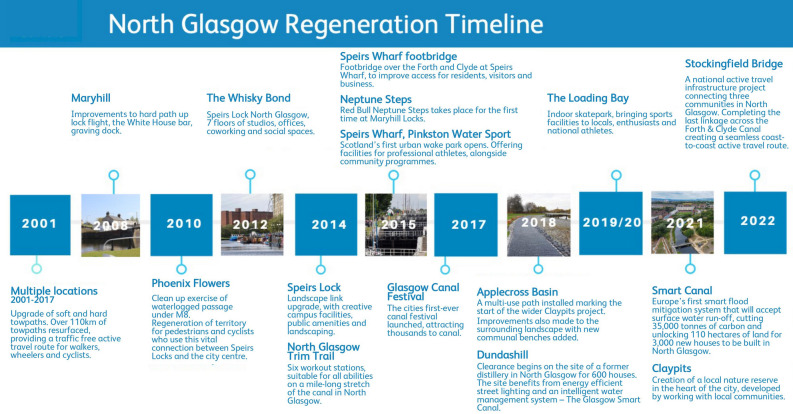
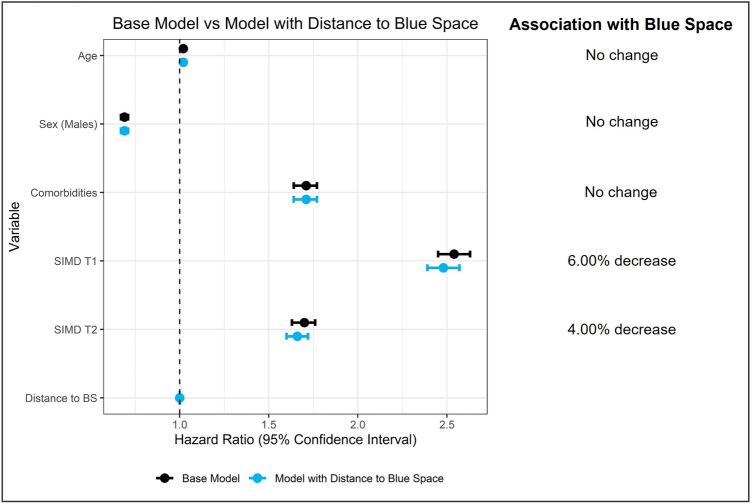
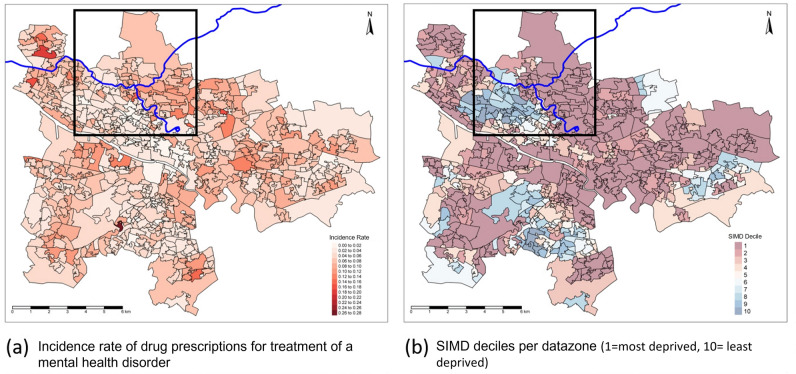
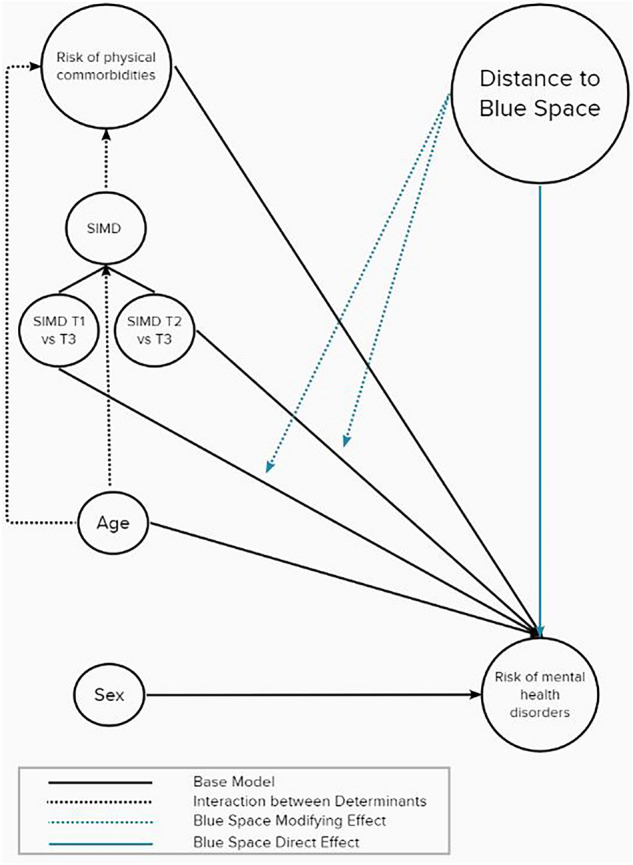
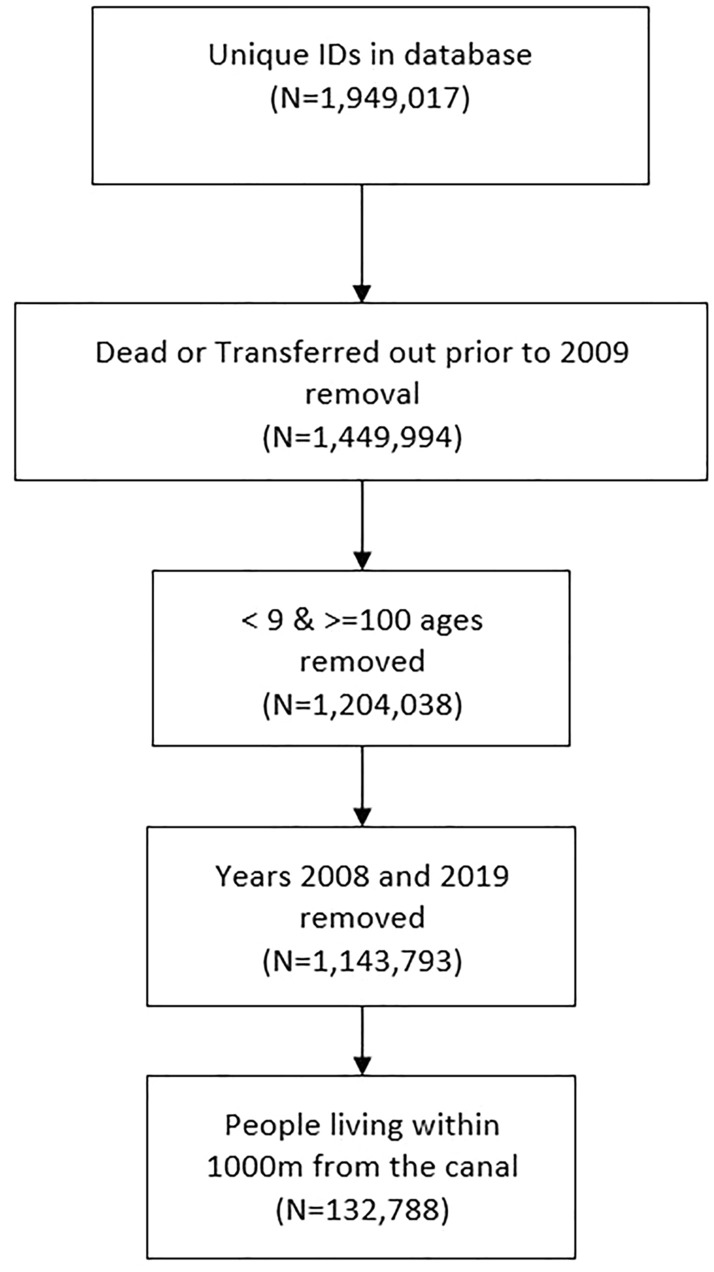
The incidence of mental health disorders in urban areas is increasing and there is a growing interest in using urban blue spaces (urban waterways, canals, lakes, ponds, coasts, etc.) as a tool to manage and mitigate mental health inequalities in the population. However, there is a dearth of longitudinal evidence of the mechanisms and impact of blue spaces on clinical markers of mental health to support and inform such interventions. We conducted a 10-year retrospective study, following STROBE guidelines, using routinely collected population primary care health data within the National Health Service (NHS) administrative area of Greater Glasgow and Clyde for the North of Glasgow city area. We explored whether living near blue space modifies the negative effect of socio-economic deprivation on mental health during the regeneration of an urban blue space (canal) from complete dereliction and closure. A total of 132,788 people (65,351 female) fulfilling the inclusion criteria were entered in the analysis. We established a base model estimating the effect of deprivation on the risk of mental health disorders using a Cox proportional hazards model, adjusted for age, sex and pre-existing comorbidities. We then investigated the modifying effect of living near blue space by computing a second model which included distance to blue space as an additional predicting variable and compared the results to the base model. Living near blue space modified the risk of mental health disorders deriving from socio-economic deprivation by 6% (hazard ratio 2.48, 95% confidence interval 2.39-2.57) for those living in the most deprived tertile (T1) and by 4% (hazard ratio 1.66, 95% confidence interval 1.60-1.72) for those in the medium deprivation tertile (T2). Our findings support the notion that living near blue space could play an important role in reducing the burden of mental health inequalities in urban populations.
城市地区心理健康障碍的发病率正在上升,人们越来越感兴趣地将城市蓝色空间(城市水道、运河、湖泊、池塘、海岸等)用作管理和减轻人口心理健康不平等的工具。然而,关于蓝色空间对心理健康临床指标的影响的机制和影响的纵向证据很少,无法支持和告知此类干预措施。我们按照 STROBE 指南进行了一项为期 10 年的回顾性研究,使用 NHS 行政区域内常规收集的人群初级保健健康数据 Greater Glasgow and Clyde 为格拉斯哥市北部地区。我们探讨了在城市蓝色空间(运河)从完全废弃和关闭中进行再生时,居住在蓝色空间附近是否会改变社会经济剥夺对心理健康的负面影响。共有 132788 人(65351 名女性)符合纳入标准被纳入分析。我们建立了一个基本模型,使用 Cox 比例风险模型估计剥夺对心理健康障碍风险的影响,调整了年龄、性别和预先存在的合并症。然后,我们通过计算第二个模型来研究居住在蓝色空间附近的调节作用,该模型将蓝色空间的距离作为附加预测变量,并将结果与基本模型进行比较。居住在蓝色空间附近可以改变社会经济剥夺导致心理健康障碍的风险,对于居住在最贫困三分位数(T1)的人来说,风险增加了 6%(风险比 2.48,95%置信区间 2.39-2.57),对于居住在中等贫困三分位数(T2)的人来说,风险增加了 4%(风险比 1.66,95%置信区间 1.60-1.72)。我们的研究结果支持了这样一种观点,即居住在蓝色空间附近可能在减轻城市人口心理健康不平等负担方面发挥重要作用。