Laboratory of Virology, Division of Intramural Research, National Institute of Allergy and Infectious Diseases, National Institutes of Health, Rocky Mountain Laboratories, Hamilton, MT 59840, USA.
Research Technologies Branch, Division of Intramural Research, National Institutes of Allergy and Infectious Diseases, National Institutes of Health, Rocky Mountain Laboratories, Hamilton, MT, USA.
EBioMedicine. 2022 Aug;82:104188. doi: 10.1016/j.ebiom.2022.104188. Epub 2022 Jul 27.
Crimean-Congo hemorrhagic fever virus is the cause of a severe hemorrhagic fever with cases reported throughout a wide-geographic region. Spread by the bite of infected ticks, contact with infected livestock or in the health care setting, disease begins as a non-specific febrile illness that can rapidly progress to hemorrhagic manifestations. Currently, there are no approved vaccines and antivirals such as ribavirin have unclear efficacy. Thus treatment is mostly limited to supportive care.
In this report we evaluated an alphavirus-based replicon RNA vaccine expressing either the CCHFV nucleoprotein or glycoprotein precursor in a stringent, heterologous lethal challenge mouse model.
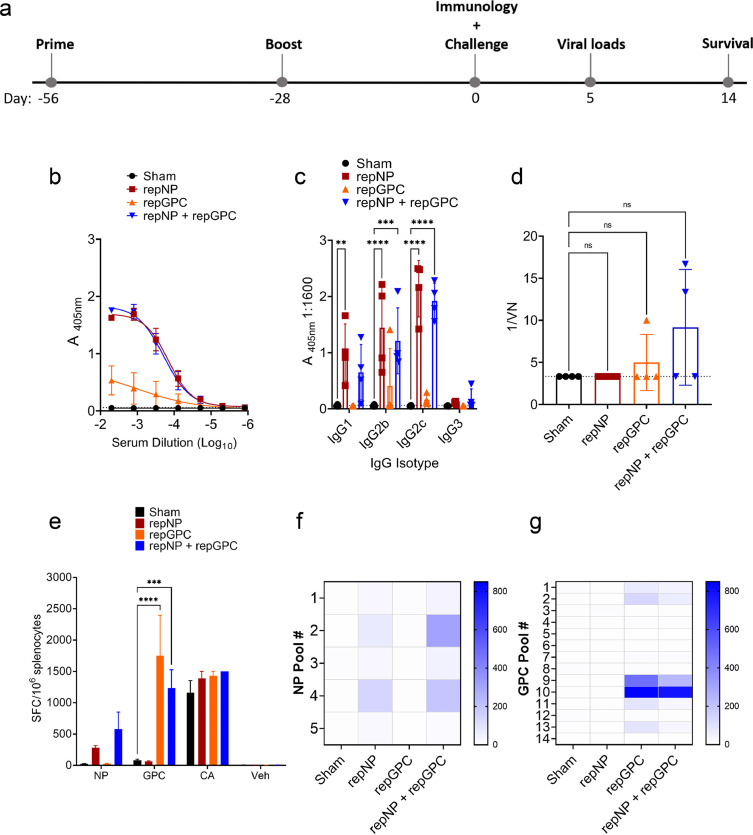
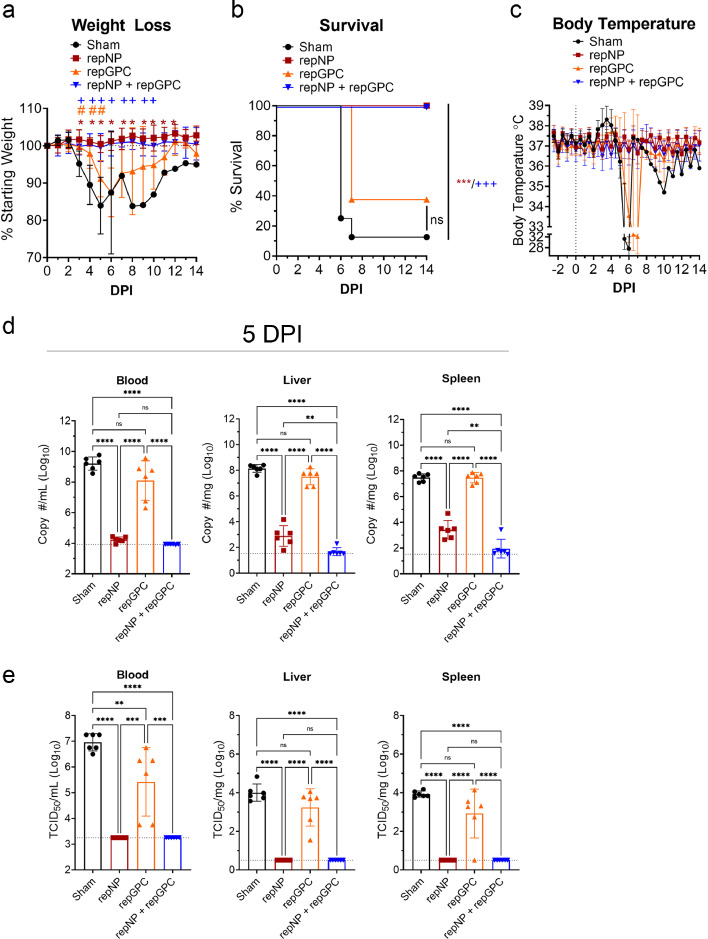
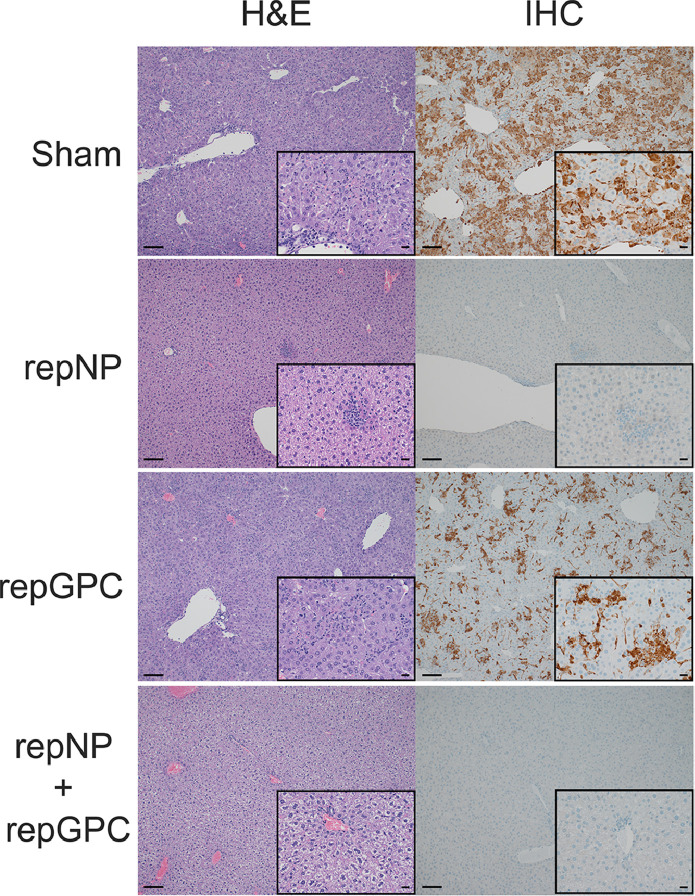
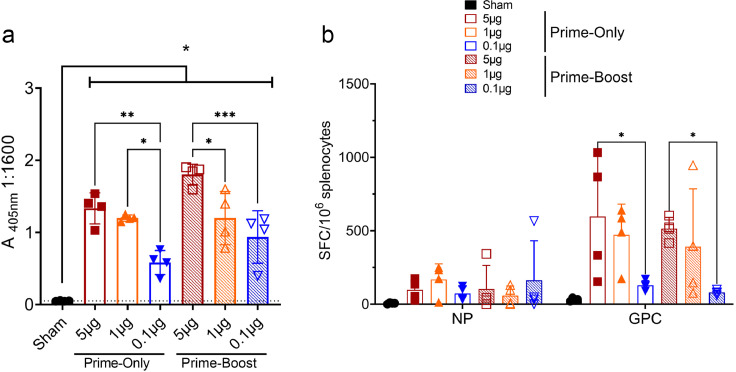
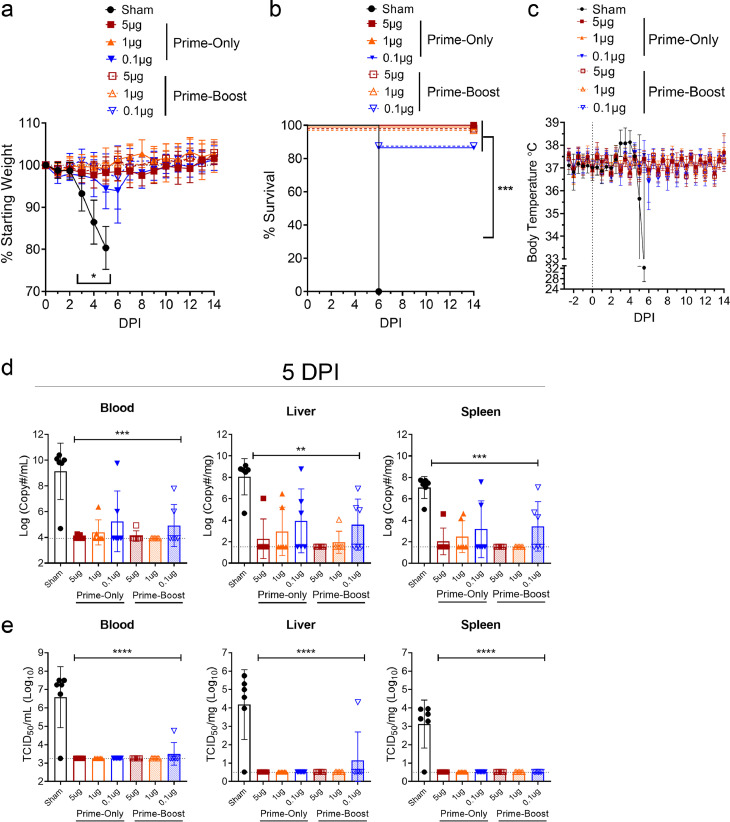
Vaccination with the RNA expressing the nucleoprotein alone could confer complete protection against clinical disease, but vaccination with a combination of both the nucleoprotein and glycoprotein precursor afforded robust protection against disease and viral replication. Protection from lethal challenge required as little as a single immunization with 100ng of RNA. Unexpectedly, analysis of the immune responses elicited by the vaccine components showed that vaccination resulted in antibodies against the internal viral nucleoprotein and cellular immunity against the virion-exposed glycoproteins.
Cumulatively this vaccine conferred robust protection against Crimean-Congo hemorrhagic fever virus and supports continued development of this vaccine candidate.
This research was supported by the Intramural Research Program of the NIAID/NIH and HDT Bio.
克里米亚-刚果出血热病毒是一种严重出血热的病原体,其病例报告分布在广泛的地理区域。该病毒通过受感染的蜱虫叮咬、接触受感染的牲畜或在医疗保健环境中传播,疾病开始表现为非特异性发热疾病,随后迅速发展为出血性表现。目前,尚无批准的疫苗,而利巴韦林等抗病毒药物的疗效尚不明确。因此,治疗主要限于支持性护理。
在本报告中,我们在严格的、异源致死性挑战小鼠模型中评估了一种基于甲病毒的复制子 RNA 疫苗,该疫苗表达克里米亚-刚果出血热病毒的核蛋白或糖蛋白前体。
单独接种表达核蛋白的 RNA 可完全预防临床疾病,但接种核蛋白和糖蛋白前体的组合可提供针对疾病和病毒复制的强大保护。只需用 100ng RNA 进行单次免疫,即可提供对致死性挑战的保护。出乎意料的是,对疫苗成分引起的免疫反应的分析表明,接种疫苗会产生针对病毒内部核蛋白的抗体和针对病毒衣壳暴露糖蛋白的细胞免疫。
该疫苗可对克里米亚-刚果出血热病毒提供强大的保护,并支持该疫苗候选物的持续开发。
这项研究得到了 NIAID/NIH 和 HDT Bio 的内部研究计划的支持。