Pais Daniel Francisco, Marques António Cardoso, Fuinhas José Alberto
Management and Economics Department, NECE-UBI, University of Beira Interior, Rua Marquês d'Ávila e Bolama, 6201-001 Covilhã, Portugal.
NECE-UBI, CeBER and Faculty of Economics, University of Coimbra, Av. Dr. Dias da Silva 165, 3004-512 Coimbra, Portugal.
Agric Food Econ. 2022;10(1):18. doi: 10.1186/s40100-022-00224-9. Epub 2022 Jul 26.
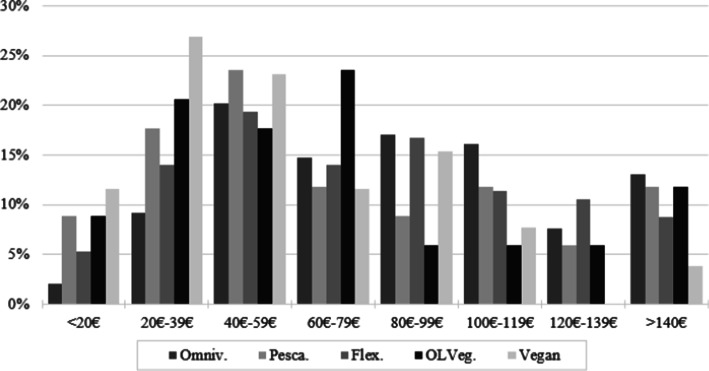
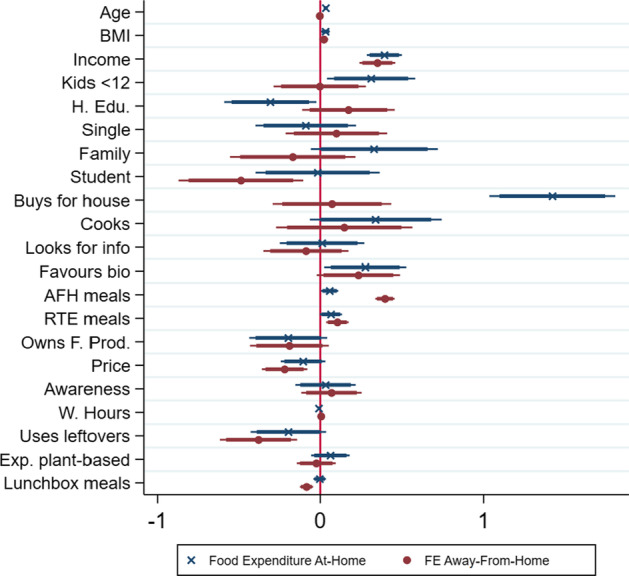
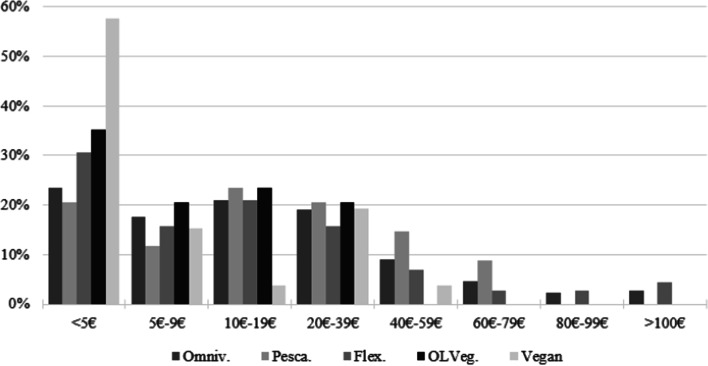
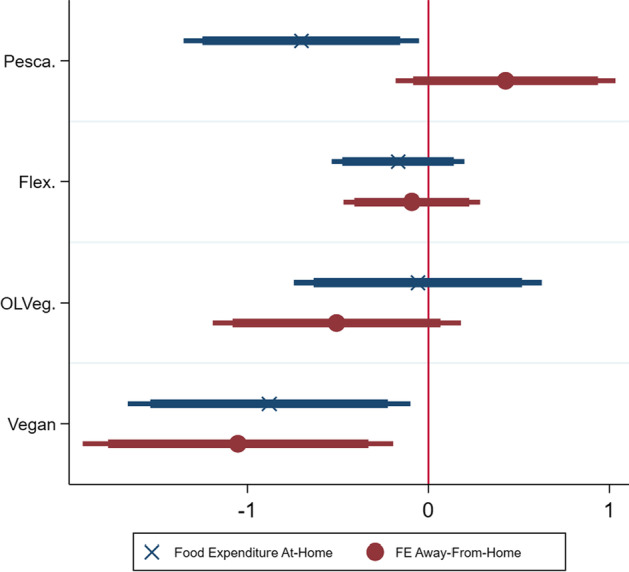
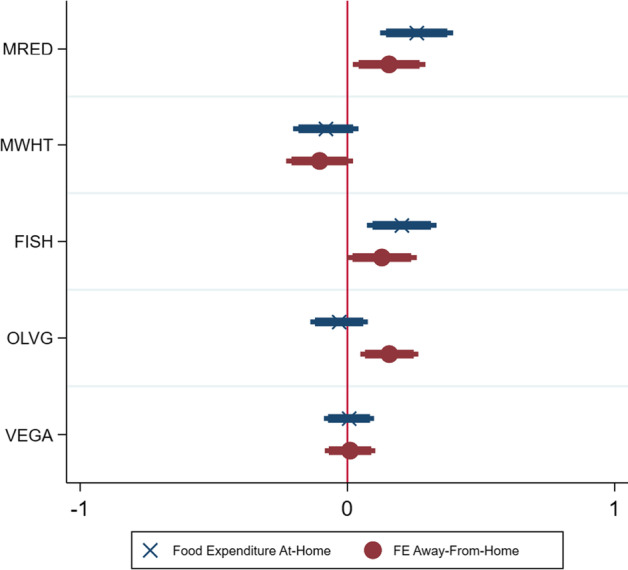
Plant-based diets are often promoted as healthier and more sustainable and thus as a mechanism to achieve the targets proposed to mitigate climate change and noncommunicable diseases. However, plant-based diets can be perceived as more expensive than the common omnivorous diets, when considering the expensive novel meat substitutes and also the higher costs of fruits and vegetables, whose consumption is perceived to increase. Therefore, the present study assesses the question: Do plant-based consumers spend more on food compared to omnivorous consumers? Based on primary data ( = 1040) collected through an online survey, representative of the Portuguese population, through logistic regressions, it was possible to conclude that plant-based consumers, particularly vegan, are associated with lower food expenditures compared to omnivorous consumers. In fact, plant-based consumers are shown to spend less than all other consumers assessed. Food policies aligning healthiness and sustainability with affordability can deliver a major boost for the promotion of plant-based diets and help achieve the mitigation targets proposed.
植物性饮食通常被宣传为更健康、更具可持续性,因此被视为实现为缓解气候变化和非传染性疾病而提出的目标的一种机制。然而,考虑到昂贵的新型肉类替代品以及水果和蔬菜的较高成本(人们认为其消费量会增加),植物性饮食可能被认为比常见的杂食性饮食更昂贵。因此,本研究评估了这样一个问题:与杂食性消费者相比,植物性饮食消费者在食品上的花费更多吗?基于通过在线调查收集的代表葡萄牙人口的原始数据(n = 1040),通过逻辑回归分析,可以得出结论:与杂食性消费者相比,植物性饮食消费者,尤其是纯素食者,食品支出较低。事实上,植物性饮食消费者的支出低于所有其他被评估的消费者。将健康、可持续性与可承受性相结合的食品政策可以极大地推动植物性饮食的推广,并有助于实现提出的缓解目标。