Wu Shu, Yang Kun, Hong Yuhang, Gong Yanju, Ni Jiajia, Yang Ni, Ding Weijun
School of Basic Medical Sciences, Chengdu University of Traditional Chinese Medicine, Chengdu, China.
Key Laboratory of Application of Ecology and Environmental Protection in Plateau Wetland of Sichuan, Xichang University, Xichang, China.
Front Microbiol. 2022 Jul 13;13:917414. doi: 10.3389/fmicb.2022.917414. eCollection 2022.
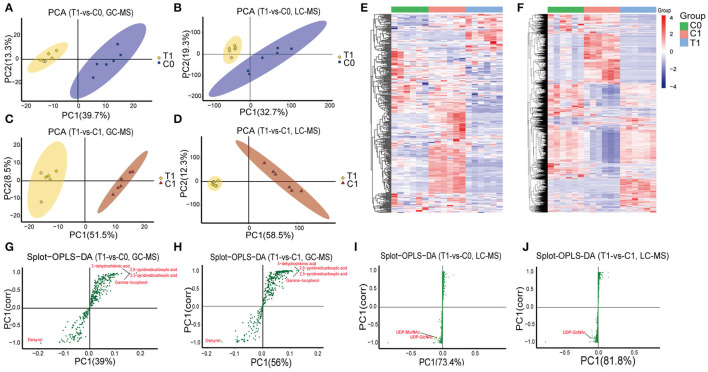
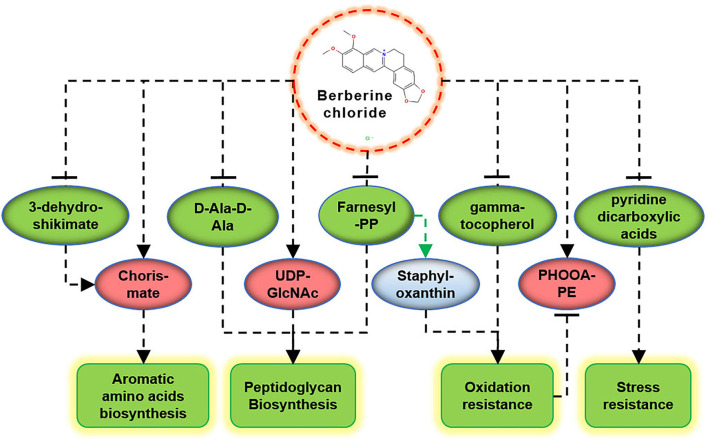
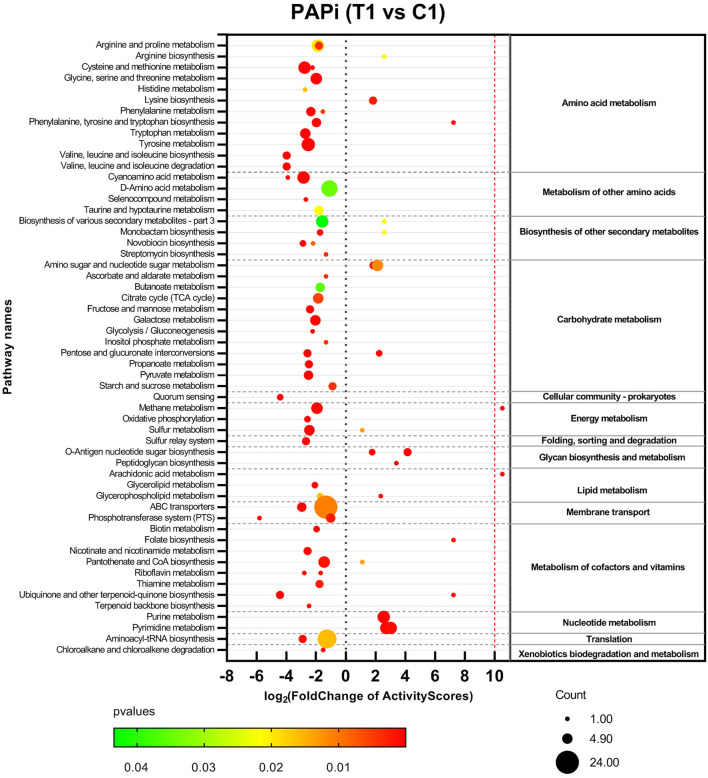
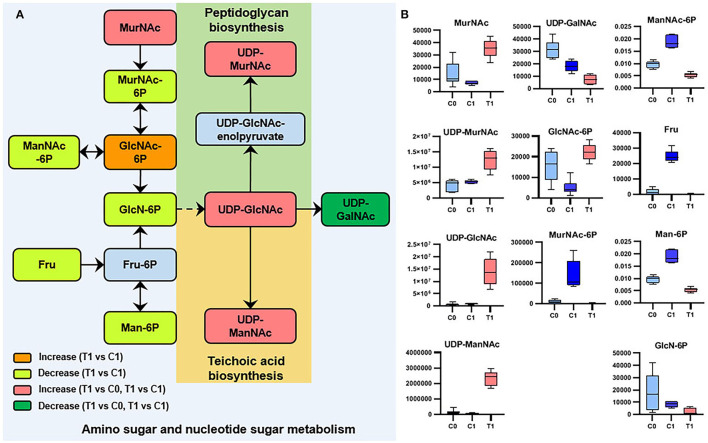
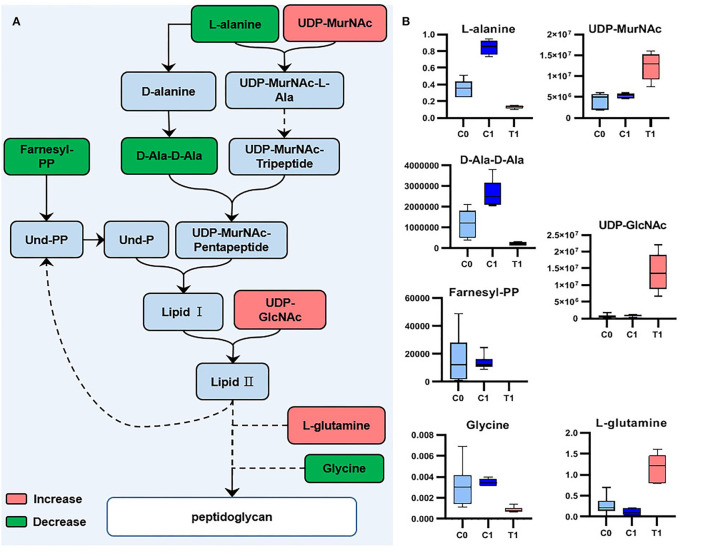
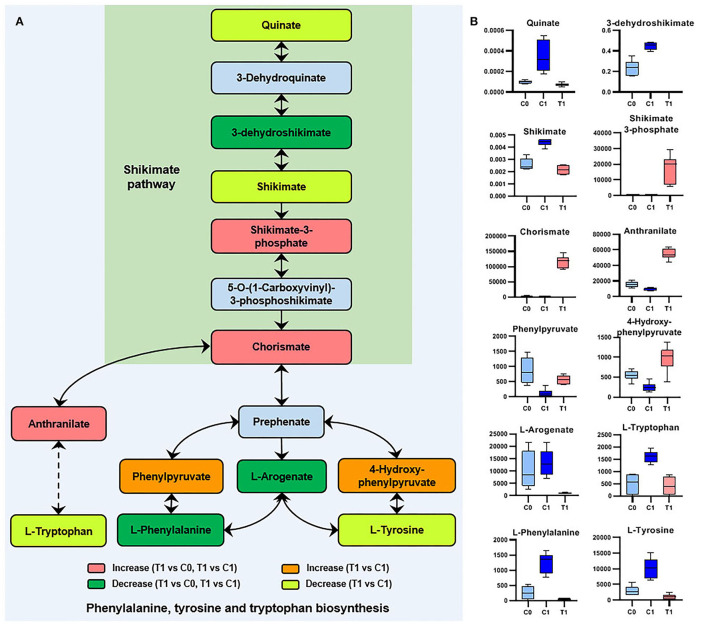
Berberine hydrochloride (BBR) is a natural product widely used in clinical medicine and animal production. It has a variety of antimicrobial effects, but its complex antimicrobial mechanism has not been clarified. This study aimed to discover the metabolic markers and gain a new perspective on the antibacterial mechanism of BBR. The effects of different inhibitory concentrations of BBR on the survival and growth of standard strain ATCC 25923 were analyzed by the bacteriostatic activity test. Differences in intracellular metabolites of following 19 μg/ml BBR exposure for 1 h were investigated by combining non-targeted metabolomics techniques of gas chromatography-mass spectrometry (GC-MS) and liquid chromatography-mass spectrometry (LC-MS). The results showed that the minimum inhibitory concentration of BBR against was 51 μg/ml. A total of 368 and 3,454 putative metabolites were identified by GC-MS and LC-MS analyses, respectively. Principal component analysis showed the separation of intracellular metabolite profiles between BBR-exposed samples and non-exposed controls. Pathway activity profiling analysis indicated a global inhibition of metabolisms by BBR exposure, while enhancement was also found in nucleic acid metabolism, amino sugar, and nucleotide sugar metabolism. Several metabolic markers were screened out mainly based on their variable importance of projection values. Two pyridine dicarboxylic acids were significantly downregulated, suggesting the reduction of stress resistance. The oxidized phospholipid (PHOOA-PE) was accumulated, while lipid antioxidant gamma-tocopherol was decreased, and farnesyl PP, the synthetic precursor of another antioxidant (staphyloxanthin), was decreased below the detection threshold. This evidence indicates that BBR reduced the antioxidant capacity of . Accumulation of the precursors (UDP-GlcNAc, CDP-ribitol, and CDP-glycerol) and downregulation of the key metabolite D-Ala-D-Ala suggest the inhibition of cell wall synthesis, especially the peptidoglycan synthesis. Metabolites involved in the shikimate pathway (such as 3-dehydroshikimate) and downstream aromatic amino acid synthesis were disturbed. This study provides the first metabolomics information on the antibacterial mechanism of BBR against . The key metabolic markers screened in this study suggest that the shikimate pathway, staphyloxanthin synthesis, and peptidoglycan biosynthesis are new directions for further study of BBR antibacterial mechanism in the future.
盐酸小檗碱(BBR)是一种广泛应用于临床医学和动物生产的天然产物。它具有多种抗菌作用,但其复杂的抗菌机制尚未阐明。本研究旨在发现代谢标志物,并对BBR的抗菌机制获得新的认识。通过抑菌活性试验分析了不同抑制浓度的BBR对标准菌株ATCC 25923存活和生长的影响。结合气相色谱 - 质谱联用(GC-MS)和液相色谱 - 质谱联用(LC-MS)的非靶向代谢组学技术,研究了19μg/ml BBR作用1小时后细胞内代谢物的差异。结果表明,BBR对该菌的最低抑菌浓度为51μg/ml。通过GC-MS和LC-MS分析分别鉴定出368种和3454种假定代谢物。主成分分析显示,BBR处理样品与未处理对照之间细胞内代谢物谱存在分离。通路活性谱分析表明,BBR处理会对代谢产生全面抑制,同时在核酸代谢、氨基糖和核苷酸糖代谢方面也有增强。主要基于投影值的变量重要性筛选出了几种代谢标志物。两种吡啶二羧酸显著下调,表明抗逆性降低。氧化磷脂(PHOOA-PE)积累,而脂质抗氧化剂γ-生育酚减少,另一种抗氧化剂(葡萄球菌黄素)的合成前体法尼基焦磷酸减少至检测阈值以下。这一证据表明BBR降低了该菌的抗氧化能力。前体物质(UDP-GlcNAc、CDP-核糖醇和CDP-甘油)的积累以及关键代谢物D-Ala-D-Ala的下调表明细胞壁合成受到抑制,尤其是肽聚糖合成。参与莽草酸途径(如3-脱氢莽草酸)和下游芳香族氨基酸合成的代谢物受到干扰。本研究提供了关于BBR对该菌抗菌机制的首个代谢组学信息。本研究筛选出的关键代谢标志物表明,莽草酸途径、葡萄球菌黄素合成和肽聚糖生物合成是未来进一步研究BBR抗菌机制的新方向。