Fuloria Shivkanya, Mehta Jyoti, Talukdar Manash Pratim, Sekar Mahendran, Gan Siew Hua, Subramaniyan Vetriselvan, Rani Nur Najihah Izzati Mat, Begum M Yasmin, Chidambaram Kumarappan, Nordin Rusli, Maziz Mohammad Nazmul Hasan, Sathasivam Kathiresan V, Lum Pei Teng, Fuloria Neeraj Kumar
Faculty of Pharmacy, AIMST University, Bedong, Malaysia.
Department of Applied Sciences and Biotechnology, Shoolini University, Solan, India.
Front Microbiol. 2022 Jul 13;13:950913. doi: 10.3389/fmicb.2022.950913. eCollection 2022.
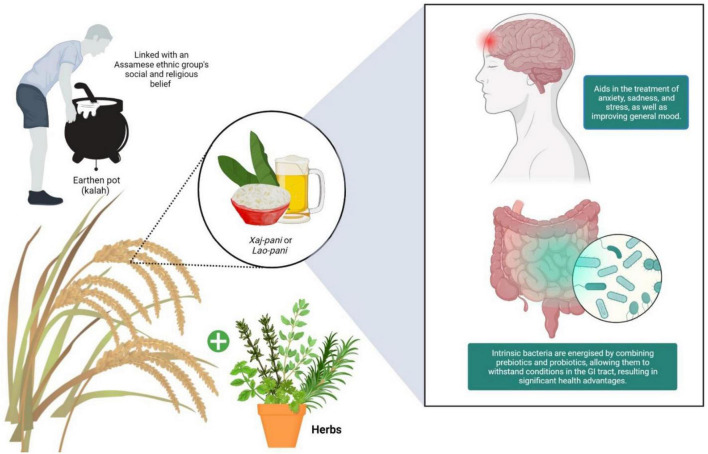
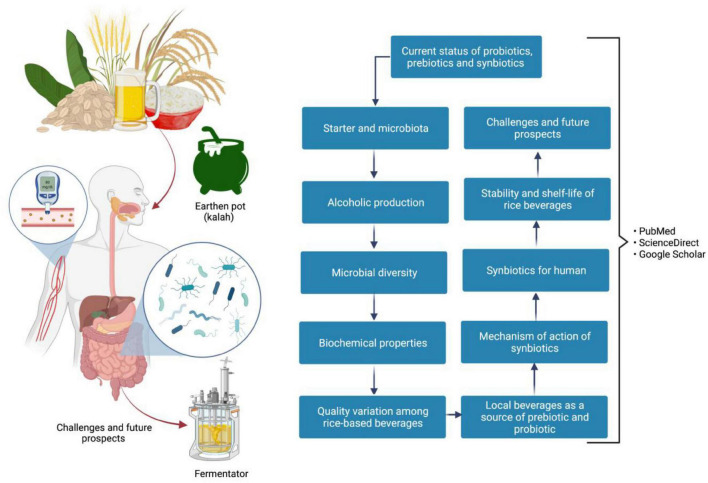
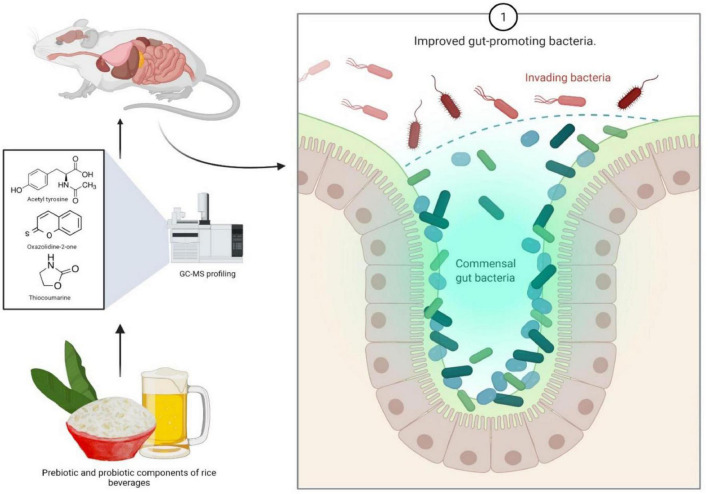
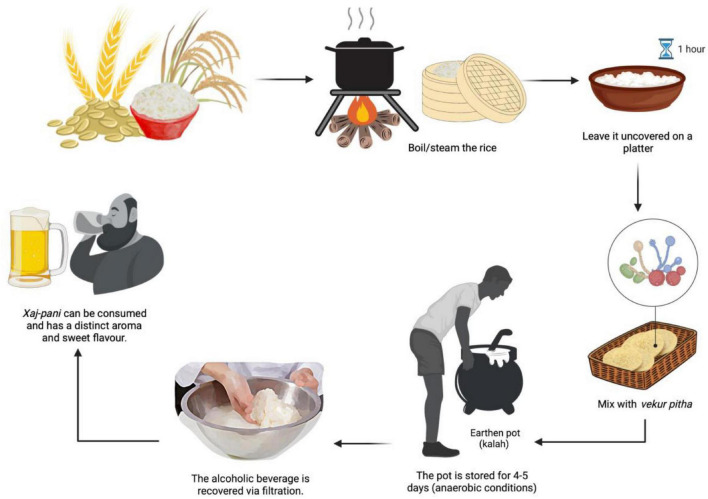
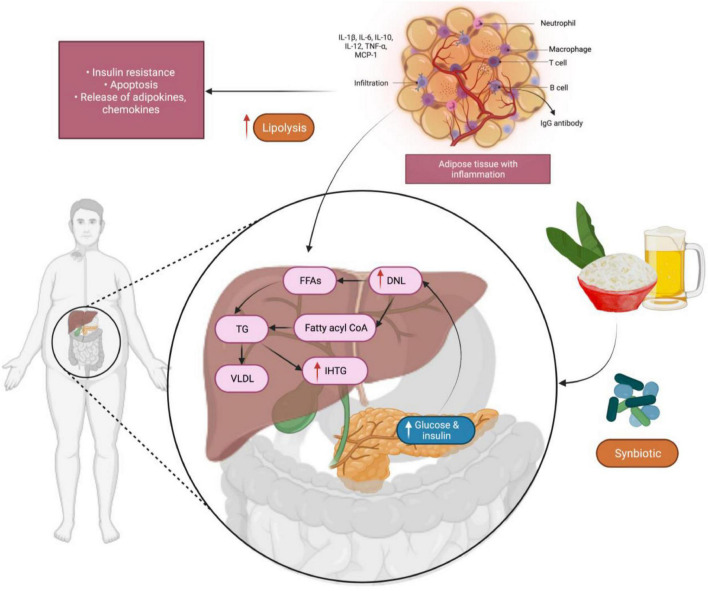
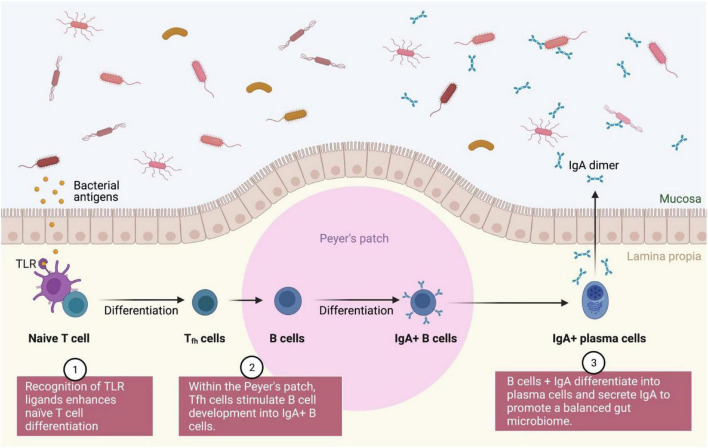
Fermented foods have been an important component of the human diet from the time immemorial. It contains a high amount of probiotics that have been associated to a wide range of health benefits, including improved digestion and immunity. This review focuses on the indigenously prepared prebiotic- and probiotic-containing functional fermented rice (named ) by the Ahom Community from Assam, in Northeast India, including all the beneficial and potential effects on human health. Literature was searched from scientific databases such as PubMed, ScienceDirect and Google Scholar. Glutinous rice (commonly known as bora rice of sali variety) is primarily employed to prepare beverages that are recovered through the filtration process. The beer is normally consumed during religious rites, festivals and ritual practices, as well as being used as a refreshing healthy drink. Traditionally, it is prepared by incorporating a variety of medicinal herbs into their starter culture () inoculum which is rich in yeasts, molds and lactic acid bacteria (LAB) and then incorporated in alcoholic beverage fermentation. The Ahom communities routinely consume this traditionally prepared alcoholic drink with no understanding of its quality and shelf life. Additionally, a finally produced dried cake, known as act as a source of and can be stored for future use. Despite the rampant use in this community, the relationship between 's consumption, immunological response, infectious and inflammatory processes remains unknown in the presence of factors unrelated or indirectly connected to immune function. Overall, this review provides the guidelines to promote the development of prebiotic- and probiotic-containing functional fermented rice that could significantly have an impact on the health of the consumers.
自古以来,发酵食品一直是人类饮食的重要组成部分。它含有大量益生菌,这些益生菌与广泛的健康益处相关联,包括改善消化和增强免疫力。本综述聚焦于印度东北部阿萨姆邦阿洪族社区自制的含益生元和益生菌的功能性发酵米(名为 ),包括其对人类健康的所有有益和潜在影响。从科学数据库如PubMed、ScienceDirect和谷歌学术搜索文献。糯米(通常称为萨利品种的博拉米)主要用于制备通过过滤过程回收的饮料。这种啤酒通常在宗教仪式、节日和祭祀活动中饮用,也用作提神的健康饮品。传统上,它是通过将多种草药加入富含酵母、霉菌和乳酸菌(LAB)的发酵剂接种物中,然后用于酒精饮料发酵来制备的。阿洪族社区经常饮用这种传统制备的酒精饮料,却不了解其质量和保质期。此外,最终制成的干饼,称为 ,可作为 的来源并可储存以备将来使用。尽管在这个社区中广泛使用,但在与免疫功能无关或间接相关的因素存在的情况下, 的消费与免疫反应、感染和炎症过程之间的关系仍然未知。总体而言,本综述提供了促进含益生元和益生菌的功能性发酵米发展的指导方针,这可能会对消费者的健康产生重大影响。