Department of Computational Medicine and Bioinformatics, University of Michigan, Ann Arbor, USA.
Department of Neurosurgery, University of Michigan, Ann Arbor, USA.
BMC Med Inform Decis Mak. 2022 Aug 1;22(1):203. doi: 10.1186/s12911-022-01953-z.
Traumatic Brain Injury (TBI) is a common condition with potentially severe long-term complications, the prediction of which remains challenging. Machine learning (ML) methods have been used previously to help physicians predict long-term outcomes of TBI so that appropriate treatment plans can be adopted. However, many ML techniques are "black box": it is difficult for humans to understand the decisions made by the model, with post-hoc explanations only identifying isolated relevant factors rather than combinations of factors. Moreover, such models often rely on many variables, some of which might not be available at the time of hospitalization.
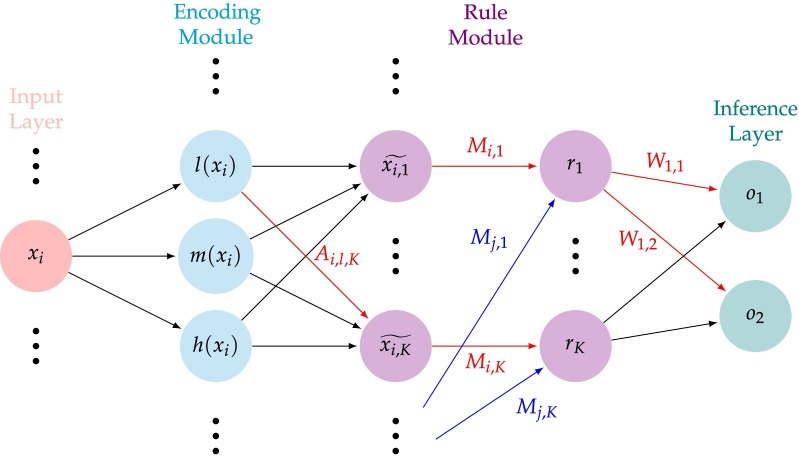
In this study, we apply an interpretable neural network model based on tropical geometry to predict unfavorable outcomes at six months from hospitalization in TBI patients, based on information available at the time of admission.
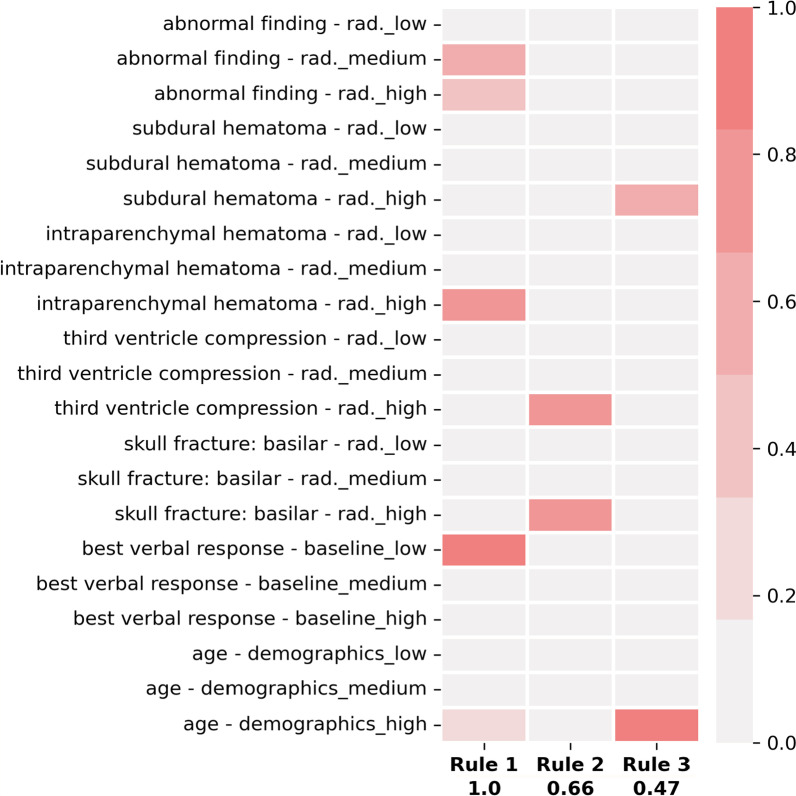
The proposed method is compared to established machine learning methods-XGBoost, Random Forest, and SVM-achieving comparable performance in terms of area under the receiver operating characteristic curve (AUC)-0.799 for the proposed method vs. 0.810 for the best black box model. Moreover, the proposed method allows for the extraction of simple, human-understandable rules that explain the model's predictions and can be used as general guidelines by clinicians to inform treatment decisions.
The classification results for the proposed model are comparable with those of traditional ML methods. However, our model is interpretable, and it allows the extraction of intelligible rules. These rules can be used to determine relevant factors in assessing TBI outcomes and can be used in situations when not all necessary factors are known to inform the full model's decision.
创伤性脑损伤(TBI)是一种常见的疾病,可能会产生严重的长期并发症,其预测仍然具有挑战性。机器学习(ML)方法以前曾被用于帮助医生预测 TBI 的长期结果,以便采用适当的治疗计划。然而,许多 ML 技术是“黑盒”:人类很难理解模型做出的决策,事后解释只能识别孤立的相关因素,而不是因素组合。此外,此类模型通常依赖于许多变量,其中一些在住院时可能不可用。
在这项研究中,我们应用了一种基于热带几何的可解释神经网络模型,根据 TBI 患者住院时的可用信息,预测六个月时的不良结局。
所提出的方法与已建立的机器学习方法(XGBoost、随机森林和 SVM)进行了比较,在接收器工作特征曲线(AUC)下的面积方面表现相当(提出的方法为 0.799,最佳黑盒模型为 0.810)。此外,所提出的方法允许提取简单的、人类可理解的规则,解释模型的预测,并可作为临床医生的一般指导原则,为治疗决策提供信息。
所提出模型的分类结果与传统 ML 方法相当。然而,我们的模型是可解释的,它允许提取可理解的规则。这些规则可用于确定评估 TBI 结果的相关因素,并可用于在不知道所有必要因素的情况下告知完整模型决策的情况下使用。