Mussio Irene, de Oliveira Angela C M
Newcastle University Business School (Economics), 5 Barrack Road, Newcastle upon Tyne, NE1 4SE, UK.
Department of Resource Economics, University of Massachusetts, 203 Stockbridge Hall, 80 Campus Center Way, Amherst, MA, 01003, USA.
Health Econ Rev. 2022 Aug 2;12(1):41. doi: 10.1186/s13561-022-00385-9.
Influenza seasons can be unpredictable and have the potential to rapidly affect populations, especially in crowded areas. Prior research suggests that normative messaging can be used to increase voluntary provision of public goods, such as the influenza vaccine. We extend the literature by examining the influence of normative messaging on the decision to get vaccinated against influenza.
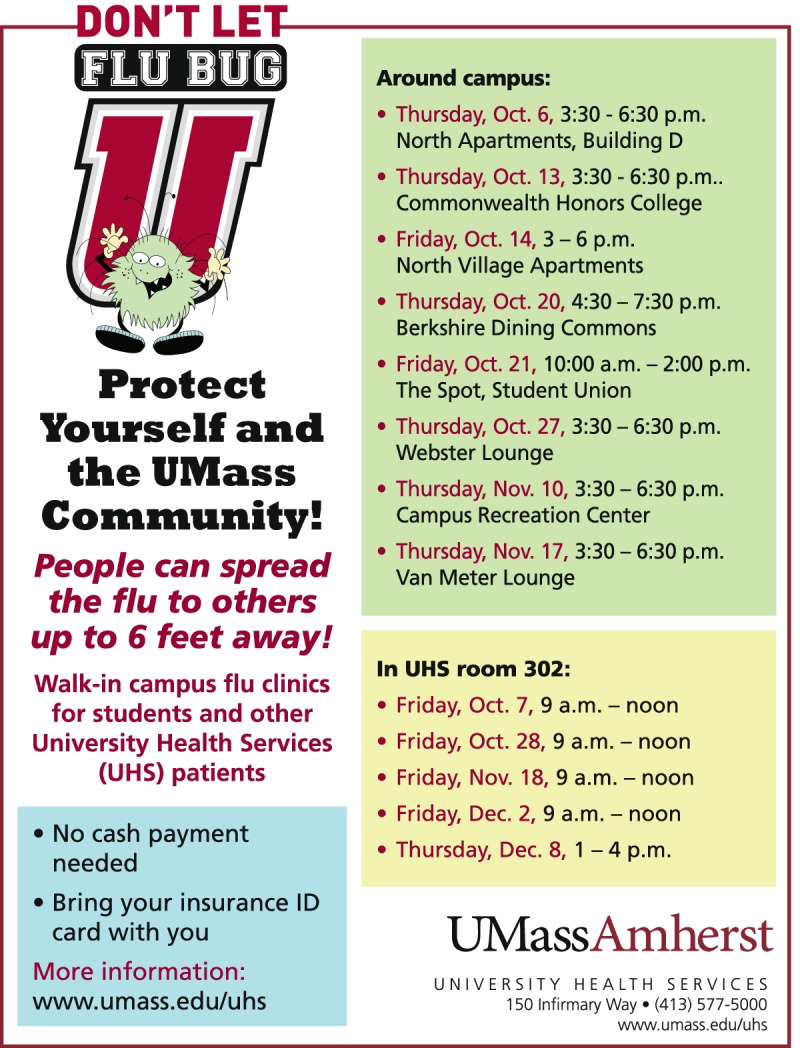
We conduct a field experiment in conjunction with University Health Services, targeting undergraduate students living on campus. We use four posters, randomized by living area clusters to advertise flu vaccination clinics during the Fall. The wording on the posters is varied to emphasize the individual benefits of the vaccine, the social benefits of the vaccine or both benefits together. We collect survey data for those vaccinated at the vaccination clinics, and for those not vaccinated via an online survey.
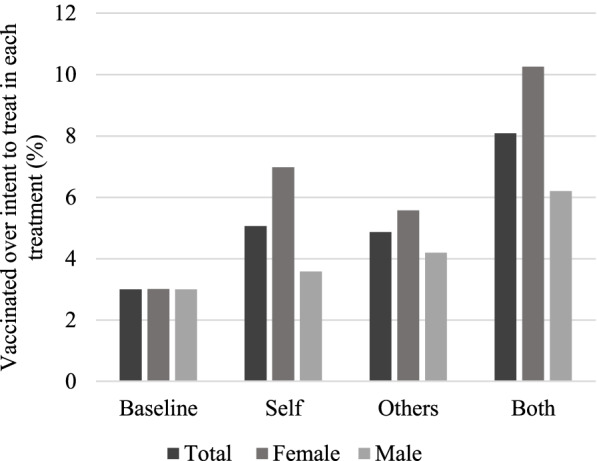
We find that any normative message increases the percentage of students getting the flu vaccine compared with no message. In terms of the likelihood of getting the flu vaccine, emphasizing both the individual and social benefits of vaccination has the largest increase in the vaccination rate (19-20 percentage point increase). However, flu vaccinations did not reach the herd immunity threshold (70% of students vaccinated).
This study provides evidence that there is a pro-social component that is relevant in individual vaccination decisions which should be accounted for when designing vaccination campaigns. The results of this normative, pro-social messaging experiment could be extended to other at-risk communities where the number of background risks is much larger. This is especially relevant nowadays, as other seasonal vaccines are being rolled out and younger adults are the ones with the lowest uptake.
流感季节难以预测,有可能迅速影响人群,尤其是在人口密集地区。先前的研究表明,规范性信息可用于增加诸如流感疫苗等公共物品的自愿提供。我们通过研究规范性信息对流感疫苗接种决策的影响来扩展这一文献。
我们与大学健康服务中心联合开展了一项实地实验,目标是住在校园里的本科生。我们使用四张海报,按居住区域集群随机分配,在秋季宣传流感疫苗接种诊所。海报上的文字有所不同,以强调疫苗的个人益处、疫苗的社会效益或两者的益处。我们收集了在疫苗接种诊所接种疫苗的人的调查数据,以及通过在线调查收集未接种疫苗的人的数据。
我们发现,与不传达信息相比,任何规范性信息都会提高接种流感疫苗的学生比例。就接种流感疫苗的可能性而言,强调接种疫苗的个人和社会效益使接种率提高幅度最大(提高19 - 20个百分点)。然而,流感疫苗接种率未达到群体免疫阈值(70%的学生接种)。
本研究提供了证据,表明在个体疫苗接种决策中存在一个与亲社会相关的因素,在设计疫苗接种活动时应予以考虑。这种规范性亲社会信息传递实验的结果可以推广到背景风险数量大得多的其他高危社区。如今这一点尤其相关,因为其他季节性疫苗正在推出,而年轻人的接种率最低。