Department of Geriatric and Emergency Medicine, The First Affiliated Hospital, School of Medicine, Zhejiang University, Hangzhou, China.
The Key Laboratory for Diagnosis and Treatment of Aging and Physic-chemical Injury Diseases of Zhejiang Province, Hangzhou, China.
Front Immunol. 2022 Jul 18;13:917293. doi: 10.3389/fimmu.2022.917293. eCollection 2022.
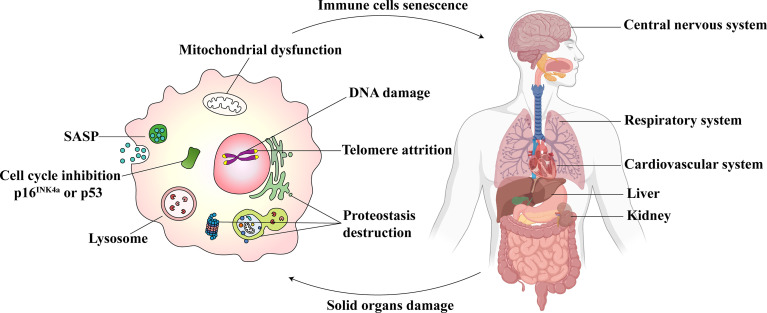
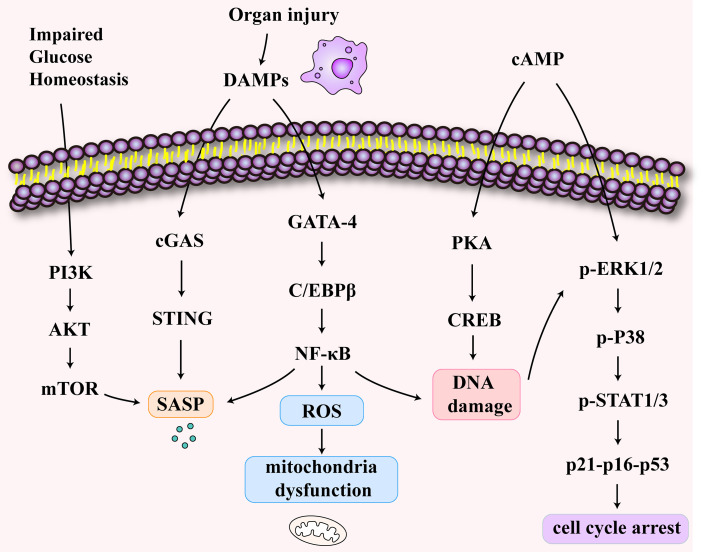
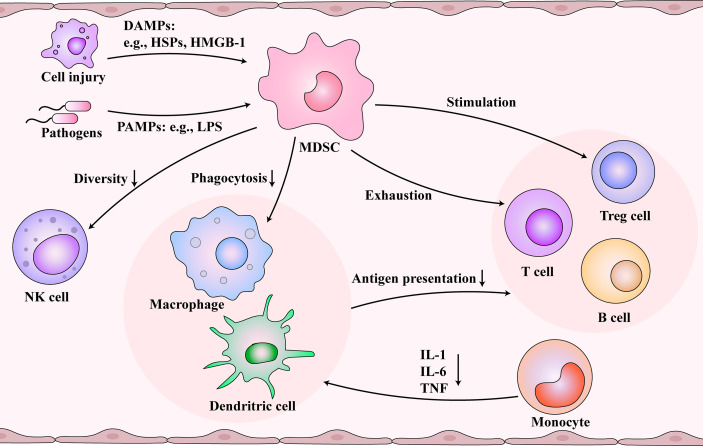
Progressive immune dysfunction associated with aging is known as immunosenescence. The age-related deterioration of immune function is accompanied by chronic inflammation and microenvironment changes. Immunosenescence can affect both innate and acquired immunity. Sepsis is a systemic inflammatory response that affects parenchymal organs, such as the respiratory system, cardiovascular system, liver, urinary system, and central nervous system, according to the sequential organ failure assessment (SOFA). The initial immune response is characterized by an excess release of inflammatory factors, followed by persistent immune paralysis. Moreover, immunosenescence was found to complement the severity of the immune disorder following sepsis. Furthermore, the immune characteristics associated with sepsis include lymphocytopenia, thymus degeneration, and immunosuppressive cell proliferation, which are very similar to the characteristics of immunosenescence. Therefore, an in-depth understanding of immunosenescence after sepsis and its subsequent effects on the organs may contribute to the development of promising therapeutic strategies. This paper focuses on the characteristics of immunosenescence after sepsis and rigorously analyzes the possible underlying mechanism of action. Based on several recent studies, we summarized the relationship between immunosenescence and sepsis-related organs. We believe that the association between immunosenescence and parenchymal organs might be able to explain the delayed consequences associated with sepsis.
与衰老相关的进行性免疫功能障碍称为免疫衰老。免疫功能的年龄相关性下降伴随着慢性炎症和微环境变化。免疫衰老会影响固有免疫和获得性免疫。根据序贯器官衰竭评估 (SOFA),败血症是一种影响实质器官(如呼吸系统、心血管系统、肝脏、泌尿系统和中枢神经系统)的全身炎症反应。最初的免疫反应表现为炎症因子的过度释放,随后是持续的免疫麻痹。此外,免疫衰老被发现补充了败血症后免疫紊乱的严重程度。此外,败血症相关的免疫特征包括淋巴细胞减少、胸腺退化和免疫抑制细胞增殖,这与免疫衰老的特征非常相似。因此,深入了解败血症后免疫衰老及其对器官的后续影响可能有助于开发有前途的治疗策略。本文重点关注败血症后免疫衰老的特征,并严格分析其可能的作用机制。基于最近的几项研究,我们总结了免疫衰老与败血症相关器官之间的关系。我们认为,免疫衰老与实质器官之间的关联可能能够解释与败血症相关的延迟后果。