Coven Joshua, Gupta Arpit, Yao Iris
NYU Stern School of Business, United States.
J Urban Econ. 2023 Jan;133:103489. doi: 10.1016/j.jue.2022.103489. Epub 2022 Aug 2.
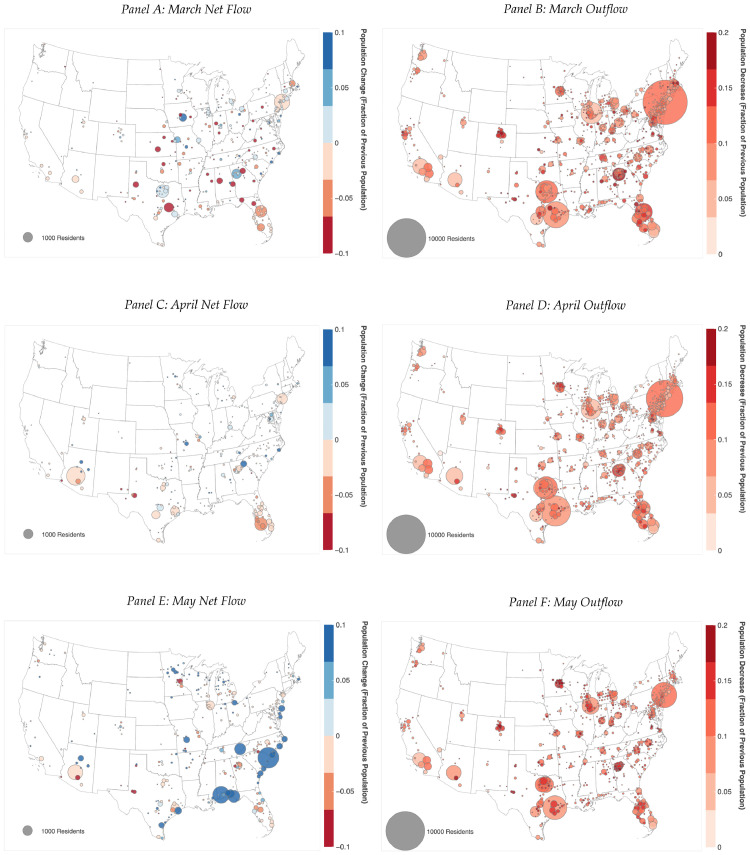
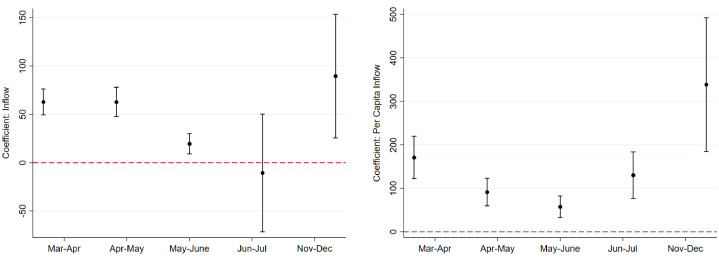
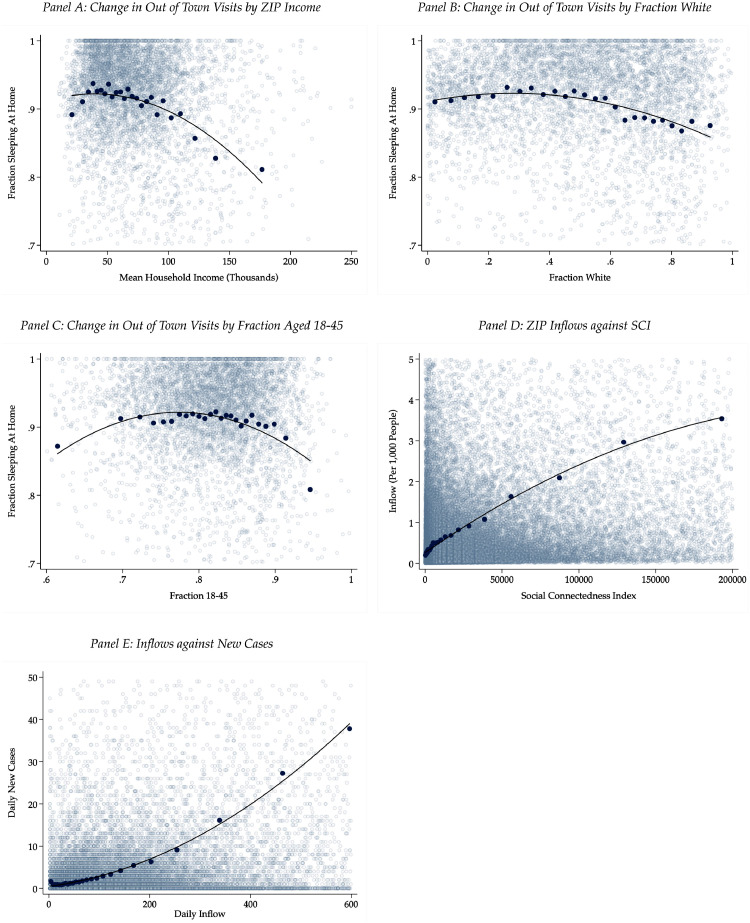
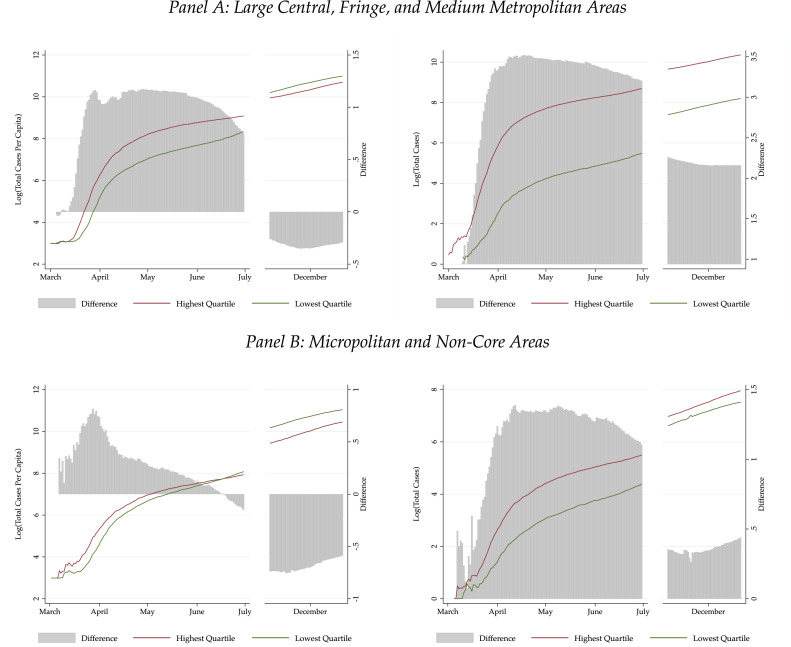
We document large-scale urban flight in the United States during the COVID-19 pandemic. Regions that saw migrant influx experienced greater subsequent new COVID-19 cases, linking urban flight (as a disease vector) and coronavirus spread in destination areas. Urban residents fled to socially connected areas, consistent with the theory that individuals sheltered with friends and family, or in second homes. Populations that fled were disproportionately younger, whiter, and wealthier. The association between migration and subsequent new cases persists when instrumenting for migration with social networks.
我们记录了新冠疫情期间美国大规模的城市人口外流情况。有移民涌入的地区随后出现了更多的新冠新增病例,这将城市人口外流(作为一种疾病传播媒介)与冠状病毒在目的地地区的传播联系了起来。城市居民逃往社交联系紧密的地区,这与个人与朋友和家人一起或在第二居所避难的理论相符。外流人口中年轻人、白人和富人的比例过高。在用社交网络作为移民的工具变量时,移民与随后新增病例之间的关联依然存在。