Department of Experimental and Clinical Pharmacology, Medical University of Warsaw, Center for Preclinical Research and Technology CEPT, Warsaw, Poland.
Genomics Core Facility, Centre of New Technologies, University of Warsaw, Warsaw, Poland.
RNA Biol. 2022 Jan;19(1):963-979. doi: 10.1080/15476286.2022.2100629.
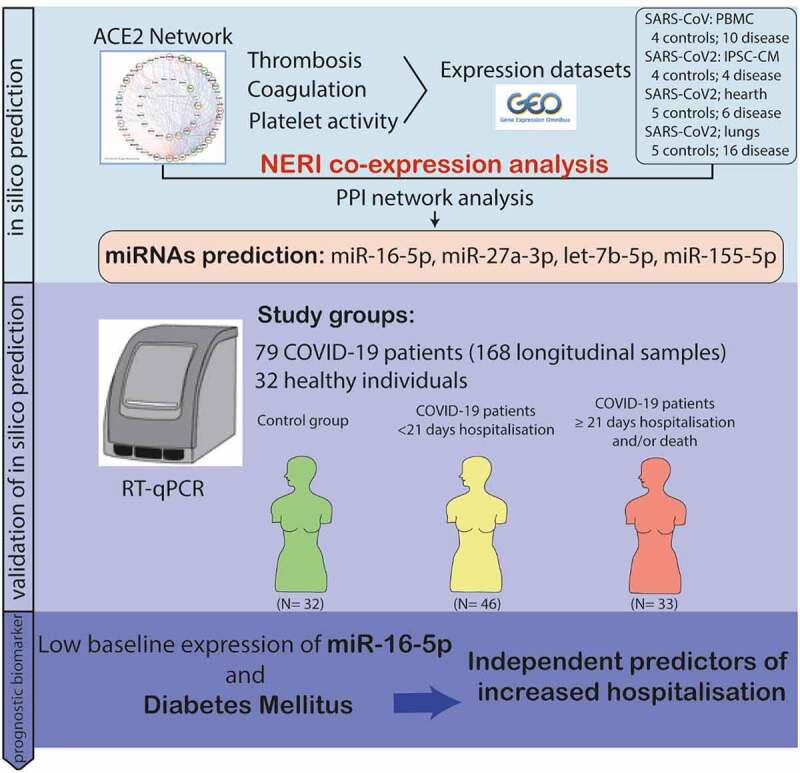
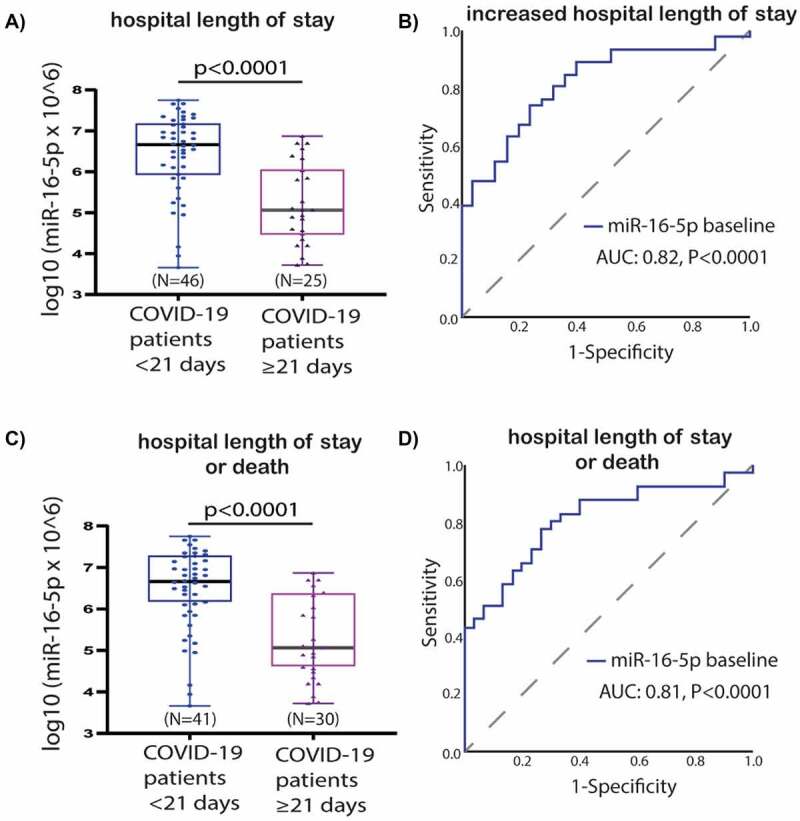
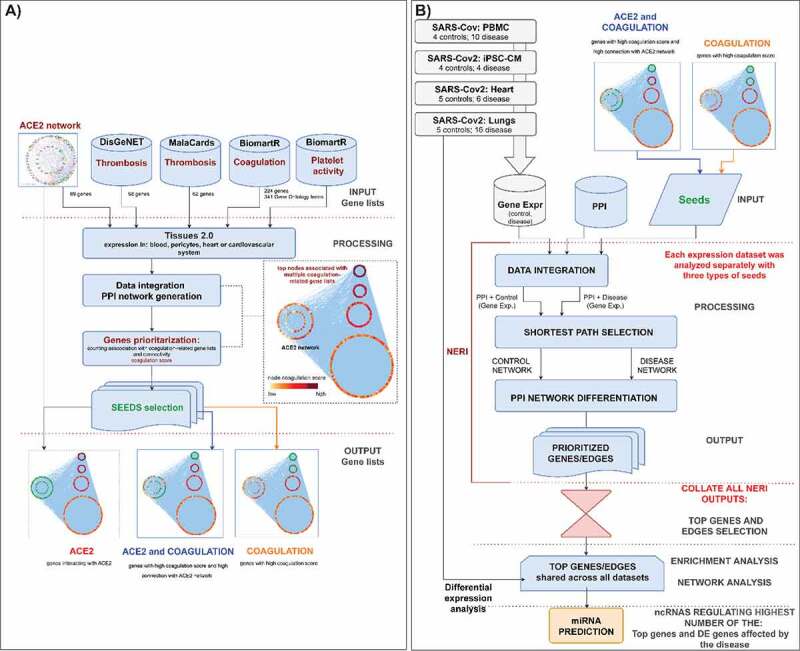
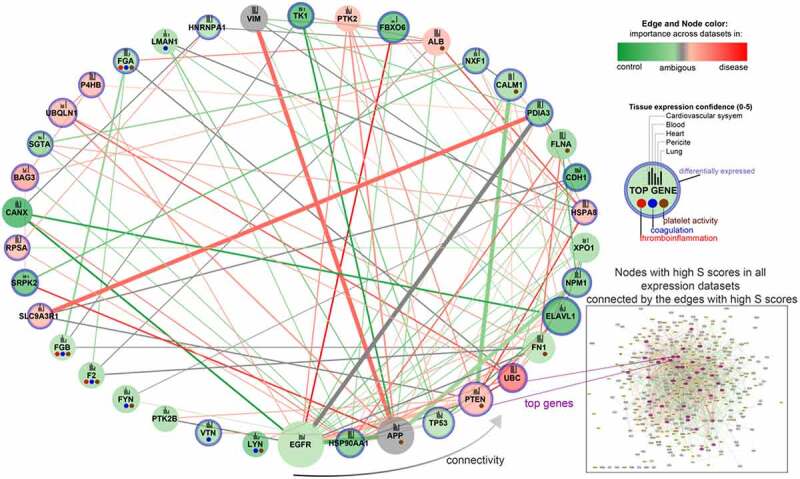
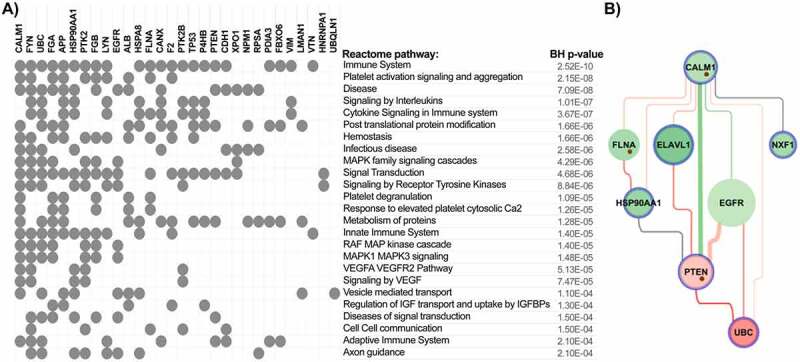
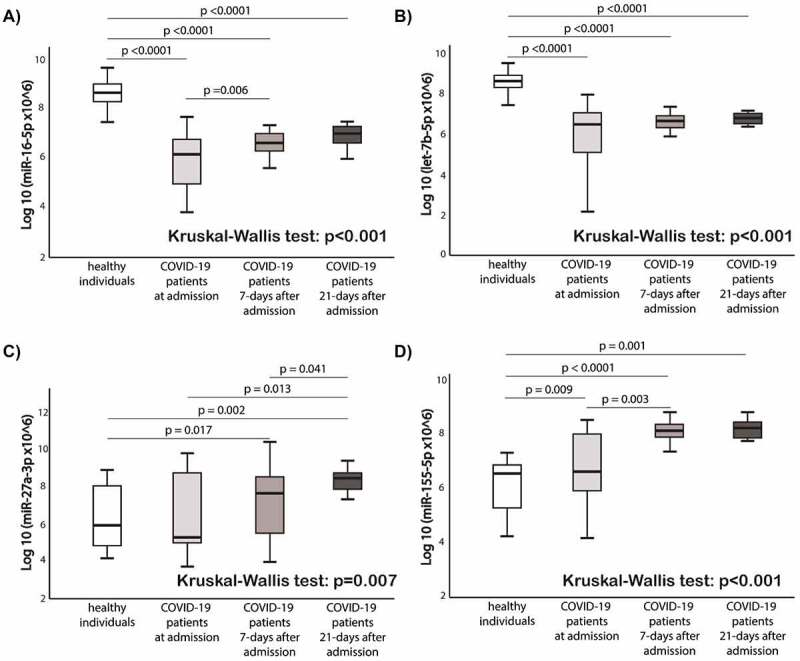
SARS-CoV-2 tropism for the ACE2 receptor, along with the multifaceted inflammatory reaction, is likely to drive the generalized hypercoagulable and thrombotic state seen in patients with COVID-19. Using the original bioinformatic workflow and network medicine approaches we reanalysed four coronavirus-related expression datasets and performed co-expression analysis focused on thrombosis and ACE2 related genes. We identified microRNAs (miRNAs) which play role in ACE2-related thrombosis in coronavirus infection and further, we validated the expressions of precisely selected miRNAs-related to thrombosis (miR-16-5p, miR-27a-3p, let-7b-5p and miR-155-5p) in 79 hospitalized COVID-19 patients and 32 healthy volunteers by qRT-PCR. Consequently, we aimed to unravel whether bioinformatic prioritization could guide selection of miRNAs with a potential of diagnostic and prognostic biomarkers associated with disease severity in patients hospitalized for COVID-19. In bioinformatic analysis, we identified EGFR, HSP90AA1, APP, TP53, PTEN, UBC, FN1, ELAVL1 and CALM1 as regulatory genes which could play a pivotal role in COVID-19 related thrombosis. We also found miR-16-5p, miR-27a-3p, let-7b-5p and miR-155-5p as regulators in the coagulation and thrombosis process. predictions were further confirmed in patients hospitalized for COVID-19. The expression levels of miR-16-5p and let-7b in COVID-19 patients were lower at baseline, 7-days and 21-day after admission compared to the healthy controls (p < 0.0001 for all time points for both miRNAs). The expression levels of miR-27a-3p and miR-155-5p in COVID-19 patients were higher at day 21 compared to the healthy controls (p = 0.007 and p < 0.001, respectively). A low baseline miR-16-5p expression presents predictive utility in assessment of the hospital length of stay or death in follow-up as a composite endpoint (AUC:0.810, 95% CI, 0.71-0.91, p < 0.0001) and low baseline expression of miR-16-5p and diabetes mellitus are independent predictors of increased length of stay or death according to a multivariate analysis (OR: 9.417; 95% CI, 2.647-33.506; p = 0.0005 and OR: 6.257; 95% CI, 1.049-37.316; p = 0.044, respectively). This study enabled us to better characterize changes in gene expression and signalling pathways related to hypercoagulable and thrombotic conditions in COVID-19. In this study we identified and validated miRNAs which could serve as novel, thrombosis-related predictive biomarkers of the COVID-19 complications, and can be used for early stratification of patients and prediction of severity of infection development in an individual. ACE2, angiotensin-converting enzyme 2AF, atrial fibrillationAPP, Amyloid Beta Precursor ProteinaPTT, activated partial thromboplastin timeAUC, Area under the curveAβ, amyloid betaBMI, body mass indexCAD, coronary artery diseaseCALM1, Calmodulin 1 geneCaM, calmodulinCCND1, Cyclin D1CI, confidence intervalCOPD, chronic obstructive pulmonary diseaseCOVID-19, Coronavirus disease 2019CRP, C-reactive proteinCV, CardiovascularCVDs, cardiovascular diseasesDE, differentially expressedDM, diabetes mellitusEGFR, Epithelial growth factor receptorELAVL1, ELAV Like RNA Binding Protein 1FLNA, Filamin AFN1, Fibronectin 1GEO, Gene Expression OmnibushiPSC-CMs, Human induced pluripotent stem cell-derived cardiomyocytesHSP90AA1, Heat Shock Protein 90 Alpha Family Class A Member 1Hsp90α, heat shock protein 90αICU, intensive care unitIL, interleukinIQR, interquartile rangelncRNAs, long non-coding RNAsMI, myocardial infarctionMiRNA, MiR, microRNAmRNA, messenger RNAncRNA, non-coding RNANERI, network-medicine based integrative approachNF-kB, nuclear factor kappa-light-chain-enhancer of activated B cellsNPV, negative predictive valueNXF, nuclear export factorPBMCs, Peripheral blood mononuclear cellsPCT, procalcitoninPPI, Protein-protein interactionsPPV, positive predictive valuePTEN, phosphatase and tensin homologqPCR, quantitative polymerase chain reactionROC, receiver operating characteristicSARS-CoV-2, severe acute respiratory syndrome coronavirus 2SD, standard deviationTLR4, Toll-like receptor 4TM, thrombomodulinTP53, Tumour protein P53UBC, Ubiquitin CWBC, white blood cells.
SARS-CoV-2 对 ACE2 受体的嗜性,以及多方面的炎症反应,可能导致 COVID-19 患者中普遍存在的高凝和血栓状态。我们使用原始的生物信息学工作流程和网络医学方法重新分析了四个与冠状病毒相关的表达数据集,并进行了针对血栓和 ACE2 相关基因的共表达分析。我们确定了在冠状病毒感染中与 ACE2 相关的血栓形成起作用的 microRNAs(miRNAs),并进一步通过 qRT-PCR 在 79 名住院 COVID-19 患者和 32 名健康志愿者中验证了与血栓形成相关的精确选择的 miRNAs(miR-16-5p、miR-27a-3p、let-7b-5p 和 miR-155-5p)的表达。因此,我们旨在揭示生物信息学优先级是否可以指导选择具有与 COVID-19 住院患者疾病严重程度相关的诊断和预后生物标志物潜力的 miRNAs。在生物信息学分析中,我们确定了 EGFR、HSP90AA1、APP、TP53、PTEN、UBC、FN1、ELAVL1 和 CALM1 作为可能在 COVID-19 相关血栓形成中发挥关键作用的调节基因。我们还发现 miR-16-5p、miR-27a-3p、let-7b-5p 和 miR-155-5p 作为凝血和血栓形成过程中的调节剂。预测结果在住院 COVID-19 患者中得到进一步证实。与健康对照组相比,COVID-19 患者在基线、第 7 天和第 21 天的 miR-16-5p 和 let-7b 表达水平更低(所有时间点的 miR-16-5p 和 let-7b 的 p 值均<0.0001)。与健康对照组相比,COVID-19 患者在第 21 天的 miR-27a-3p 和 miR-155-5p 表达水平更高(p 值分别为 0.007 和 p<0.001)。基线 miR-16-5p 表达水平低在评估住院时间或随访中死亡的复合终点方面具有预测效用(AUC:0.810,95%CI,0.71-0.91,p<0.0001),并且根据多变量分析,基线 miR-16-5p 表达水平低和糖尿病是住院时间延长或死亡的独立预测因素(OR:9.417;95%CI,2.647-33.506;p=0.0005 和 OR:6.257;95%CI,1.049-37.316;p=0.044)。本研究使我们能够更好地描述 COVID-19 中与高凝和血栓形成相关的基因表达和信号通路的变化。在这项研究中,我们确定并验证了可能作为 COVID-19 并发症的新型血栓形成相关预测生物标志物的 miRNAs,可用于早期对患者进行分层,并预测个体感染的严重程度。ACE2,血管紧张素转换酶 2AF,心房颤动APP,淀粉样前体蛋白aPTT,活化部分凝血活酶时间AUC,曲线下面积Aβ,淀粉样βBMI,体重指数CAD,冠状动脉疾病CALM1,钙调蛋白 1 基因CaM,钙调蛋白CCND1,细胞周期蛋白 D1CI,置信区间COPD,慢性阻塞性肺疾病COVID-19,2019 年冠状病毒病CRP,C 反应蛋白CV,心血管疾病CVDs,心血管疾病DE,差异表达DM,糖尿病EGFR,表皮生长因子受体ELAVL1,ELAV 样 RNA 结合蛋白 1FLNA,细丝蛋白 AFN1,纤连蛋白 1FN1,纤维连接蛋白 1GEO,基因表达综合分析iPSC-CMs,人诱导多能干细胞衍生的心肌细胞HSP90AA1,热休克蛋白 90α家族成员 1Hsp90α,热休克蛋白 90αICU,重症监护病房IL,白细胞介素IQR,四分位间距lncRNAs,长非编码 RNAmiRNA,miR,微 RNAmRNA,信使 RNAncRNA,非编码 RNA 内源性逆转录病毒,网络医学基于整合的方法NF-kB,核因子 kappa 轻链增强子的活化 B 细胞NPV,负预测值NXF,核出口因子PBMCs,外周血单核细胞PCT,降钙素PPI,蛋白质-蛋白质相互作用PPV,正预测值PTEN,磷酸酶和张力蛋白同源物qPCR,定量聚合酶链反应ROC,接收者操作特征曲线SARS-CoV-2,严重急性呼吸综合征冠状病毒 2SD,标准偏差TLR4,Toll 样受体 4TM,血栓调节蛋白TP53,肿瘤蛋白 P53UBC,泛素 CWBC,白细胞。