Tuberculosis Prevention and Control Key Laboratory/Beijing Key Laboratory of New Techniques of Tuberculosis Diagnosis and Treatment, Senior Department of Tuberculosis, The Eighth Medical Center of PLA General Hospital, Beijing, China.
Microbiol Spectr. 2022 Aug 31;10(4):e0143822. doi: 10.1128/spectrum.01438-22. Epub 2022 Aug 8.
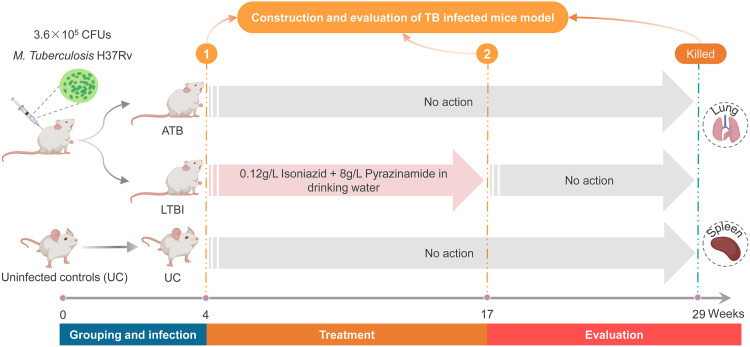
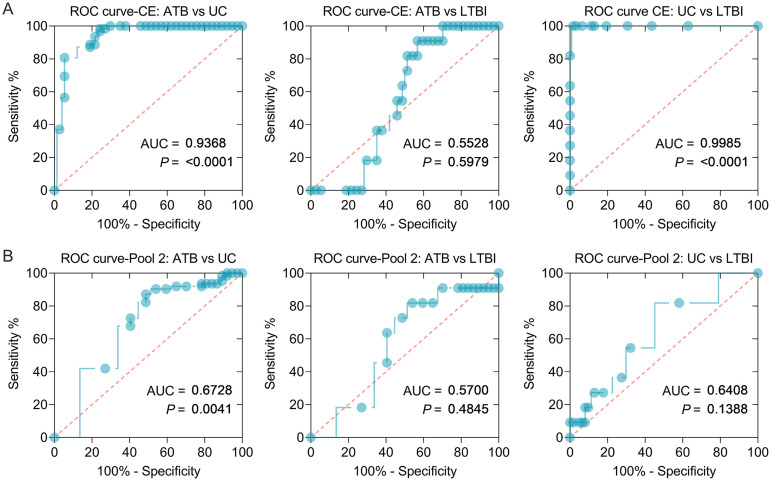
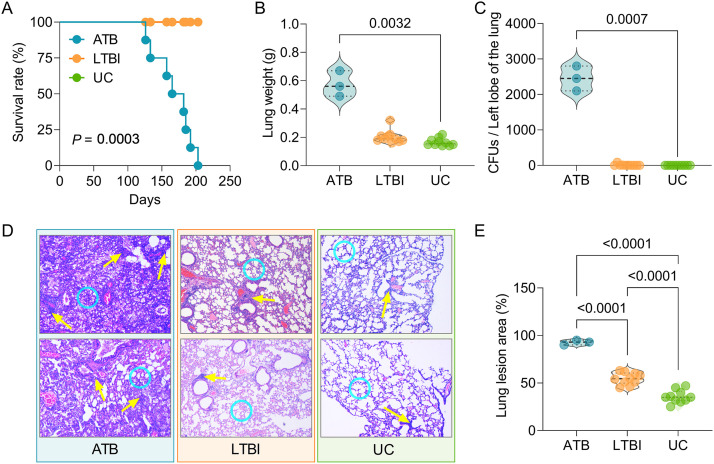
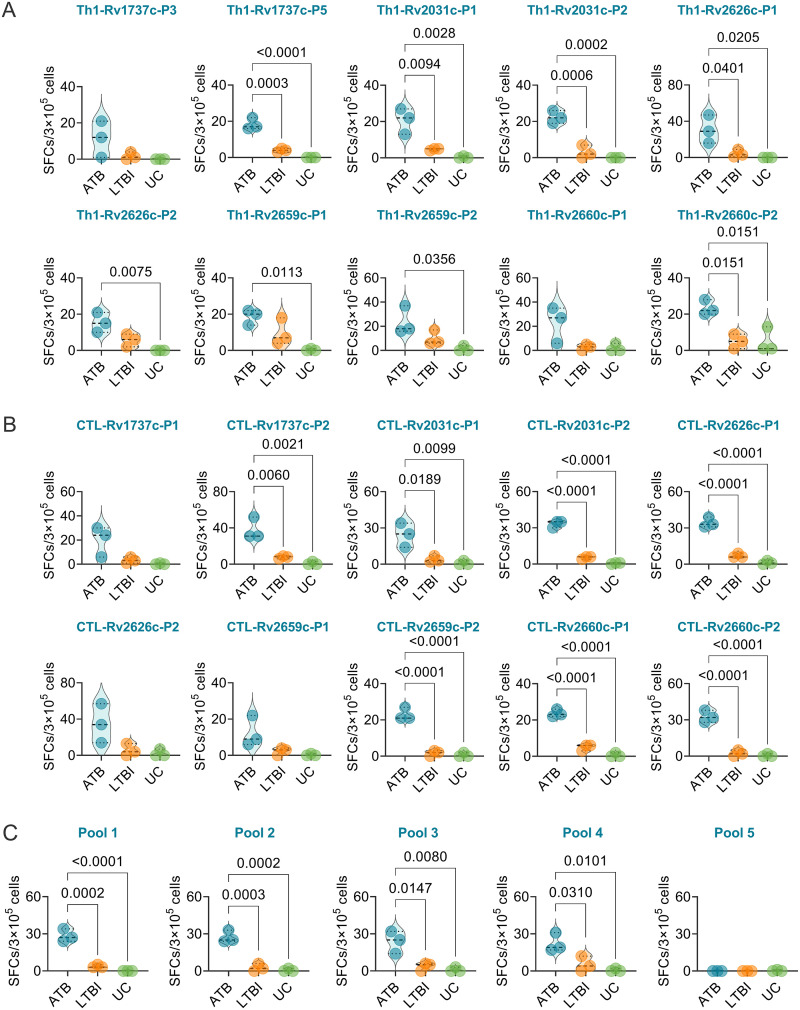
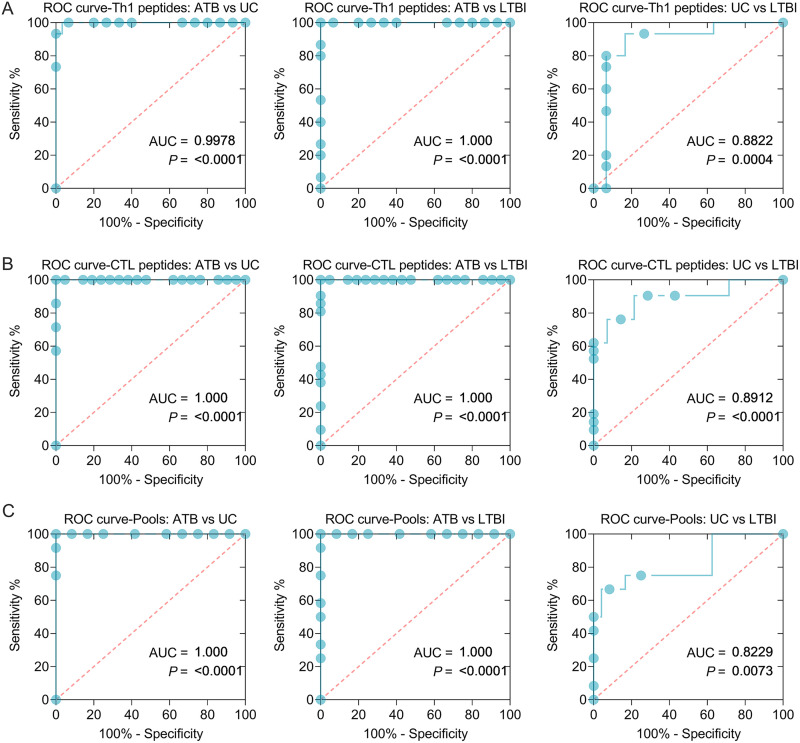
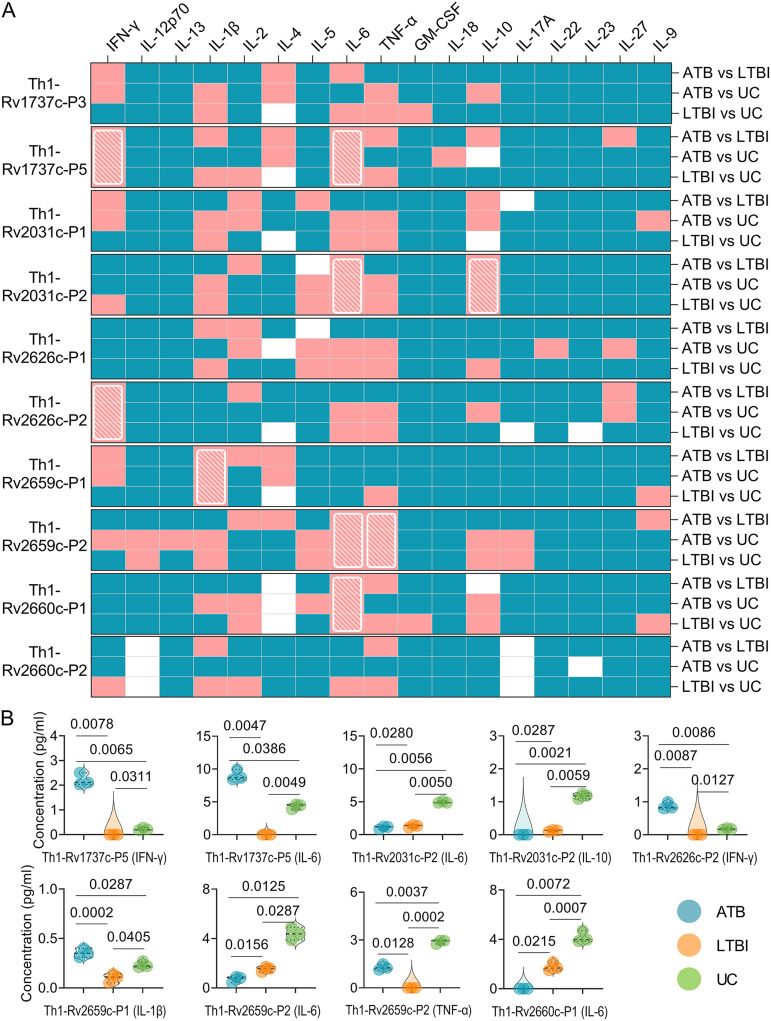
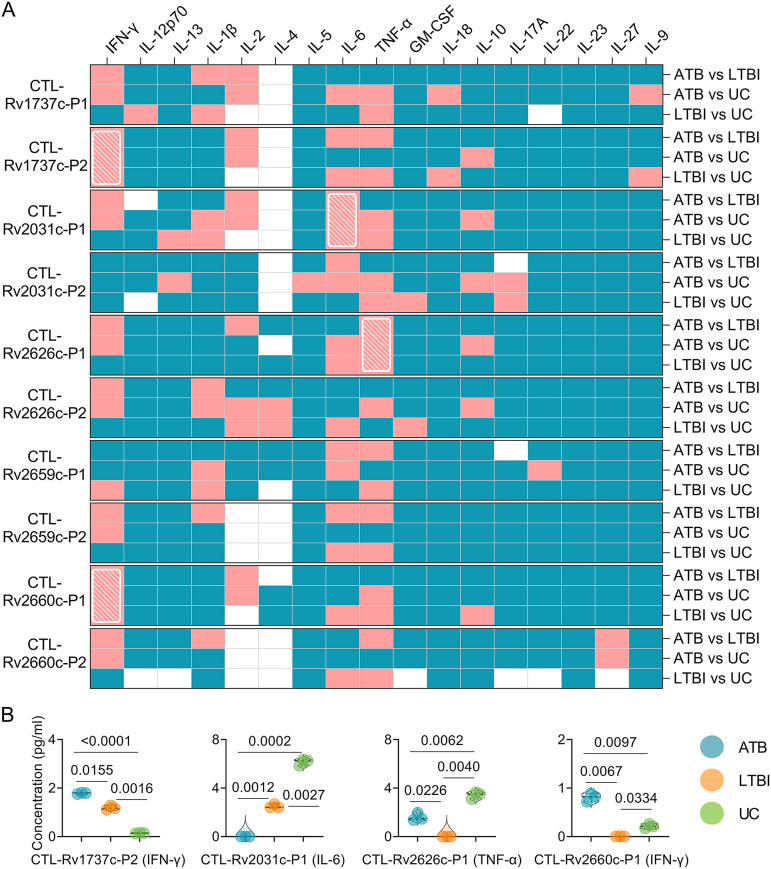
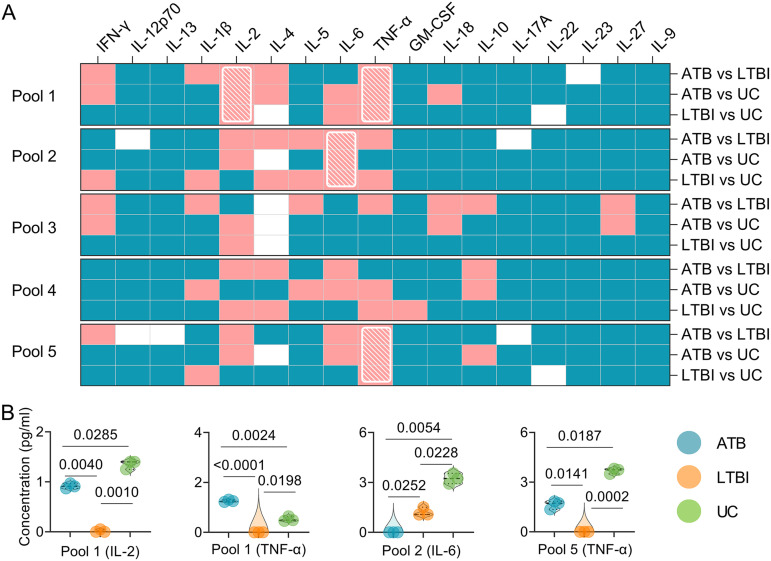
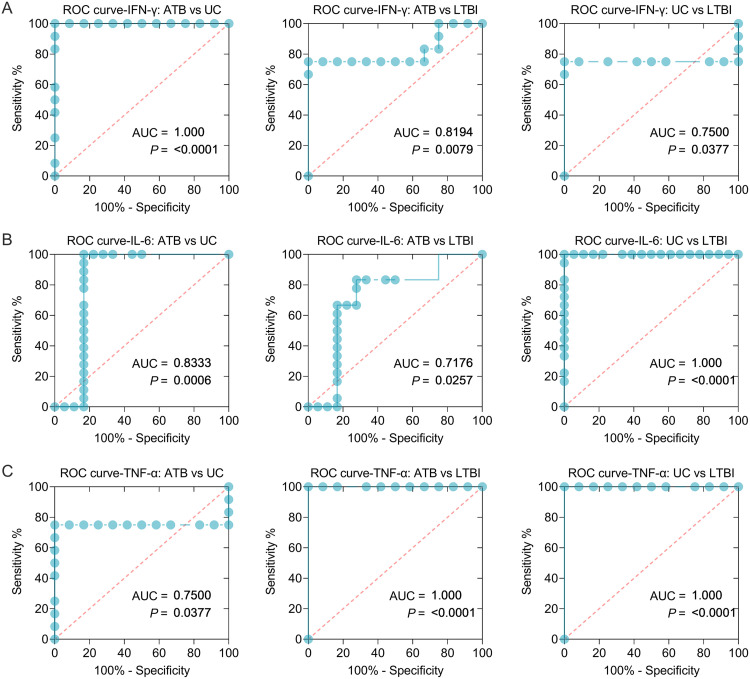
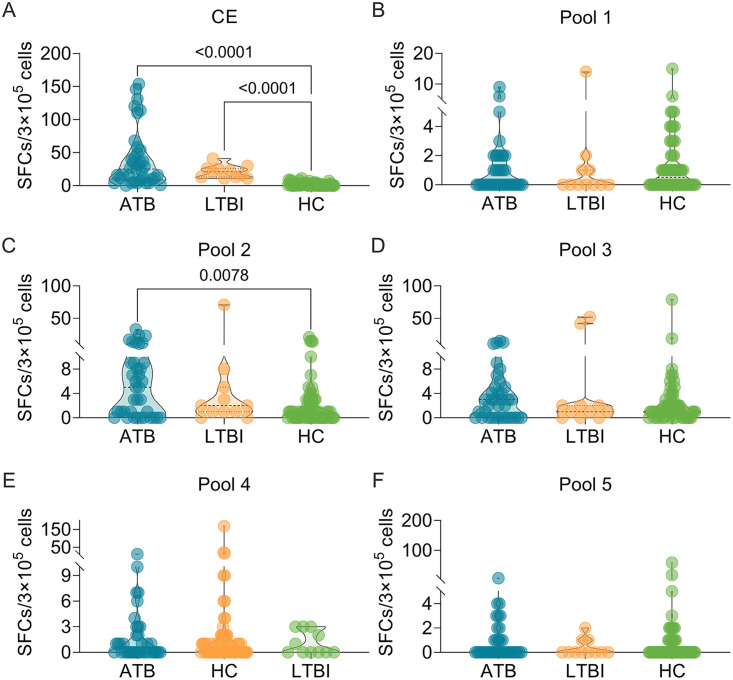
Latent tuberculosis infection (LTBI) is the primary source of tuberculosis (TB) but there is no suitable detection method to distinguish LTBI from active tuberculosis (ATB). In this study, five antigens of Mycobacterium tuberculosis belonging to LTBI and regions of difference (RDs) were selected to predict Th1 and cytotoxic T lymphocyte (CTL) epitopes. The immunodominant Th1 and CTL peptides were identified in mouse models, and their performance in distinguishing LTBI from ATB was determined in mice and humans. Ten Th1 and ten CTL immunodominant peptides were predicted and synthesized . The enzyme-linked immunosorbent spot assay results showed that the combination of five Th1 peptides (area under the curve [AUC] = 1, 0.0001; sensitivity = 100% and specificity = 93.33%), the combination of seven CTL peptides (AUC = 1, 0.0001; 100 and 95.24%), and the combination of four peptide pools (AUC = 1, 0.0001; sensitivity = 100% and specificity = 91.67%) could significantly discriminate mice with LTBI from mice with ATB or uninfected controls (UCs). The combined peptides or peptide pools induced significantly different cytokine levels between the three groups, improving their ability to differentiate ATB from LTBI. Furthermore, it was found that pool 2 could distinguish patients with ATB from UCs (AUC = 0.6728, 0.0041; sensitivity = 72.58% and specificity = 59.46%). The combination of Th1 and CTL immunodominant peptides derived from LTBI-RD antigens might be a promising strategy for diagnosing ATB and LTBI in mice and patients with ATB and uninfected controls. Latent tuberculosis infection (LTBI) is a challenging problem in preventing, diagnosing, and treating tuberculosis (TB). The innate and adaptive immune responses are essential for eliminating or killing the mycobacteria. Antigen-presenting cells (APCs) present and display mycobacterium peptides on their surfaces, and recognition between T cells and APCs is based on some essential peptides rather than the full-length protein. Therefore, the selection of candidate antigens and the prediction and screening of potential immunodominant peptides have become a key to designing a new generation of TB diagnostic biomarkers. This study is the first to report that the combination of Th1 and CTL immunodominant peptides derived from LTBI-RD antigens can distinguish LTBI from active TB (ATB) in animals and ATB patients from uninfected individuals. These findings provide a novel insight for discovering potential biomarkers for the differential diagnosis of ATB and LTBI in the future.
潜伏性结核感染 (LTBI) 是结核病 (TB) 的主要来源,但目前尚无合适的检测方法来区分 LTBI 与活动性结核病 (ATB)。在本研究中,选择了属于 LTBI 和区域差异 (RD) 的五种结核分枝杆菌抗原来预测 Th1 和细胞毒性 T 淋巴细胞 (CTL) 表位。在小鼠模型中鉴定了免疫优势 Th1 和 CTL 肽,并在小鼠和人类中确定了它们区分 LTBI 与 ATB 的性能。预测并合成了 10 个 Th1 和 10 个 CTL 免疫显性肽。酶联免疫斑点分析结果表明,五种 Th1 肽的组合(曲线下面积 [AUC] = 1,0.0001;敏感性 = 100%,特异性 = 93.33%)、七种 CTL 肽的组合(AUC = 1,0.0001;100 和 95.24%)和四种肽池的组合(AUC = 1,0.0001;敏感性 = 100%,特异性 = 91.67%)可显著区分 LTBI 小鼠与 ATB 小鼠或未感染对照 (UCs)。组合肽或肽池在三组之间诱导了明显不同的细胞因子水平,从而提高了它们区分 ATB 与 LTBI 的能力。此外,还发现池 2 可将 ATB 患者与 UCs 区分开(AUC = 0.6728,0.0041;敏感性 = 72.58%,特异性 = 59.46%)。LTBI-RD 抗原衍生的 Th1 和 CTL 免疫显性肽的组合可能是一种有前途的策略,可用于诊断小鼠和 ATB 患者及未感染对照中的 ATB 和 LTBI。潜伏性结核感染 (LTBI) 是预防、诊断和治疗结核病 (TB) 的一个具有挑战性的问题。先天和适应性免疫反应对于消除或杀死分枝杆菌至关重要。抗原呈递细胞 (APC) 表面呈现并显示分枝杆菌肽,T 细胞与 APC 之间的识别基于一些必需肽,而不是全长蛋白。因此,候选抗原的选择以及潜在免疫显性肽的预测和筛选已成为设计新一代 TB 诊断生物标志物的关键。本研究首次报道,LTBI-RD 抗原衍生的 Th1 和 CTL 免疫显性肽的组合可在动物和 ATB 患者中区分 LTBI 与活动性 TB (ATB)。这些发现为未来发现 ATB 和 LTBI 鉴别诊断的潜在生物标志物提供了新的思路。