Connecticut Convergence Institute for Translation in Regenerative Engineering, University of Connecticut Health, Farmington, CT 06030.
Raymond and Beverly Sackler Center for Biomedical, Biological, Physical, and Engineering Sciences, University of Connecticut Health Center, Farmington, CT 06030.
Proc Natl Acad Sci U S A. 2022 Aug 16;119(33):e2208106119. doi: 10.1073/pnas.2208106119. Epub 2022 Aug 8.
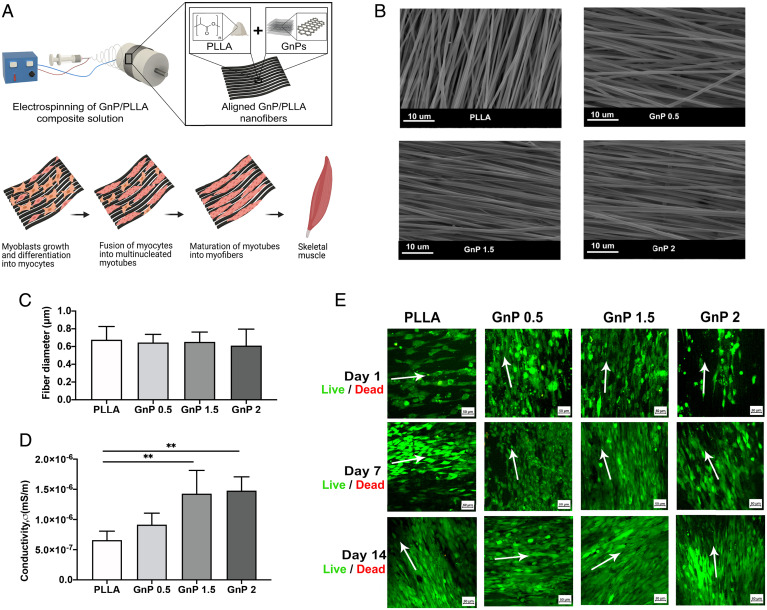
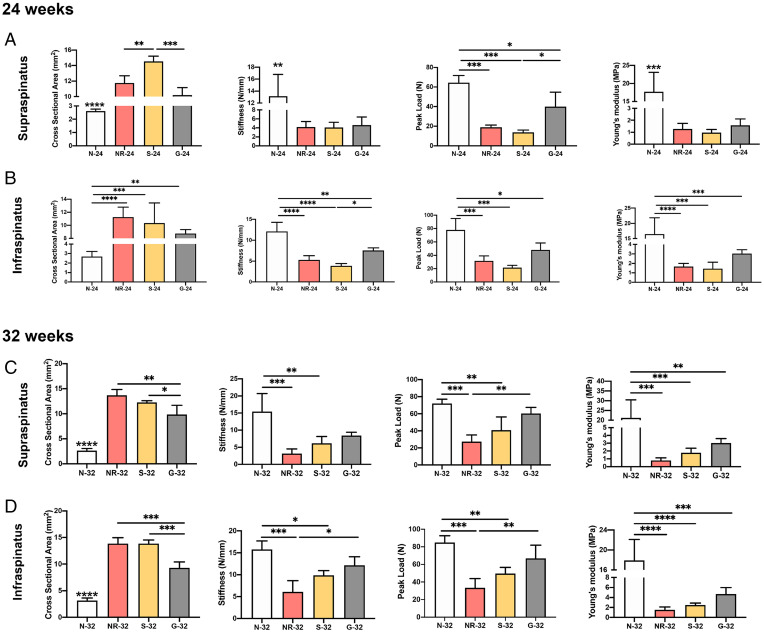
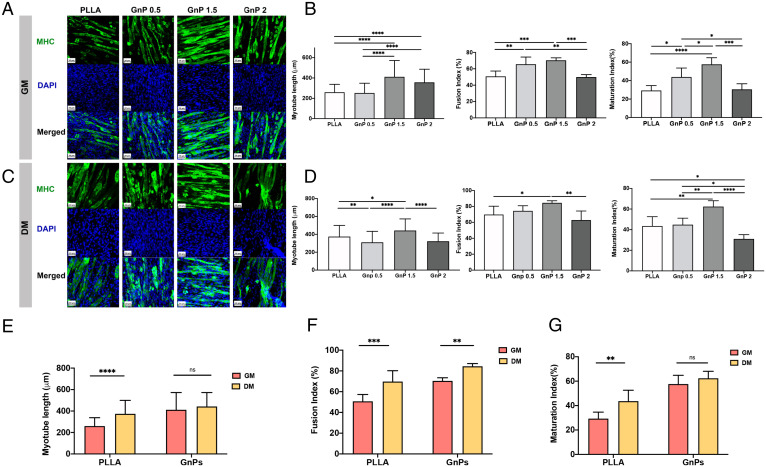
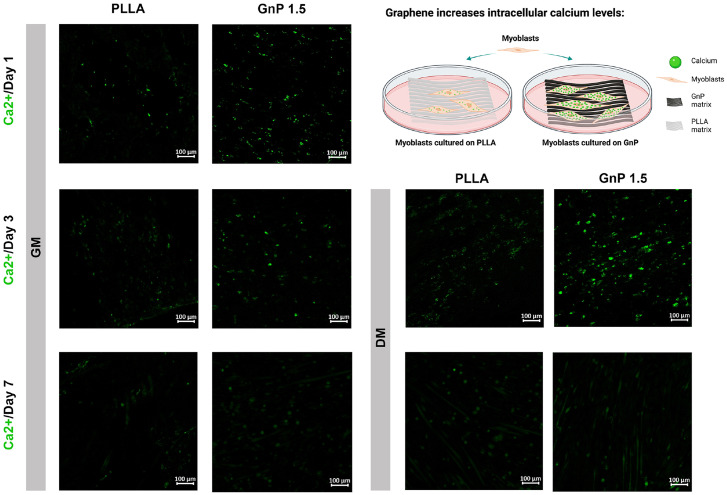
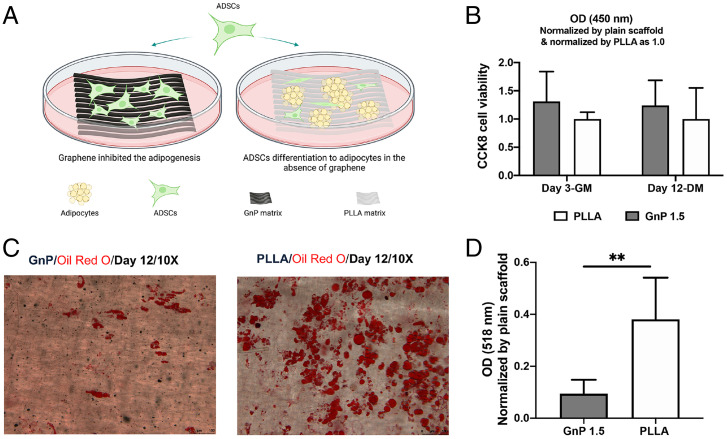
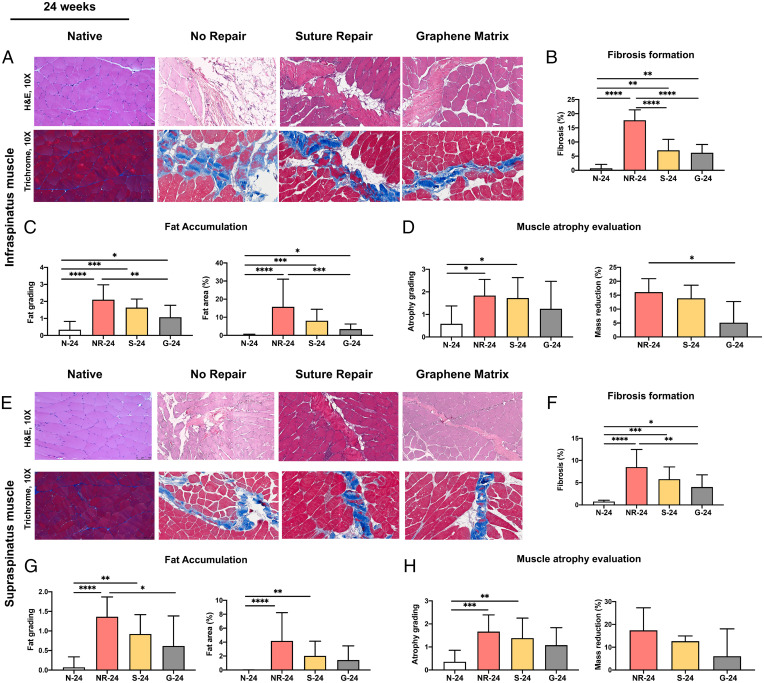
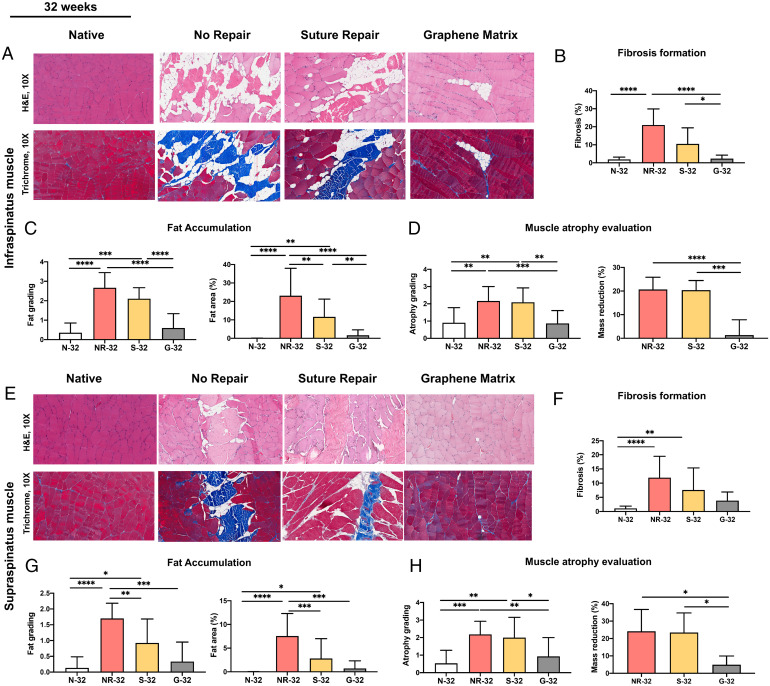
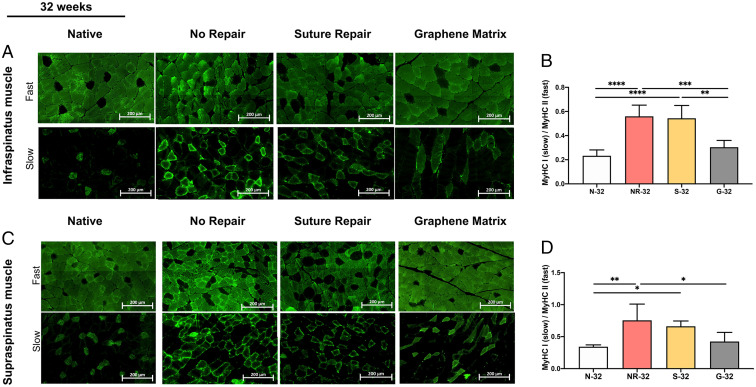
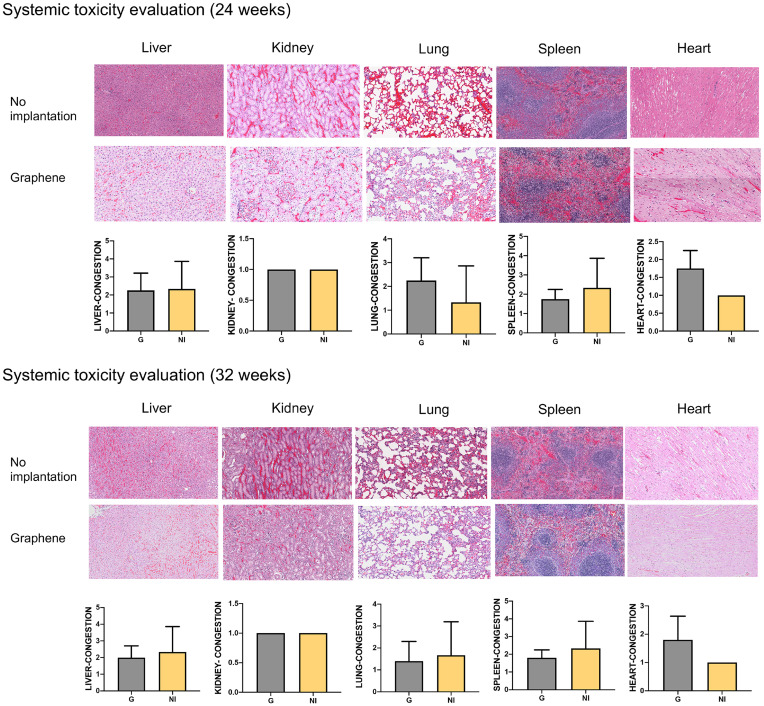
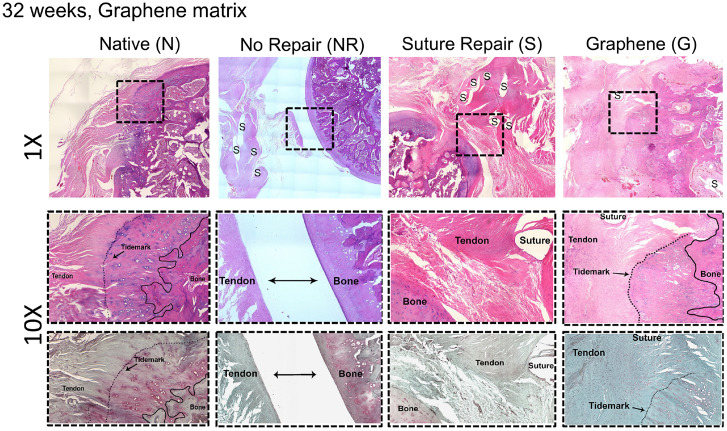
Massive rotator cuff tears (MRCTs) of the shoulder cause disability and pain among the adult population. In chronic injuries, the tendon retraction and subsequently the loss of mechanical load lead to muscle atrophy, fat accumulation, and fibrosis formation over time. The intrinsic repair mechanism of muscle and the successful repair of the torn tendon cannot reverse the muscle degeneration following MRCTs. To address these limitations, we developed an electroconductive matrix by incorporating graphene nanoplatelets (GnPs) into aligned poly(l-lactic acid) (PLLA) nanofibers. This study aimed to understand 1) the effects of GnP matrices on muscle regeneration and inhibition of fat formation in vitro and 2) the ability of GnP matrices to reverse muscle degenerative changes in vivo following an MRCT. The GnP matrix significantly increased myotube formation, which can be attributed to enhanced intracellular calcium ions in myoblasts. Moreover, the GnP matrix suppressed adipogenesis in adipose-derived stem cells. These results supported the clinical effects of the GnP matrix on reducing fat accumulation and muscle atrophy. The histological evaluation showed the potential of the GnP matrix to reverse muscle atrophy, fat accumulation, and fibrosis in both supraspinatus and infraspinatus muscles at 24 and 32 wk after the chronic MRCTs of the rat shoulder. The pathological evaluation of internal organs confirmed the long-term biocompatibility of the GnP matrix. We found that reversing muscle degenerative changes improved the morphology and tensile properties of the tendon compared with current surgical techniques. The long-term biocompatibility and the ability of the GnP matrix to treat muscle degeneration are promising for the realization of MRCT healing and regeneration.
肩袖大面积撕裂 (MRCT) 会导致成年人残疾和疼痛。在慢性损伤中,肌腱回缩,进而机械负荷丢失,导致肌肉萎缩、脂肪堆积和纤维化形成。肌肉的内在修复机制和撕裂肌腱的成功修复并不能逆转 MRCT 后的肌肉退化。为了解决这些局限性,我们将石墨烯纳米片 (GnP) 掺入到取向的聚 (L-丙交酯) (PLLA) 纳米纤维中,开发了一种导电基质。本研究旨在了解 1)GnP 基质对肌肉再生和抑制脂肪形成的影响在体外和 2)GnP 基质在 MRCT 后逆转体内肌肉退行性变化的能力。GnP 基质显著增加了肌管的形成,这可以归因于成肌细胞中细胞内钙离子的增加。此外,GnP 基质抑制了脂肪干细胞的成脂分化。这些结果支持 GnP 基质在减少脂肪积累和肌肉萎缩方面的临床效果。组织学评估表明,GnP 基质具有逆转慢性肩袖 MRCT 后 24 和 32 周时冈上肌和冈下肌肌肉萎缩、脂肪堆积和纤维化的潜力。对内脏器官的病理评估证实了 GnP 基质的长期生物相容性。我们发现,与当前的手术技术相比,逆转肌肉退行性变化可改善肌腱的形态和拉伸性能。GnP 基质的长期生物相容性和治疗肌肉退化的能力有望实现 MRCT 的愈合和再生。