Division of Rheumatology, Inflammation, and Immunity, Brigham and Women's Hospital, Boston, Massachusetts, USA.
Department of Medicine, Harvard Medical School, Boston, Massachusetts, USA.
Ann Rheum Dis. 2022 Dec;81(12):1742-1749. doi: 10.1136/ard-2022-222954. Epub 2022 Aug 9.
To investigate temporal trends in incidence and severity of COVID-19 among patients with systemic autoimmune rheumatic diseases (SARDs) from the first wave through the initial Omicron wave.
We conducted a retrospective cohort study investigating COVID-19 outcomes among patientswith SARD systematically identified to have confirmed COVID-19 from 1 March 2020 to 31 January 2022 at Mass General Brigham. We tabulated COVID-19 counts of total and severe cases (hospitalisations or deaths) and compared the proportion with severe COVID-19 by calendar period and by vaccination status. We used logistic regression to estimate the ORs for severe COVID-19 for each period compared with the early COVID-19 period (reference group).
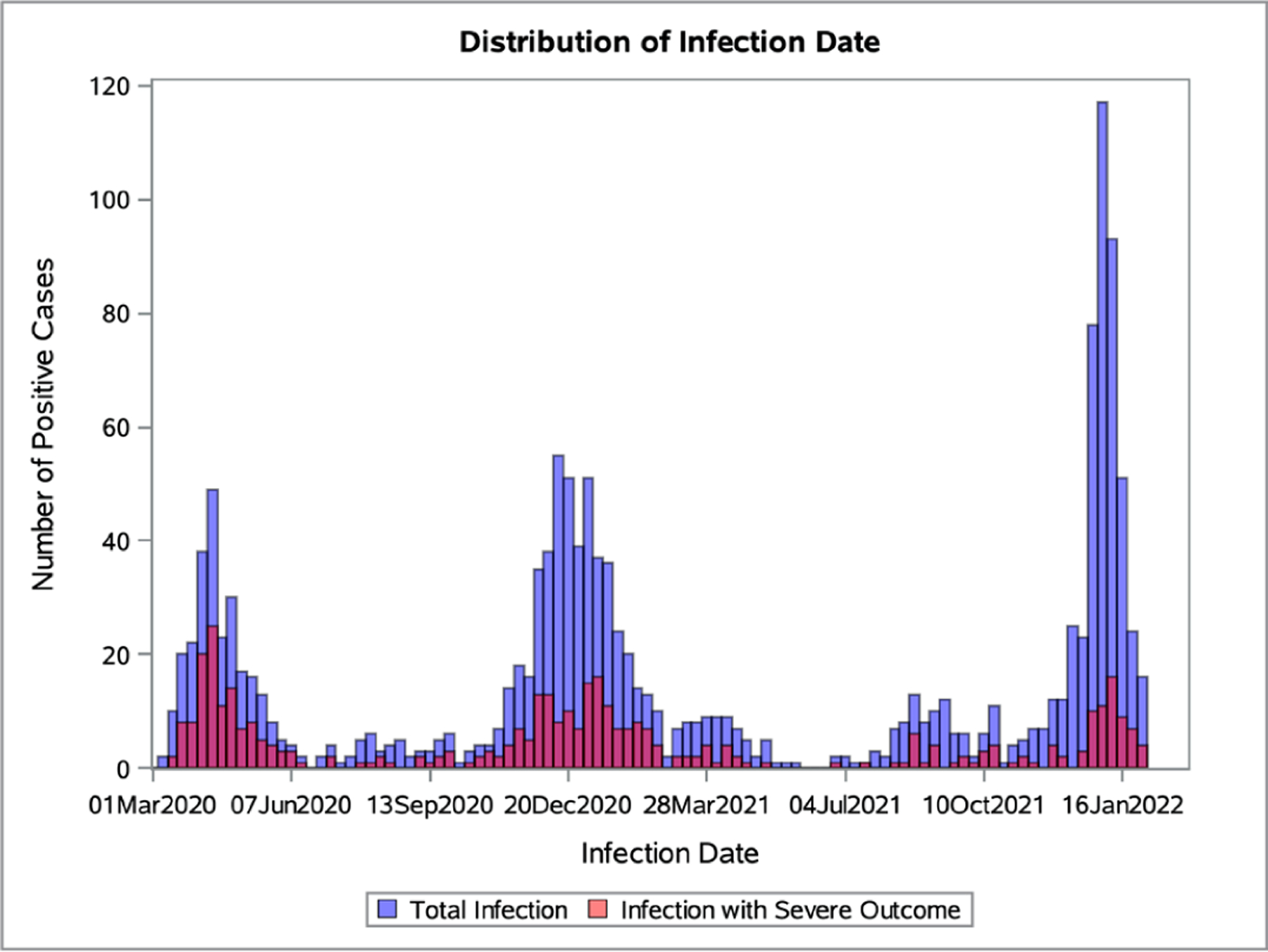
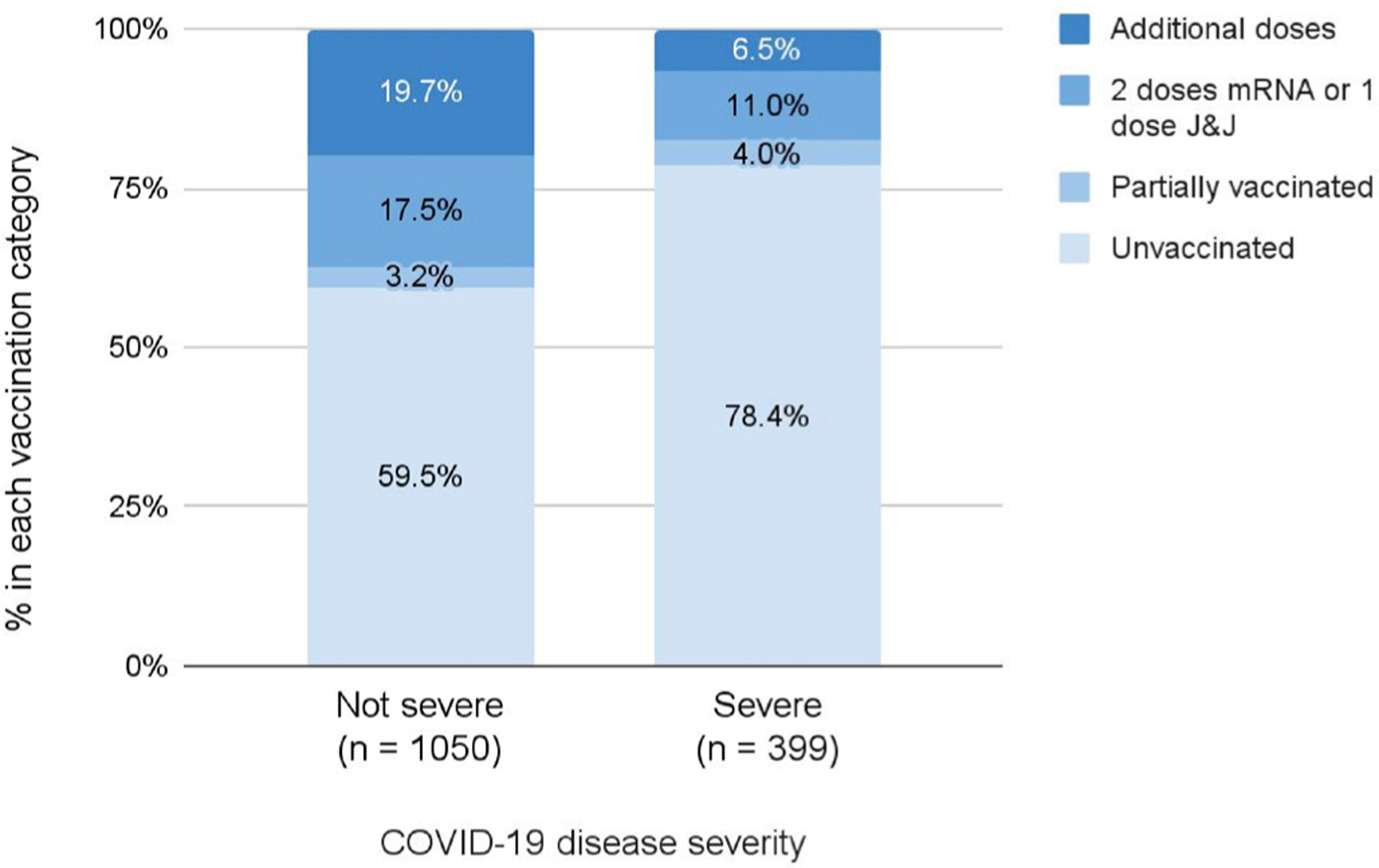
We identified 1449 patients with SARD with COVID-19 (mean age 58.4 years, 75.2% female, 33.9% rheumatoid arthritis). There were 399 (28%) cases of severe COVID-19. The proportion of severe COVID-19 outcomes declined over calendar time (p for trend <0.001); 46% of cases were severe in the early COVID-19 period (1 March 2020-30 June 2020) vs 15% in the initial Omicron wave (17 December 2021-31 January 2022; adjusted OR 0.29, 95% CI 0.19 to 0.43). A higher proportion of those unvaccinated were severe compared with not severe cases (78% vs 60%).
The proportion of patients with SARD with severe COVID-19 has diminished since early in the pandemic, particularly during the most recent time periods, including the initial Omicron wave. Advances in prevention, diagnosis and treatment of COVID-19 may have improved outcomes among patients with SARD.
调查 COVID-19 大流行期间系统性自身免疫性风湿病(SARD)患者的发病率和严重程度的时间趋势,研究对象包括第一波至初始奥密克戎波期间确诊 COVID-19 的患者。
我们开展了一项回顾性队列研究,调查 2020 年 3 月 1 日至 2022 年 1 月 31 日期间在马萨诸塞州综合医院接受系统性自身免疫性风湿病治疗并确诊 COVID-19 的患者的 COVID-19 结局。我们对总病例数和严重病例数(住院或死亡)进行了分类,并按日历时间段和疫苗接种情况比较了严重 COVID-19 的比例。我们使用逻辑回归来估计每个时间段与早期 COVID-19 时间段(参考组)相比严重 COVID-19 的比值比(OR)。
我们共纳入了 1449 名患有 SARD 的 COVID-19 患者(平均年龄 58.4 岁,75.2%为女性,33.9%为类风湿关节炎)。其中 399 例(28%)为严重 COVID-19 病例。严重 COVID-19 结局的比例随时间推移而下降(趋势 p 值<0.001);早期 COVID-19 时期(2020 年 3 月 1 日至 6 月 30 日)严重病例比例为 46%,而初始奥密克戎波期间为 15%(2021 年 12 月 17 日至 2022 年 1 月 31 日;调整后的 OR 0.29,95%置信区间 0.19 至 0.43)。未接种疫苗的患者中严重病例的比例高于未接种疫苗的患者(78%比 60%)。
自大流行早期以来,SARD 患者中严重 COVID-19 的比例有所下降,尤其是在最近的时间段内,包括初始奥密克戎波期间。COVID-19 的预防、诊断和治疗进展可能改善了 SARD 患者的结局。