Netherlands Institute for Health Services Research (NIVEL), Utrecht, the Netherlands.
National Health Care Institute, Diemen, the Netherlands.
BMC Prim Care. 2022 Aug 9;23(1):199. doi: 10.1186/s12875-022-01804-w.
Primary Sjögren's Syndrome (pSS) is a rare autoimmune disease that is difficult to diagnose due to a variety of clinical presentations, resulting in misdiagnosis and late referral to specialists. To improve early-stage disease recognition, this study aimed to develop an algorithm to identify possible pSS patients in primary care. We built a machine learning algorithm which was based on combined healthcare data as a first step towards a clinical decision support system.
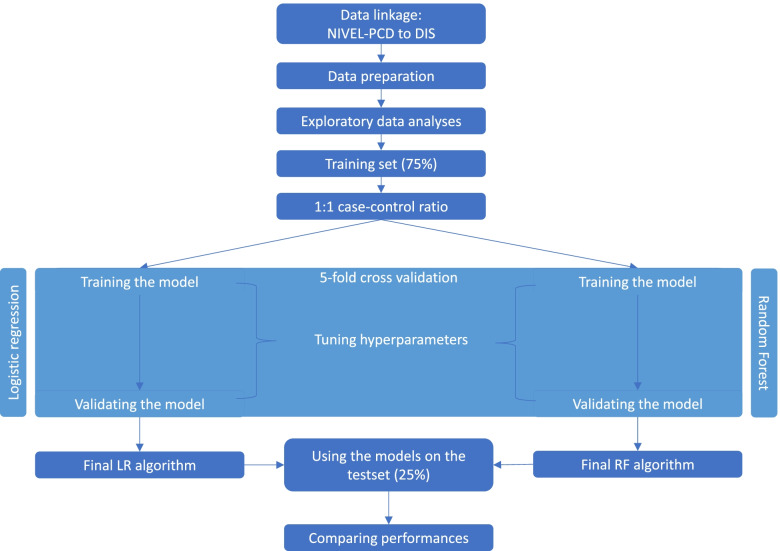
Routine healthcare data, consisting of primary care electronic health records (EHRs) data and hospital claims data (HCD), were linked on patient level and consisted of 1411 pSS and 929,179 non-pSS patients. Logistic regression (LR) and random forest (RF) models were used to classify patients using age, gender, diseases and symptoms, prescriptions and GP visits.
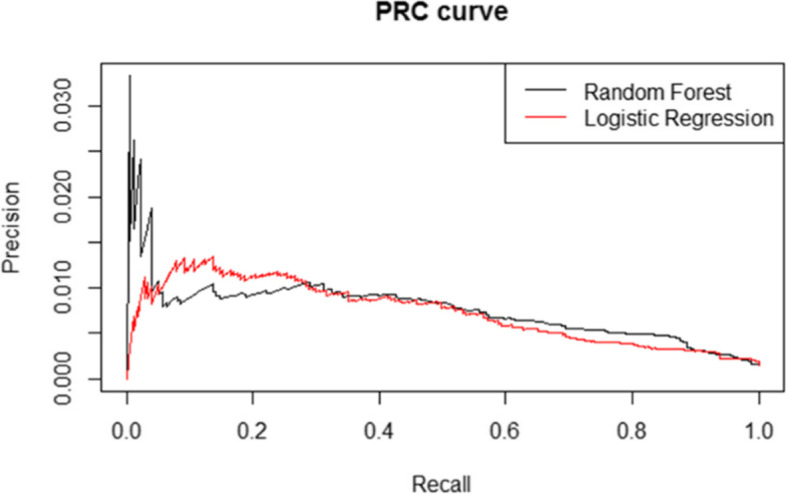
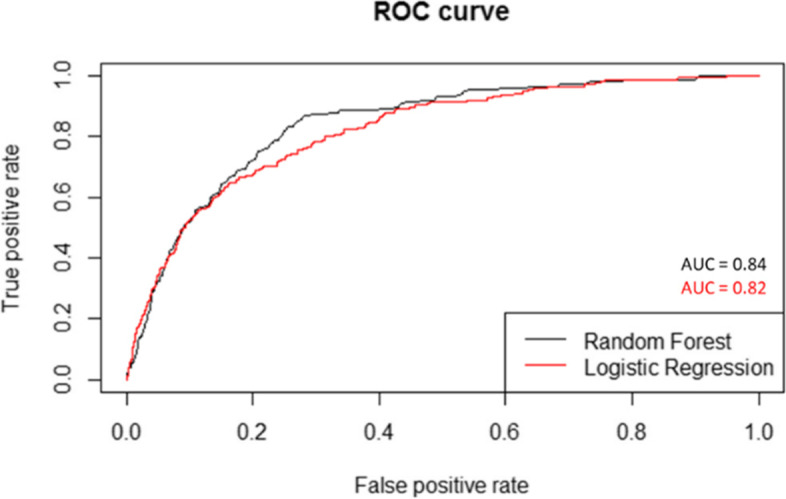
The LR and RF models had an AUC of 0.82 and 0.84, respectively. Many actual pSS patients were found (sensitivity LR = 72.3%, RF = 70.1%), specificity was 74.0% (LR) and 77.9% (RF) and the negative predictive value was 99.9% for both models. However, most patients classified as pSS patients did not have a diagnosis of pSS in secondary care (positive predictive value LR = 0.4%, RF = 0.5%).
This is the first study to use machine learning to classify patients with pSS in primary care using GP EHR data. Our algorithm has the potential to support the early recognition of pSS in primary care and should be validated and optimized in clinical practice. To further enhance the algorithm in detecting pSS in primary care, we suggest it is improved by working with experienced clinicians.
原发性干燥综合征(pSS)是一种罕见的自身免疫性疾病,由于其临床表现多种多样,容易误诊,导致患者就诊时间较晚。为了提高早期疾病的识别率,本研究旨在开发一种算法,以便在初级保健中识别可能的 pSS 患者。我们构建了一个机器学习算法,该算法基于联合医疗保健数据,作为开发临床决策支持系统的第一步。
常规医疗保健数据(包括初级保健电子健康记录[EHR]数据和医院索赔数据[HCD])在患者层面进行了链接,共包含 1411 例 pSS 患者和 929179 例非 pSS 患者。使用逻辑回归(LR)和随机森林(RF)模型,基于患者的年龄、性别、疾病和症状、处方和全科医生就诊情况对患者进行分类。
LR 和 RF 模型的 AUC 分别为 0.82 和 0.84。许多实际的 pSS 患者被发现(LR 的敏感性为 72.3%,RF 的敏感性为 70.1%),特异性分别为 74.0%(LR)和 77.9%(RF),两种模型的阴性预测值均为 99.9%。然而,大多数被归类为 pSS 患者的患者在二级保健中并未被诊断为 pSS(LR 的阳性预测值为 0.4%,RF 的阳性预测值为 0.5%)。
这是第一项使用机器学习基于全科医生 EHR 数据对初级保健中的 pSS 患者进行分类的研究。我们的算法有可能支持初级保健中 pSS 的早期识别,应在临床实践中进行验证和优化。为了进一步提高该算法在初级保健中检测 pSS 的能力,我们建议与经验丰富的临床医生合作来改进该算法。