Vision and Image Processing Research Group, University of Waterloo, Waterloo, Canada.
DarwinAI Corp, Waterloo, Canada.
BMC Med Imaging. 2022 Aug 9;22(1):143. doi: 10.1186/s12880-022-00871-w.
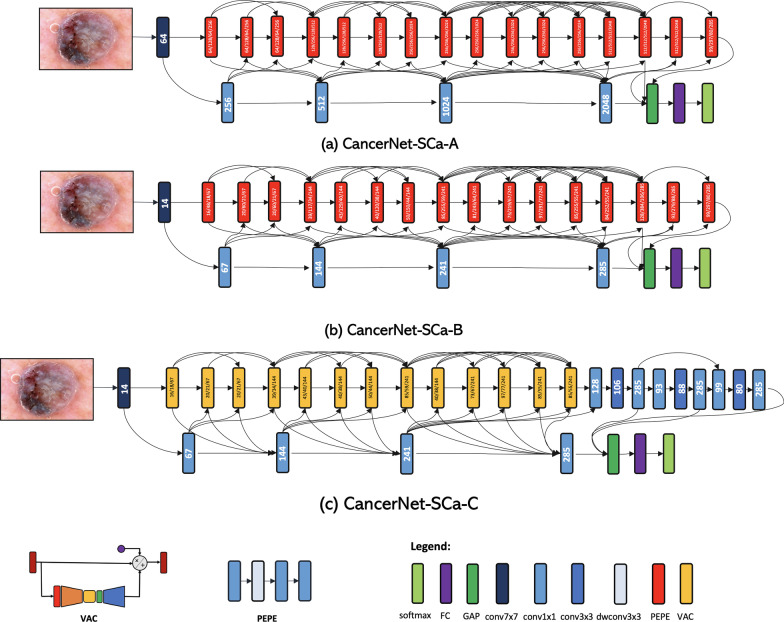
Skin cancer continues to be the most frequently diagnosed form of cancer in the U.S., with not only significant effects on health and well-being but also significant economic costs associated with treatment. A crucial step to the treatment and management of skin cancer is effective early detection with key screening approaches such as dermoscopy examinations, leading to stronger recovery prognoses. Motivated by the advances of deep learning and inspired by the open source initiatives in the research community, in this study we introduce Cancer-Net SCa, a suite of deep neural network designs tailored for the detection of skin cancer from dermoscopy images that is open source and available to the general public. To the best of the authors' knowledge, Cancer-Net SCa comprises the first machine-driven design of deep neural network architectures tailored specifically for skin cancer detection, one of which leverages attention condensers for an efficient self-attention design.
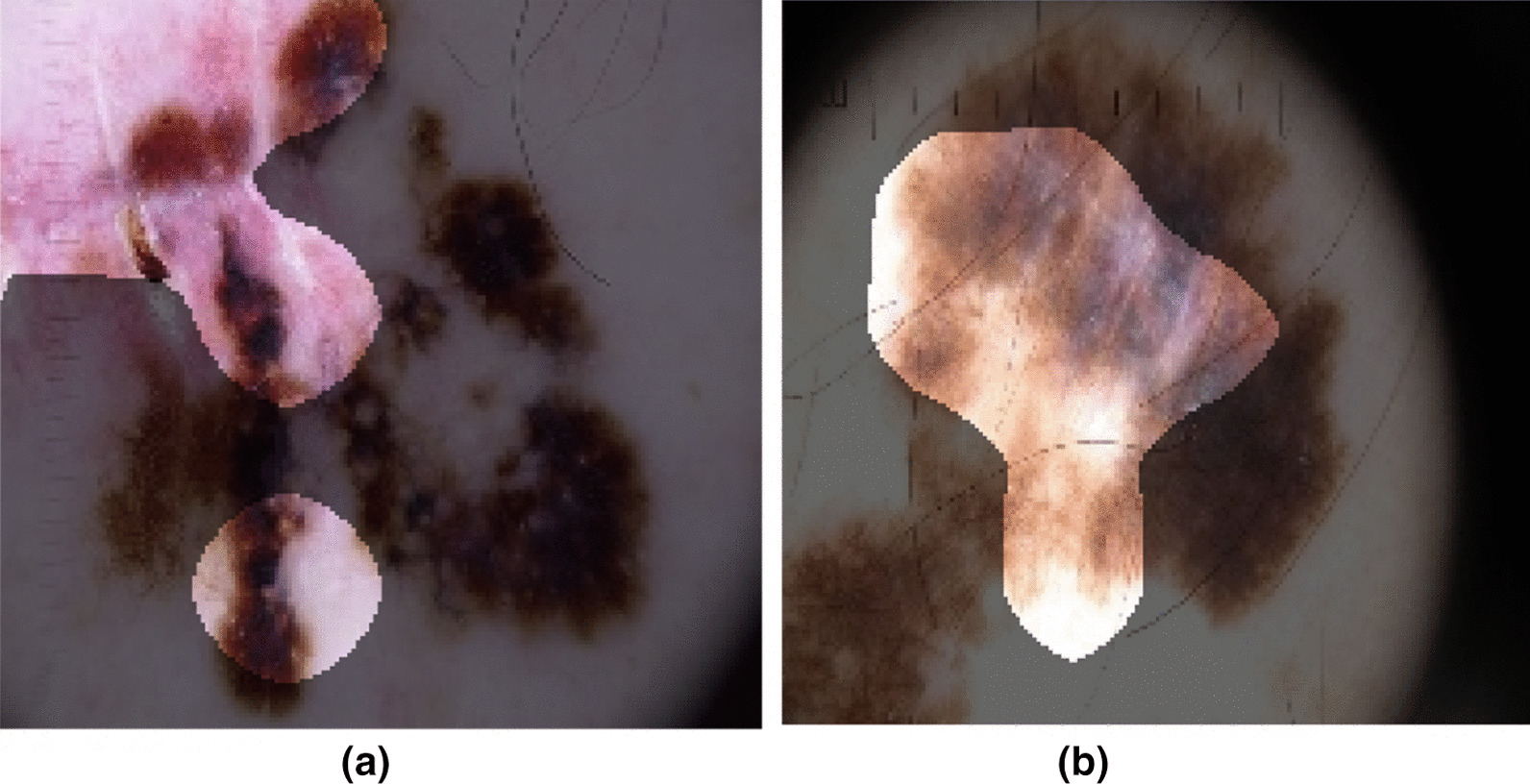
We investigate and audit the behaviour of Cancer-Net SCa in a responsible and transparent manner through explainability-driven performance validation. All the proposed designs achieved improved accuracy when compared to the ResNet-50 architecture while also achieving significantly reduced architectural and computational complexity. In addition, when evaluating the decision making process of the networks, it can be seen that diagnostically relevant critical factors are leveraged rather than irrelevant visual indicators and imaging artifacts.
The proposed Cancer-Net SCa designs achieve strong skin cancer detection performance on the International Skin Imaging Collaboration (ISIC) dataset, while providing a strong balance between computation and architectural efficiency and accuracy. While Cancer-Net SCa is not a production-ready screening solution, the hope is that the release of Cancer-Net SCa in open source, open access form will encourage researchers, clinicians, and citizen data scientists alike to leverage and build upon them.
皮肤癌仍然是美国最常见的癌症类型,不仅对健康和幸福感有重大影响,而且与治疗相关的经济成本也很高。皮肤癌治疗和管理的关键步骤是通过皮肤镜检查等关键筛查方法进行有效早期检测,从而获得更强的康复预后。受深度学习的进展和研究社区开源倡议的启发,本研究引入了 Cancer-Net SCa,这是一套针对皮肤癌的深度学习网络设计,可从皮肤镜图像中检测皮肤癌,并且是开源的,可供公众使用。据作者所知,Cancer-Net SCa 包含了第一个针对皮肤癌检测的机器驱动的深度神经网络架构设计,其中一个利用注意力冷凝器实现高效的自注意力设计。
我们通过可解释性驱动的性能验证,以负责任和透明的方式研究和审核 Cancer-Net SCa 的行为。与 ResNet-50 架构相比,所有提出的设计都提高了准确性,同时还显著降低了架构和计算复杂性。此外,在评估网络的决策过程时,可以看出利用了诊断相关的关键因素,而不是无关的视觉指标和成像伪影。
所提出的 Cancer-Net SCa 设计在国际皮肤成像协作(ISIC)数据集上实现了出色的皮肤癌检测性能,同时在计算和架构效率和准确性之间取得了很好的平衡。虽然 Cancer-Net SCa 还不是一种可用于临床的筛查解决方案,但希望 Cancer-Net SCa 以开源、开放获取的形式发布,将鼓励研究人员、临床医生和公民数据科学家利用和构建它们。