Department of Computer Science and Engineering, Chandigarh University, Mohali, Punjab, India.
Chitkara University Institute of Engineering and Technology, Chitkara University, Punjab, India.
BMC Med Imaging. 2024 Mar 18;24(1):63. doi: 10.1186/s12880-024-01241-4.
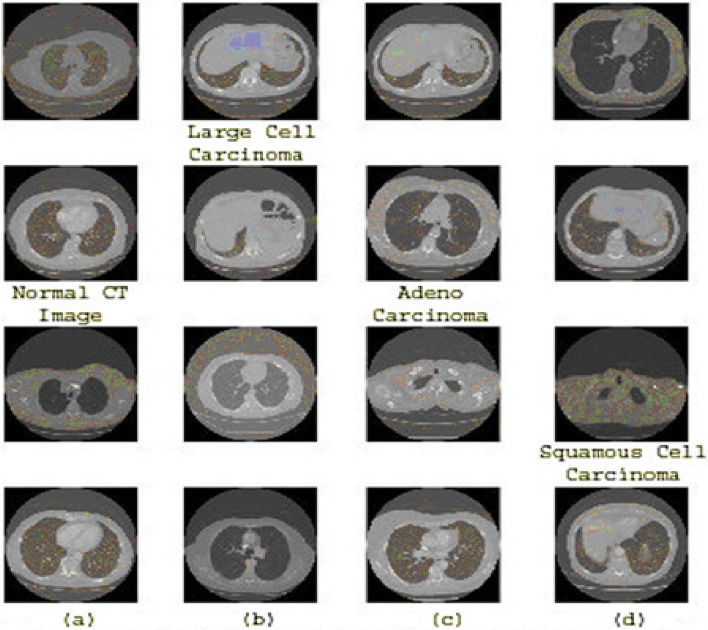
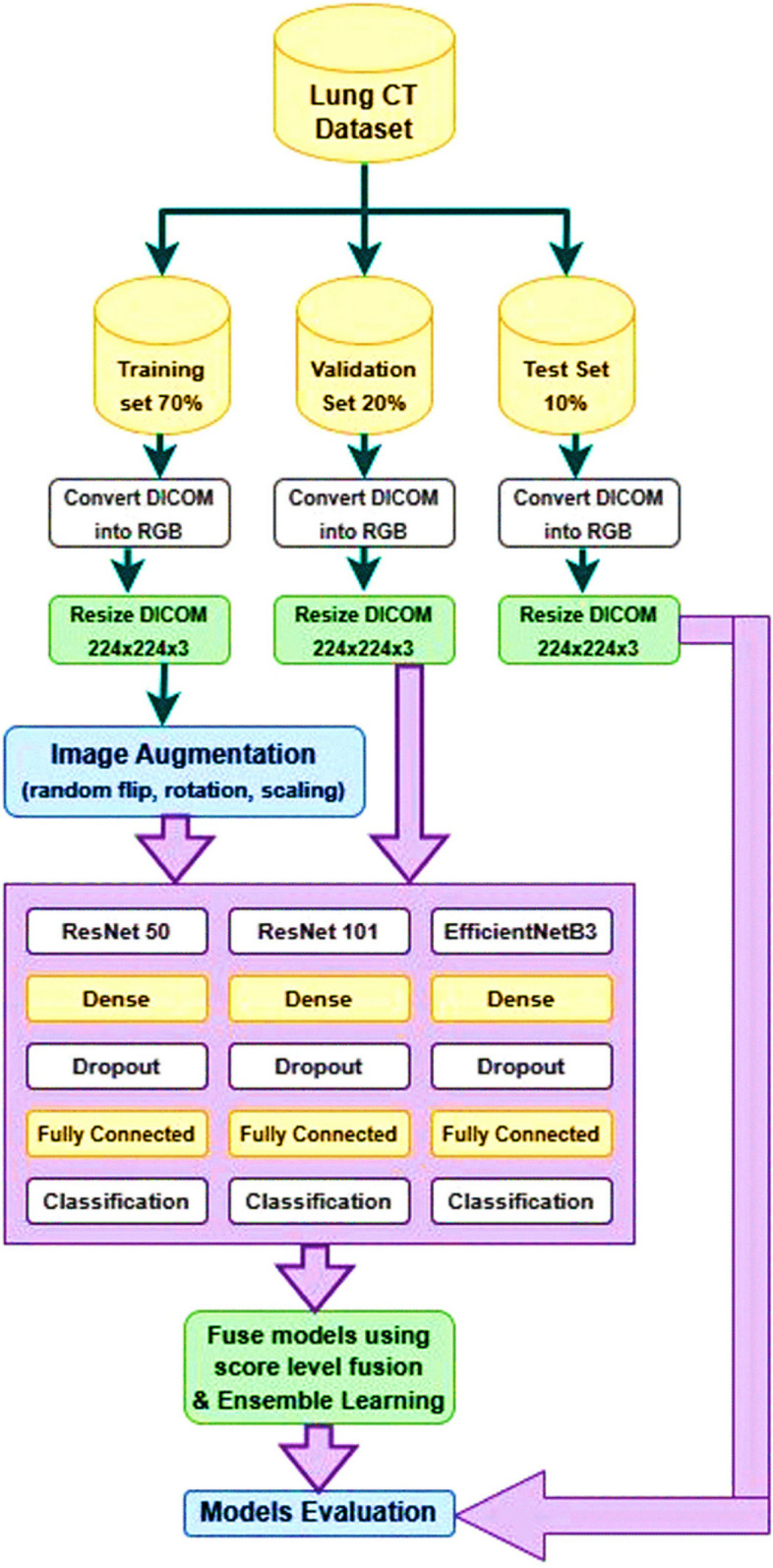
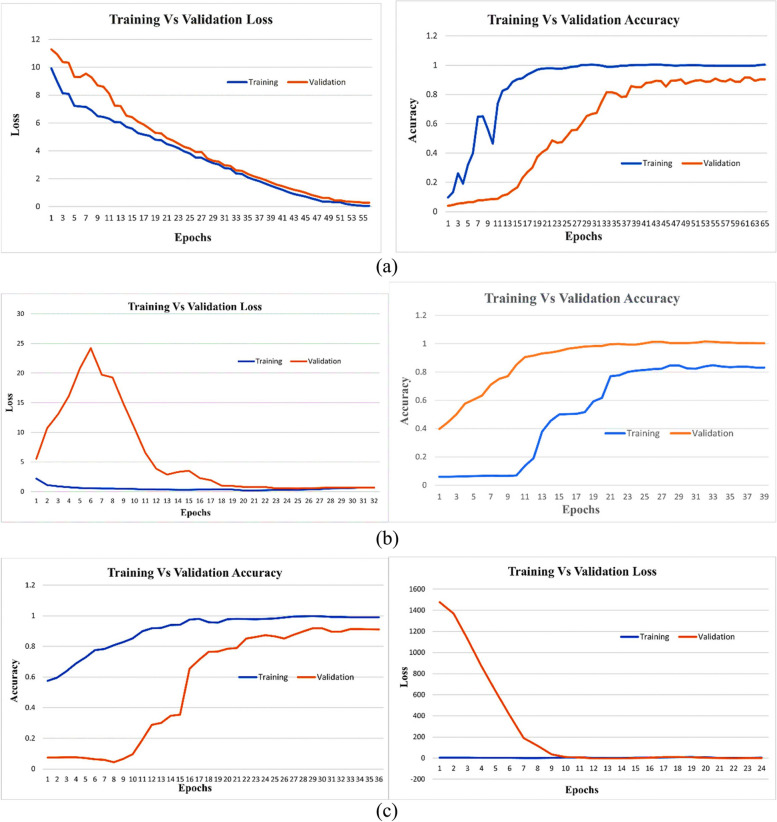
Significant advancements in machine learning algorithms have the potential to aid in the early detection and prevention of cancer, a devastating disease. However, traditional research methods face obstacles, and the amount of cancer-related information is rapidly expanding. The authors have developed a helpful support system using three distinct deep-learning models, ResNet-50, EfficientNet-B3, and ResNet-101, along with transfer learning, to predict lung cancer, thereby contributing to health and reducing the mortality rate associated with this condition. This offer aims to address the issue effectively. Using a dataset of 1,000 DICOM lung cancer images from the LIDC-IDRI repository, each image is classified into four different categories. Although deep learning is still making progress in its ability to analyze and understand cancer data, this research marks a significant step forward in the fight against cancer, promoting better health outcomes and potentially lowering the mortality rate. The Fusion Model, like all other models, achieved 100% precision in classifying Squamous Cells. The Fusion Model and ResNet-50 achieved a precision of 90%, closely followed by EfficientNet-B3 and ResNet-101 with slightly lower precision. To prevent overfitting and improve data collection and planning, the authors implemented a data extension strategy. The relationship between acquiring knowledge and reaching specific scores was also connected to advancing and addressing the issue of imprecise accuracy, ultimately contributing to advancements in health and a reduction in the mortality rate associated with lung cancer.
机器学习算法的显著进展有可能有助于早期发现和预防癌症这种毁灭性疾病。然而,传统的研究方法面临障碍,而且癌症相关信息的数量正在迅速膨胀。作者使用三种不同的深度学习模型(ResNet-50、EfficientNet-B3 和 ResNet-101)以及迁移学习开发了一个有用的支持系统,以预测肺癌,从而促进健康并降低与这种疾病相关的死亡率。这项提议旨在有效地解决这个问题。该研究使用了来自 LIDC-IDRI 存储库的 1000 张 DICOM 肺癌图像数据集,每张图像被分为四个不同的类别。尽管深度学习在分析和理解癌症数据的能力方面仍在不断取得进展,但这项研究标志着在抗击癌症方面迈出了重要的一步,促进了更好的健康结果,并有可能降低死亡率。融合模型与所有其他模型一样,在分类鳞状细胞方面达到了 100%的精度。融合模型和 ResNet-50 的准确率达到了 90%,紧随其后的是 EfficientNet-B3 和 ResNet-101,准确率略低。为了防止过拟合并改善数据收集和规划,作者实施了数据扩展策略。获取知识与达到特定分数之间的关系也与提高和解决精度不精确的问题有关,最终有助于健康的进步和与肺癌相关的死亡率的降低。