Holley Jacob M, Stanbouly Seta, Pecaut Michael J, Willey Jeffrey S, Delp Michael, Mao Xiao Wen
Department of Basic Sciences, Division of Biomedical Engineering Sciences (BMES), Loma Linda University School of Medicine, Loma Linda, CA, 92350, USA.
Department of Radiation Oncology, Wake Forest University, School of Medicine, Winston-Salem, NC, 27101, USA.
NPJ Microgravity. 2022 Aug 10;8(1):35. doi: 10.1038/s41526-022-00217-4.
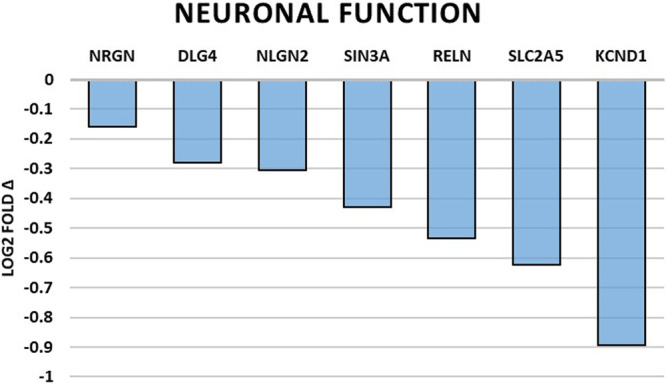
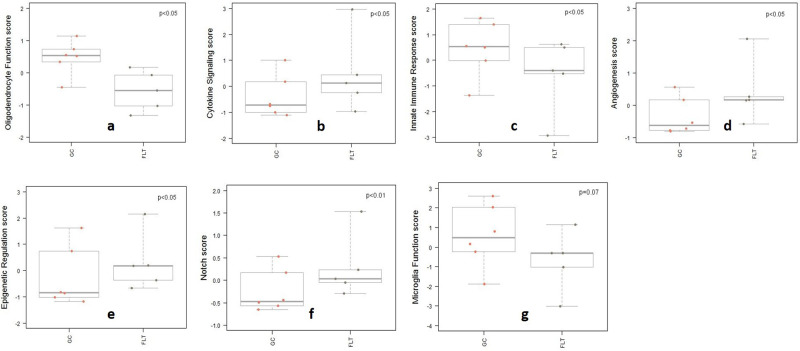
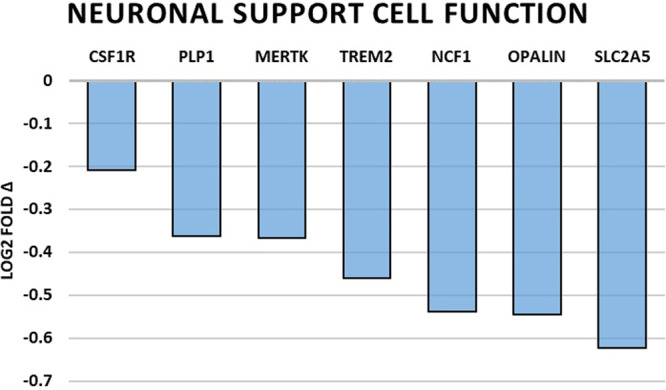
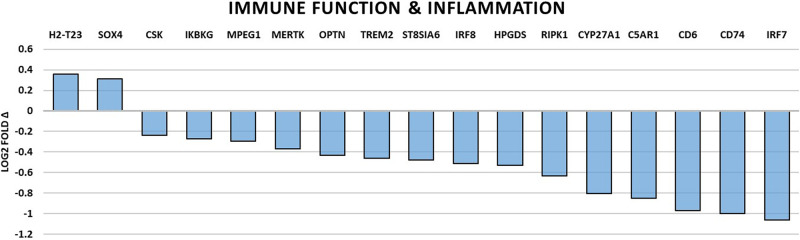
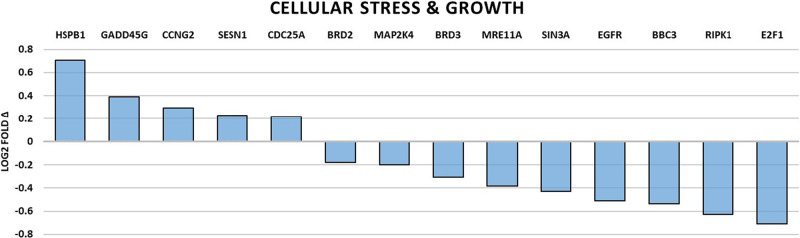
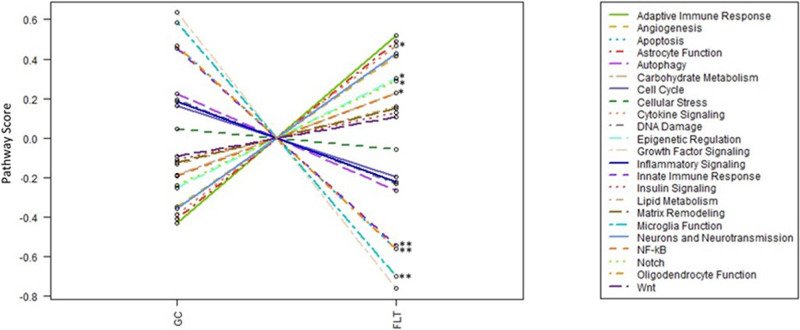
It has been proposed that neuroinflammatory response plays an important role in the neurovascular remodeling in the brain after stress. The goal of the present study was to characterize changes in the gene expression profiles associated with neuroinflammation, neuronal function, metabolism and stress in mouse brain tissue. Ten-week old male C57BL/6 mice were launched to the International Space Station (ISS) on SpaceX-12 for a 35-day mission. Within 38 ± 4 h of splashdown, mice were returned to Earth alive. Brain tissues were collected for analysis. A novel digital color-coded barcode counting technology (NanoString) was used to evaluate gene expression profiles in the spaceflight mouse brain. A set of 54 differently expressed genes (p < 0.05) significantly segregates the habitat ground control (GC) group from flight (FLT) group. Many pathways associated with cellular stress, inflammation, apoptosis, and metabolism were significantly altered by flight conditions. A decrease in the expression of genes important for oligodendrocyte differentiation and myelin sheath maintenance was observed. Moreover, mRNA expression of many genes related to anti-viral signaling, reactive oxygen species (ROS) generation, and bacterial immune response were significantly downregulated. Here we report that significantly altered immune reactions may be closely associated with spaceflight-induced stress responses and have an impact on the neuronal function.
有人提出,神经炎症反应在应激后大脑的神经血管重塑中起重要作用。本研究的目的是表征与小鼠脑组织中神经炎症、神经元功能、代谢和应激相关的基因表达谱变化。10周龄的雄性C57BL/6小鼠搭载SpaceX-12号飞船前往国际空间站(ISS)执行35天的任务。在溅落38±4小时内,小鼠活着返回地球。收集脑组织进行分析。一种新型的数字彩色编码条形码计数技术(NanoString)用于评估太空飞行小鼠大脑中的基因表达谱。一组54个差异表达基因(p<0.05)显著区分了地面对照(GC)组和飞行(FLT)组。许多与细胞应激、炎症、凋亡和代谢相关的通路在飞行条件下发生了显著改变。观察到对少突胶质细胞分化和髓鞘维持重要的基因表达下降。此外,许多与抗病毒信号、活性氧(ROS)生成和细菌免疫反应相关的基因的mRNA表达显著下调。在此我们报告,显著改变的免疫反应可能与太空飞行诱导的应激反应密切相关,并对神经元功能产生影响。