Associated Laboratory for Energy, Transports and Aeronautics (PROA/LAETA), Faculty of Engineering, University of Porto, 4200-465 Porto, Portugal.
Center for Research, Education, Innovation and Intervention in Sport (CIFI2D/LABIOMEP), Faculty of Sports, University of Porto, 4200-450 Porto, Portugal.
Int J Environ Res Public Health. 2022 Jul 28;19(15):9241. doi: 10.3390/ijerph19159241.
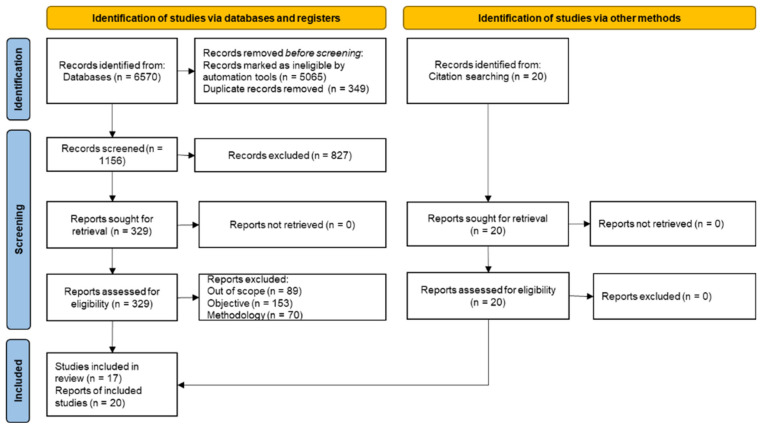
Patellofemoral pain syndrome (PFPS) is highly prevalent; it can cause severe pain and evolve into progressive functional loss, leading to difficulties performing daily tasks such as climbing and descending stairs and squatting. This systematic review aimed to find evidence, in the literature, of squat movements that can cause or worsen PFPS. This work was based on the Preferred Reporting Items for Systematic Reviews and Meta-Analyses (PRISMA) statement, and its protocol was registered in PROSPERO (CRD42019128711). From the 6570 collected records, 37 were included. From these 37 articles, 27 present a causal relationship between knee flexion and PFPS, 8 describe a relationship, considering the greater existence of muscle contractions, and one article did not describe this relationship in its results. The main limitations stem from the fact that different studies used different evaluation parameters to compare the force exerted on the patellofemoral joint. Furthermore, most studies are focused on sports populations. After analysing the included works, it was concluded that all squat exercises can cause tension overload in the knee, especially with a knee flexion between 60° and 90° degrees. The main causal/worsening factors of PFPS symptoms are the knee translocation forward the toes (on the same body side) when flexing the knee, and the muscle imbalance between the thigh muscles.
髌股疼痛综合征(PFPS)发病率高,可引起严重疼痛,并逐渐导致功能丧失,导致上下楼梯和下蹲等日常活动困难。本系统评价旨在从文献中寻找引起或加重 PFPS 的深蹲运动的证据。这项工作基于系统评价和荟萃分析的首选报告项目(PRISMA)声明,并在 PROSPERO(CRD42019128711)中注册了其方案。从 6570 条记录中,共纳入 37 项研究。在这 37 篇文章中,有 27 篇文章描述了膝关节屈曲与 PFPS 之间的因果关系,8 篇文章描述了肌肉收缩程度较大时的关系,一篇文章在结果中未描述这种关系。主要的局限性在于,不同的研究使用不同的评估参数来比较髌股关节所受的力。此外,大多数研究都集中在运动人群中。在分析了纳入的研究后,得出的结论是,所有深蹲运动都可能导致膝关节过度紧张,尤其是在膝关节屈曲 60°至 90°之间时。PFPS 症状的主要致病/加重因素是膝关节在屈曲时向前脚趾(同侧)移位,以及大腿肌肉之间的肌肉失衡。