Institute and Policlinic for Occupational Medicine, Environmental Medicine and Prevention Research, Faculty of Medicine and University Hospital of Cologne, University of Cologne, Kerpener Straße 62, 50937 Cologne, Germany.
Nutrients. 2022 Aug 2;14(15):3177. doi: 10.3390/nu14153177.
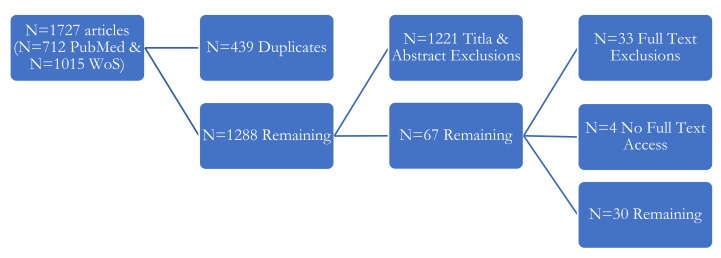
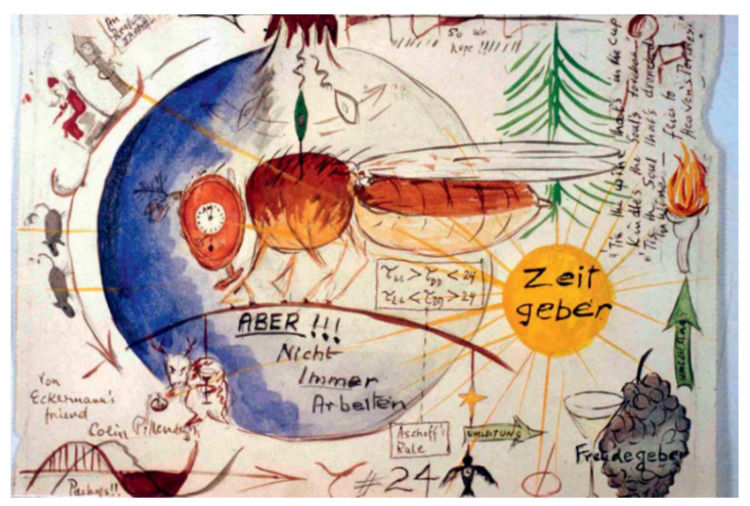
A historical Christmas card connecting two pioneers of modern chronobiology (Colin Pittendrigh and Jürgen Aschoff) brings together key evolutionary facets of the field at Christmas time. The importance of the field to physiology and medicine is conveyed by the Nobel Prize award in 2017 for discoveries of how body clocks facilitate the temporal organization of physiology across days and nights. Temporal organization can have relevance for dietary Christmas excesses and dietary New Year resolutions. Herein, we examine how diet around Christmas and New Year has been targeted in human health research and we examine published opinion on dietary practice concerning Christmas and New Year using a systematized literature review approach. Thereafter, via a selective literature synthesis regarding time-restricted eating, we explore the chronobiological notion that "when" we eat and drink may make differences in terms of whether we experience weight gain and adverse health effects during and after the festive days. Overall, current Christmas eating is typically detrimental to health in terms of "how much" we consume of "what". Regarding New Year's goal-setting, chronobiology-based advice could be considered insofar as "when" we eat may be a healthier and more sustainable nutritional habit alternative. While we need further studies in humans, individual and public health may benefit during and after Christmas by adhering to plausible principles of chrononutrition. That detrimental nutritional excesses over Christmas may encourage individuals to tackle their eating habits should not be left untapped.
一张具有历史意义的圣诞贺卡将现代时间生物学的两位先驱(科林·皮特恩德里格和于尔根·阿斯乔夫)联系在一起,在圣诞节之际将该领域的关键进化方面汇聚在一起。2017 年,诺贝尔生理学或医学奖授予发现生物钟如何促进昼夜生理时间组织的研究人员,这凸显了该领域对生理学和医学的重要性。时间组织可能与圣诞节和新年期间的饮食过量和新年饮食决议有关。在此,我们研究了围绕圣诞节和新年的饮食如何成为人类健康研究的目标,并使用系统的文献综述方法研究了关于圣诞节和新年饮食实践的已发表意见。此后,我们通过关于限时进食的选择性文献综合,探讨了“我们何时”进食和饮水可能会对我们在节日期间和之后是否会体重增加和出现健康不良影响产生影响的时间生物学概念。总体而言,就我们摄入的“量”和“质”而言,目前的圣诞节饮食通常对健康不利。关于新年的目标设定,基于时间生物学的建议可以考虑,因为“我们何时”进食可能是一种更健康、更可持续的营养习惯替代方案。虽然我们需要在人类中进行进一步的研究,但在圣诞节期间和之后,遵循合理的时间营养原则可能会使个人和公共健康受益。圣诞节期间的不良营养过剩可能会鼓励个人解决他们的饮食习惯,这一点不应被忽视。