Centre for Neural Circuits & Behaviour, University of Oxford, Oxford OX1 3TA, UK.
Centre for Neural Circuits & Behaviour, University of Oxford, Oxford OX1 3TA, UK; Department of Biosciences, Durham University, Durham DH1 3LE, UK.
Curr Biol. 2022 Sep 26;32(18):3952-3970.e8. doi: 10.1016/j.cub.2022.07.038. Epub 2022 Aug 12.
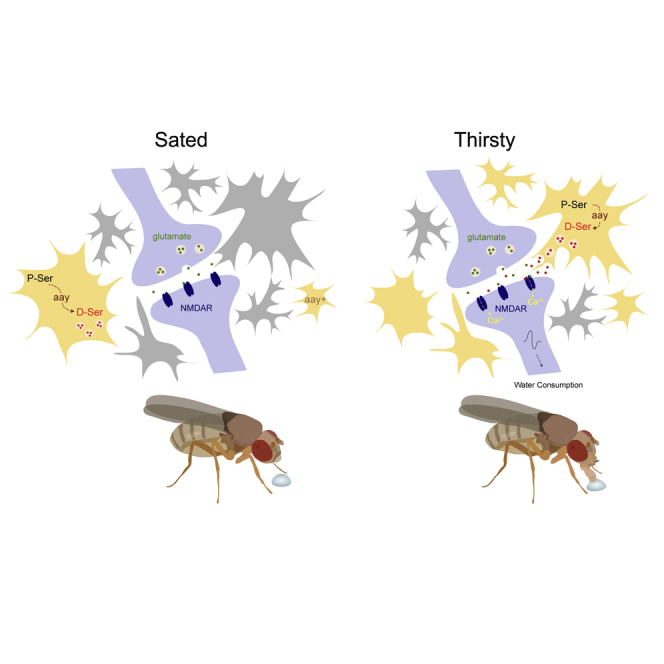
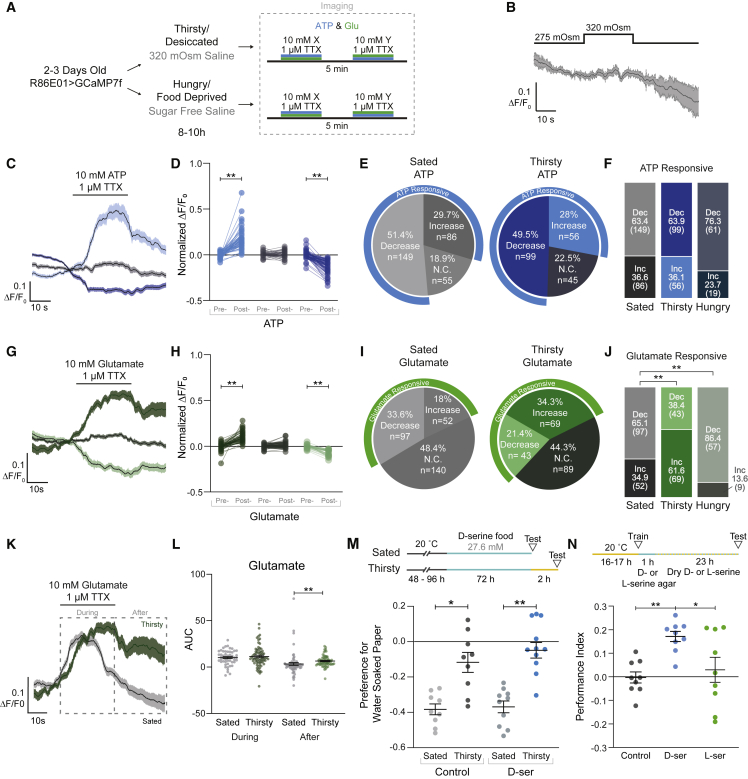
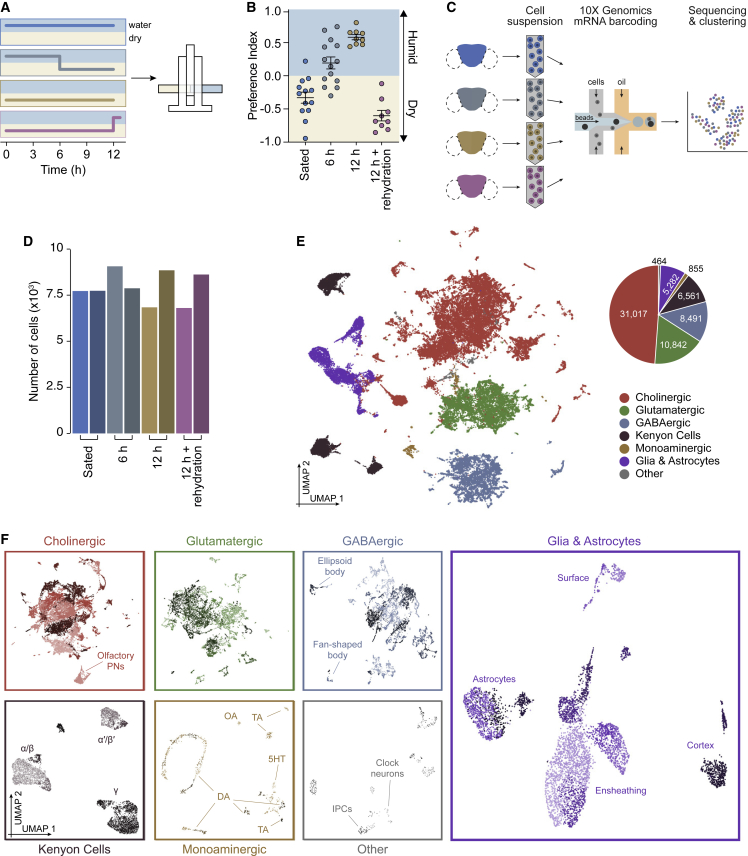
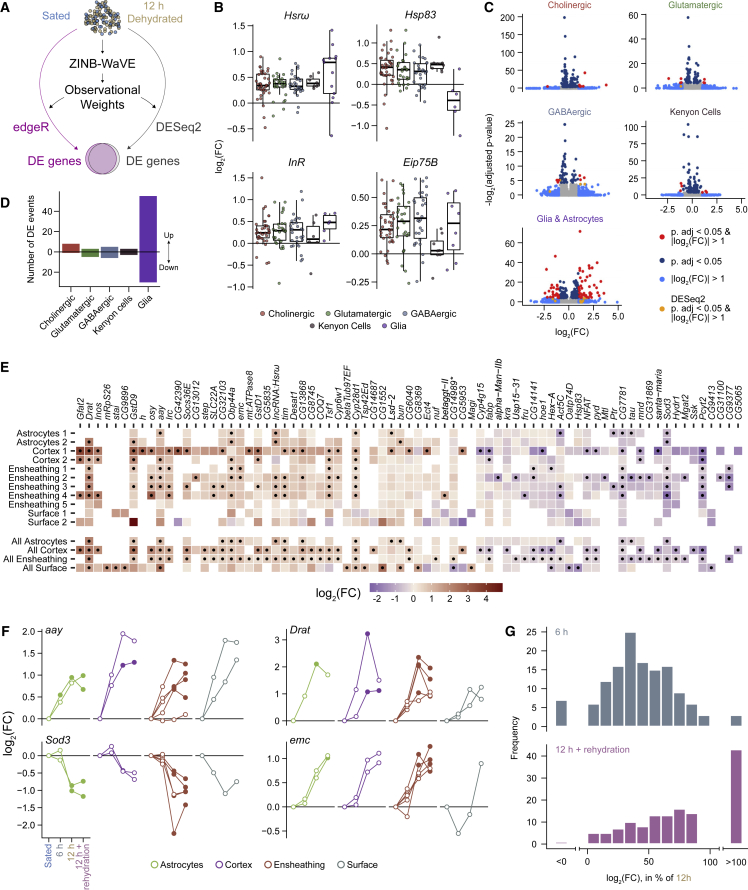
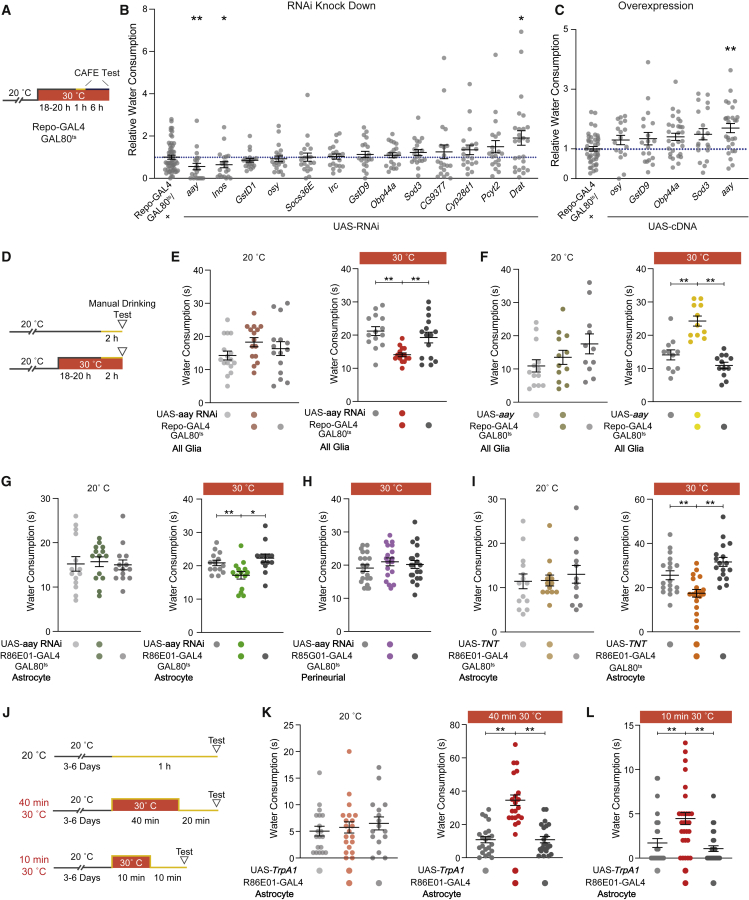
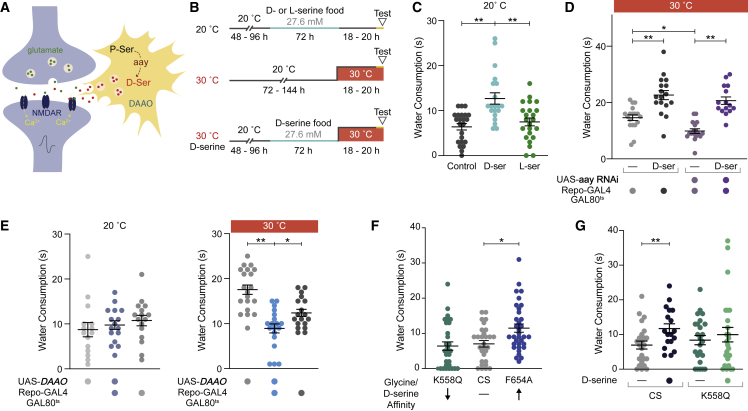
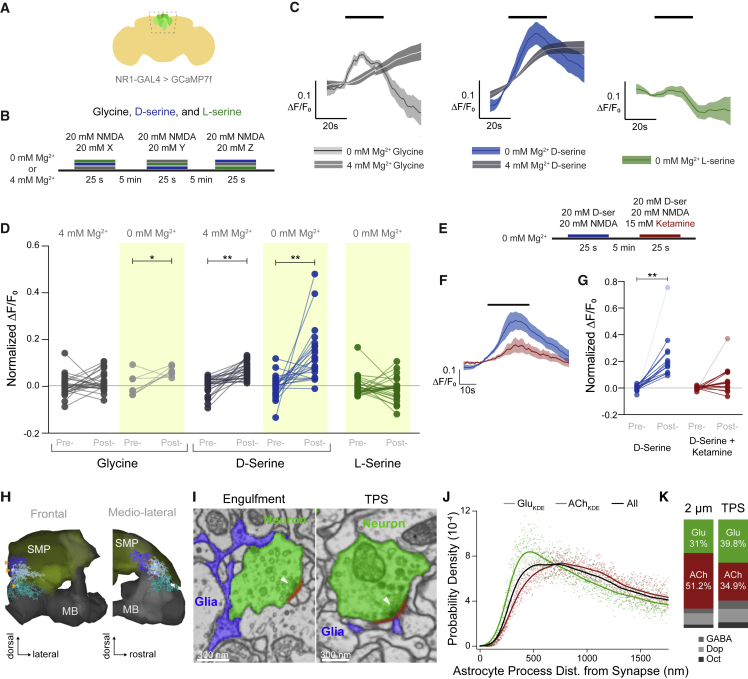
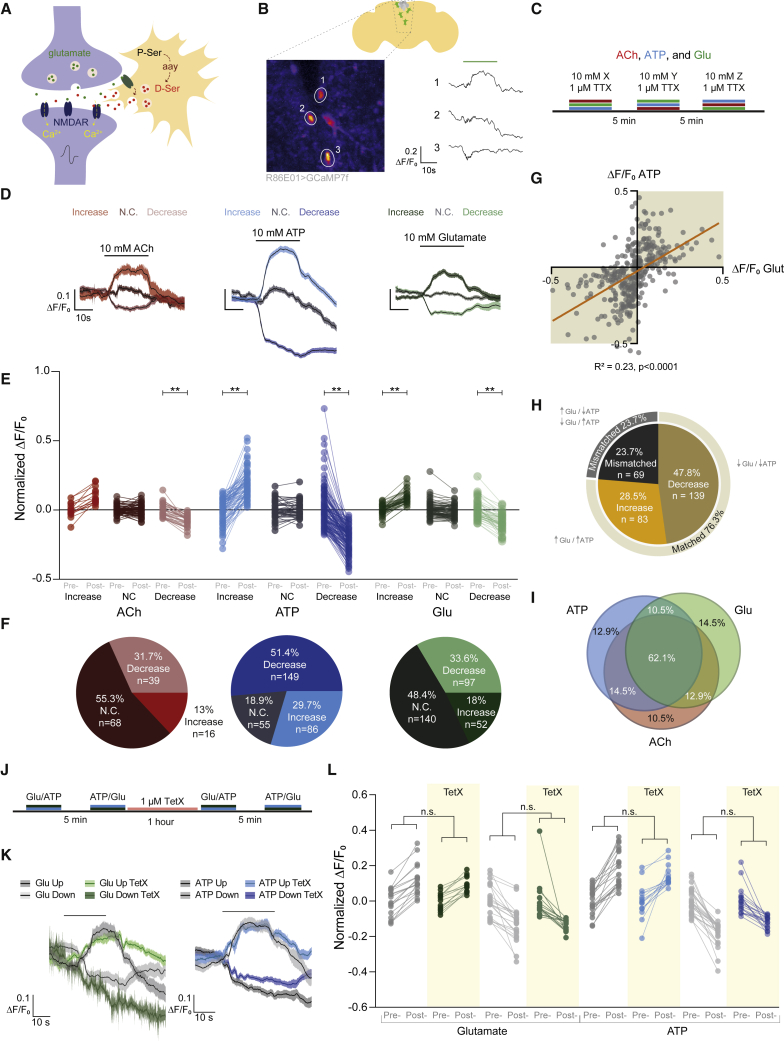
Thirst emerges from a range of cellular changes that ultimately motivate an animal to consume water. Although thirst-responsive neuronal signals have been reported, the full complement of brain responses is unclear. Here, we identify molecular and cellular adaptations in the brain using single-cell sequencing of water-deprived Drosophila. Water deficiency primarily altered the glial transcriptome. Screening the regulated genes revealed astrocytic expression of the astray-encoded phosphoserine phosphatase to bi-directionally regulate water consumption. Astray synthesizes the gliotransmitter D-serine, and vesicular release from astrocytes is required for drinking. Moreover, dietary D-serine rescues aay-dependent drinking deficits while facilitating water consumption and expression of water-seeking memory. D-serine action requires binding to neuronal NMDA-type glutamate receptors. Fly astrocytes contribute processes to tripartite synapses, and the proportion of astrocytes that are themselves activated by glutamate increases with water deprivation. We propose that thirst elevates astrocytic D-serine release, which awakens quiescent glutamatergic circuits to enhance water procurement.
口渴源于一系列细胞变化,这些变化最终促使动物饮水。虽然已经报道了口渴反应神经元信号,但大脑反应的全貌尚不清楚。在这里,我们使用单细胞测序技术对缺水的果蝇进行研究,以确定大脑中的分子和细胞适应性。水分不足主要改变了神经胶质的转录组。对受调控基因的筛选表明,astray 编码的磷酸丝氨酸磷酸酶在双向调节水的摄入中表达。Astray 合成神经递质 D-丝氨酸,而从星形胶质细胞中释放囊泡则是饮水所必需的。此外,膳食 D-丝氨酸可挽救依赖 astray 的饮水缺陷,同时促进水的摄入和寻找水的记忆的表达。D-丝氨酸的作用需要与神经元 NMDA 型谷氨酸受体结合。果蝇星形胶质细胞参与三突触过程,并且随着水分剥夺,自身被谷氨酸激活的星形胶质细胞的比例增加。我们提出,口渴会增加星形胶质细胞中 D-丝氨酸的释放,从而唤醒静止的谷氨酸能回路,以增强水的获取。