Department of Surgery, University of California Davis, Sacramento, CA 95817, USA.
Institute for Pediatric Regenerative Medicine, Shriners Hospitals for Children Northern California, Sacramento, CA 95817, USA.
Theranostics. 2022 Aug 8;12(13):6021-6037. doi: 10.7150/thno.70448. eCollection 2022.
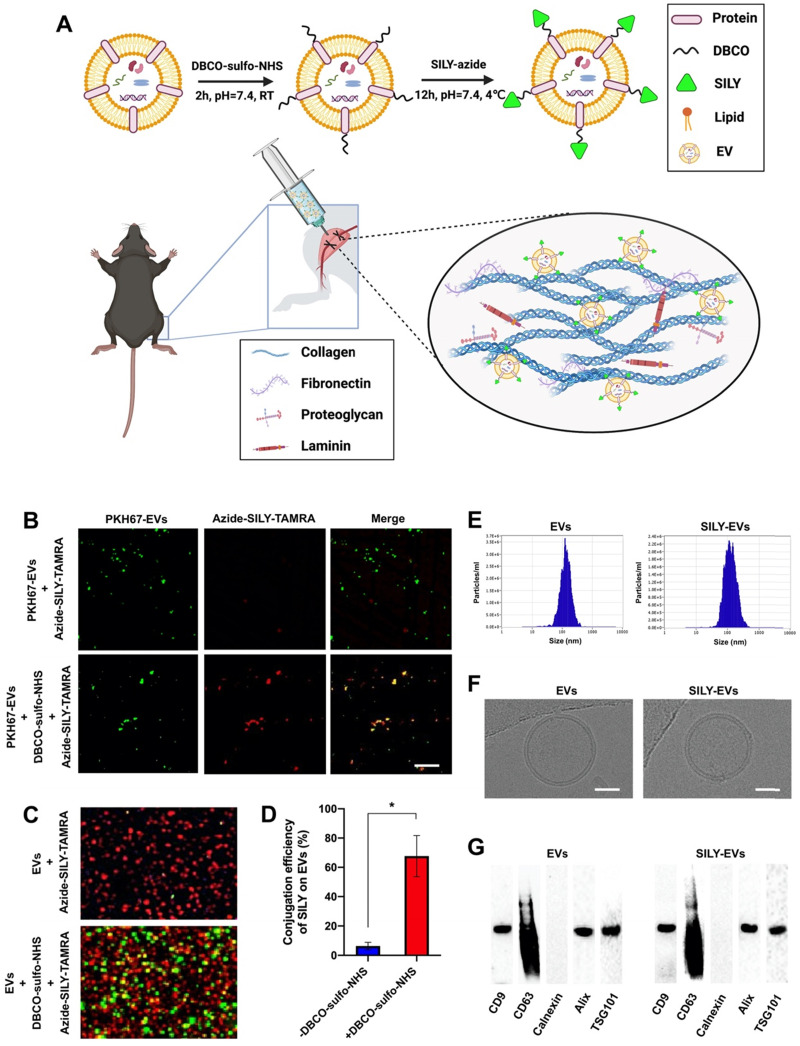
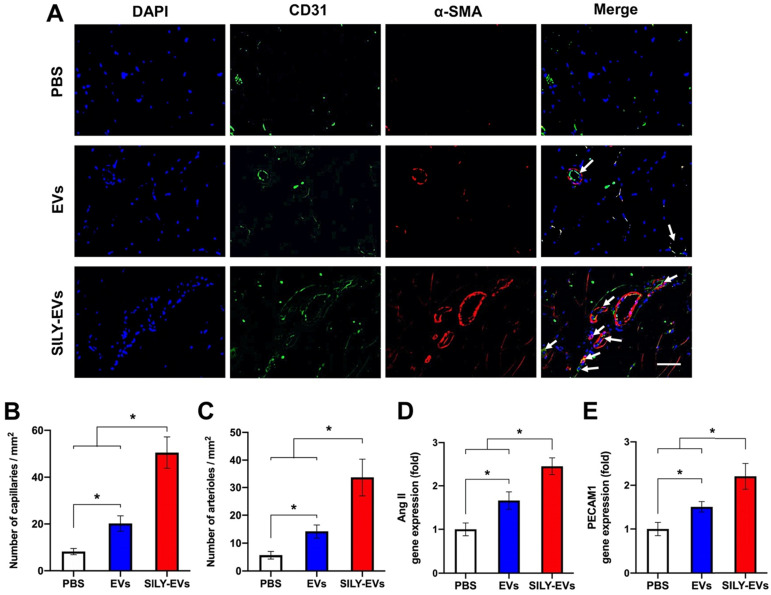
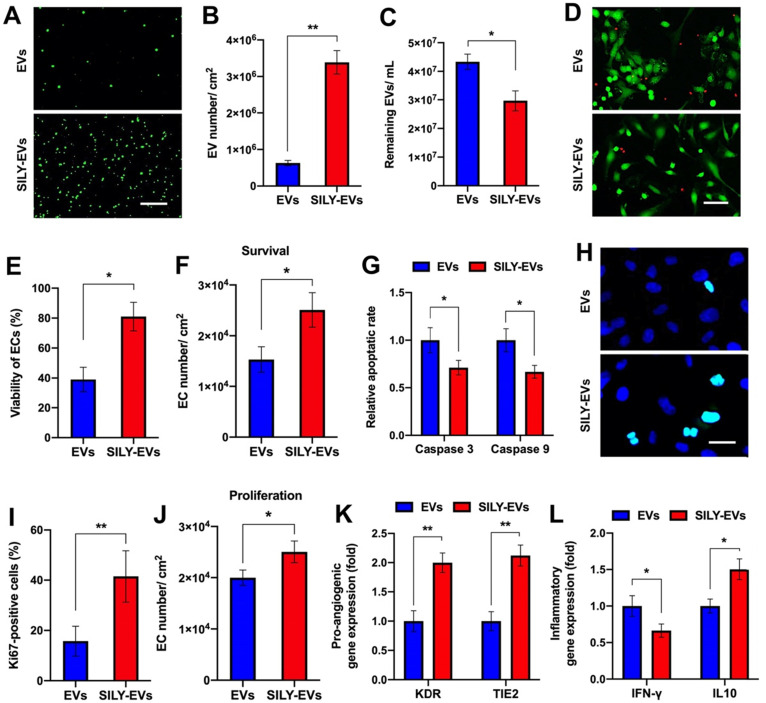
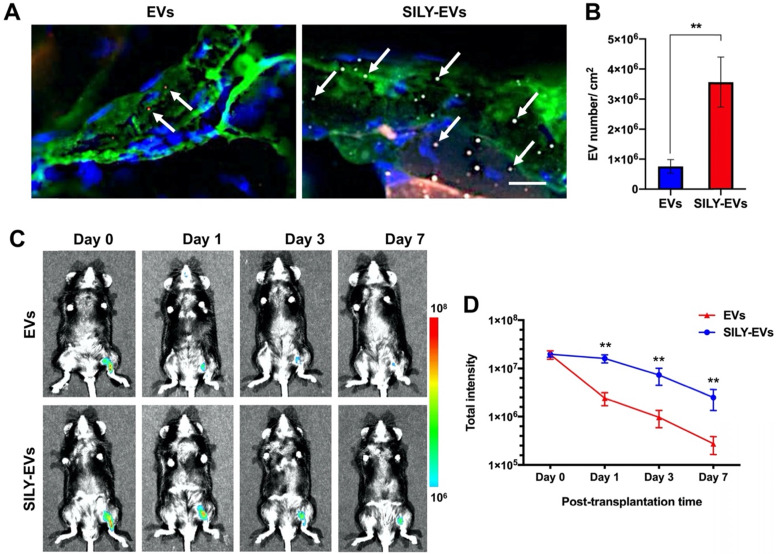
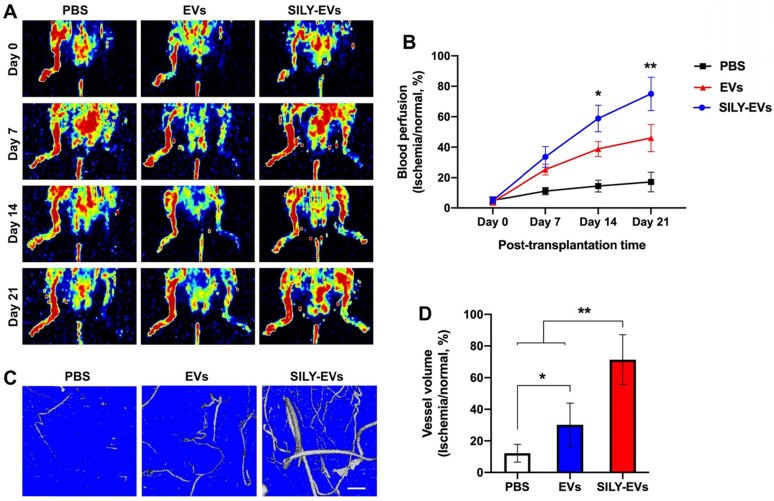
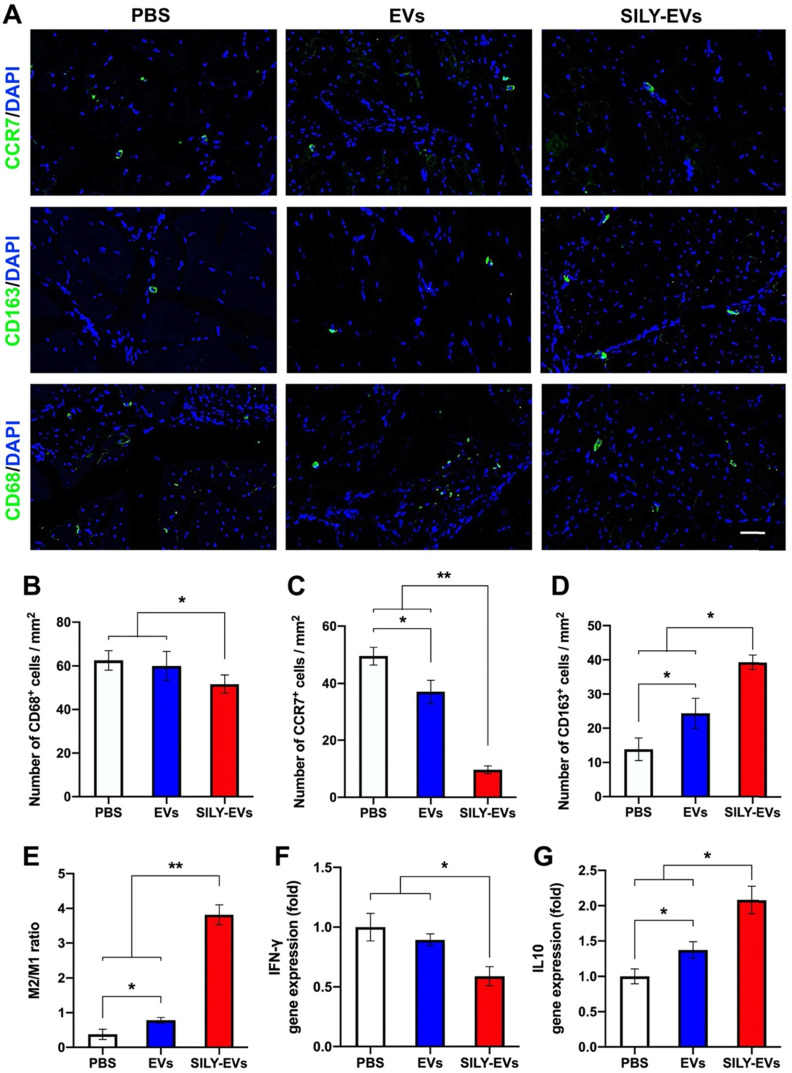
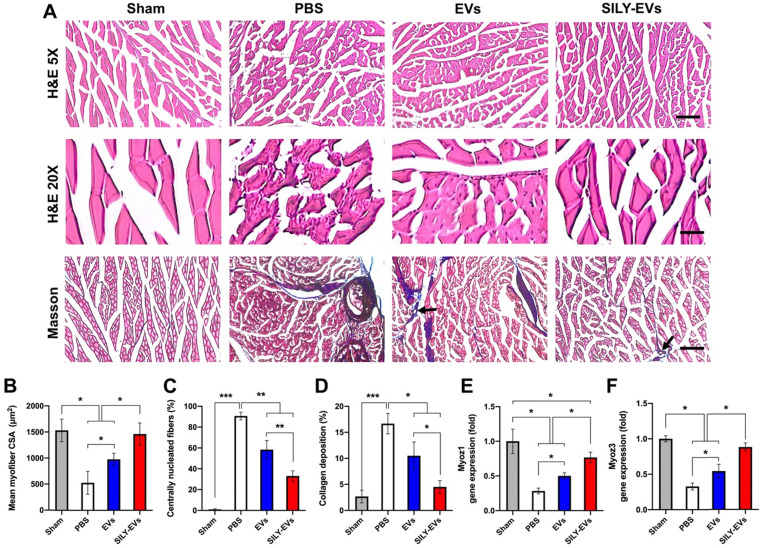
Although stem cell-derived extracellular vesicles (EVs) have remarkable therapeutic potential for various diseases, the therapeutic efficacy of EVs is limited due to their degradation and rapid diffusion after administration, hindering their translational applications. Here, we developed a new generation of collagen-binding EVs, by chemically conjugating a collagen-binding peptide SILY to EVs (SILY-EVs), which were designed to bind to collagen in the extracellular matrix (ECM) and form an EV-ECM complex to improve EVs' retention and therapeutic efficacy after transplantation. SILY was conjugated to the surface of mesenchymal stem/stromal cell (MSC)-derived EVs by using click chemistry to construct SILY-EVs. Nanoparticle tracking analysis (NTA), ExoView analysis, cryogenic electron microscopy (cryo-EM) and western-blot analysis were used to characterize the SILY-EVs. Fluorescence imaging (FLI), MTS assay, ELISA and reverse transcription-quantitative polymerase chain reaction (RT-qPCR) were used to evaluate the collagen binding and biological functions of SILY-EVs . In a mouse hind limb ischemia model, the imaging system (IVIS), laser doppler perfusion imaging (LDPI), micro-CT, FLI and RT-qPCR were used to determine the SILY-EV retention, inflammatory response, blood perfusion, gene expression, and tissue regeneration. , the SILY conjugation significantly enhanced EV adhesion to the collagen surface and did not alter the EVs' biological functions. In the mouse hind limb ischemia model, SILY-EVs presented longer retention, suppressed inflammatory responses, and significantly augmented muscle regeneration and vascularization, compared to the unmodified EVs. With the broad distribution of collagen in various tissues and organs, SILY-EVs hold promise to improve the therapeutic efficacy of EV-mediated treatment in a wide range of diseases and disorders. Moreover, SILY-EVs possess the potential to functionalize collagen-based biomaterials and deliver therapeutic agents for regenerative medicine applications.
尽管干细胞衍生的细胞外囊泡(EVs)在各种疾病的治疗中有显著的潜力,但由于其在给药后降解和快速扩散,EVs 的治疗效果受到限制,阻碍了它们的转化应用。在这里,我们开发了新一代胶原结合 EVs,通过化学偶联胶原结合肽 SILY 到 EVs(SILY-EVs),旨在与细胞外基质(ECM)中的胶原结合,并形成 EV-ECM 复合物,以提高 EVs 移植后的保留和治疗效果。 SILY 通过点击化学偶联到间充质干细胞/基质细胞(MSC)衍生的 EV 表面,构建 SILY-EVs。纳米颗粒跟踪分析(NTA)、ExoView 分析、低温电子显微镜(cryo-EM)和 Western-blot 分析用于表征 SILY-EVs。荧光成像(FLI)、MTS 分析、ELISA 和逆转录定量聚合酶链反应(RT-qPCR)用于评估 SILY-EVs 的胶原结合和生物学功能。在小鼠后肢缺血模型中,使用成像系统(IVIS)、激光多普勒灌注成像(LDPI)、微 CT、FLI 和 RT-qPCR 来确定 SILY-EV 的保留、炎症反应、血液灌注、基因表达和组织再生。SILY 缀合显著增强了 EV 与胶原表面的粘附,而不改变 EV 的生物学功能。在小鼠后肢缺血模型中,与未修饰的 EV 相比,SILY-EVs 表现出更长的保留时间,抑制了炎症反应,显著增强了肌肉再生和血管生成。由于胶原在各种组织和器官中的广泛分布,SILY-EVs 有望提高 EV 介导的治疗在广泛的疾病和障碍中的治疗效果。此外,SILY-EVs 具有功能化基于胶原的生物材料和传递治疗剂用于再生医学应用的潜力。