Dept. Biomedicina, Universitat de Barcelona, Barcelona, Spain.
Institut d'Investigacions Biomèdiques August Pi i Sunyer (IDIBAPS), Barcelona, Spain.
PLoS One. 2022 Aug 15;17(8):e0266645. doi: 10.1371/journal.pone.0266645. eCollection 2022.
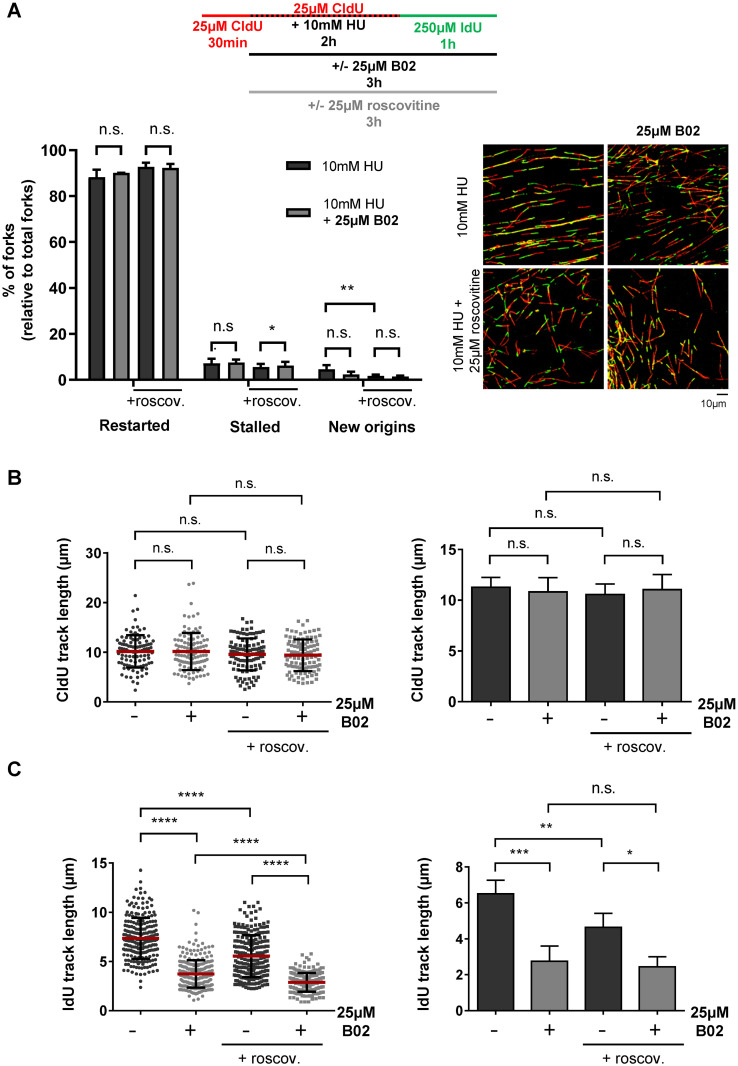
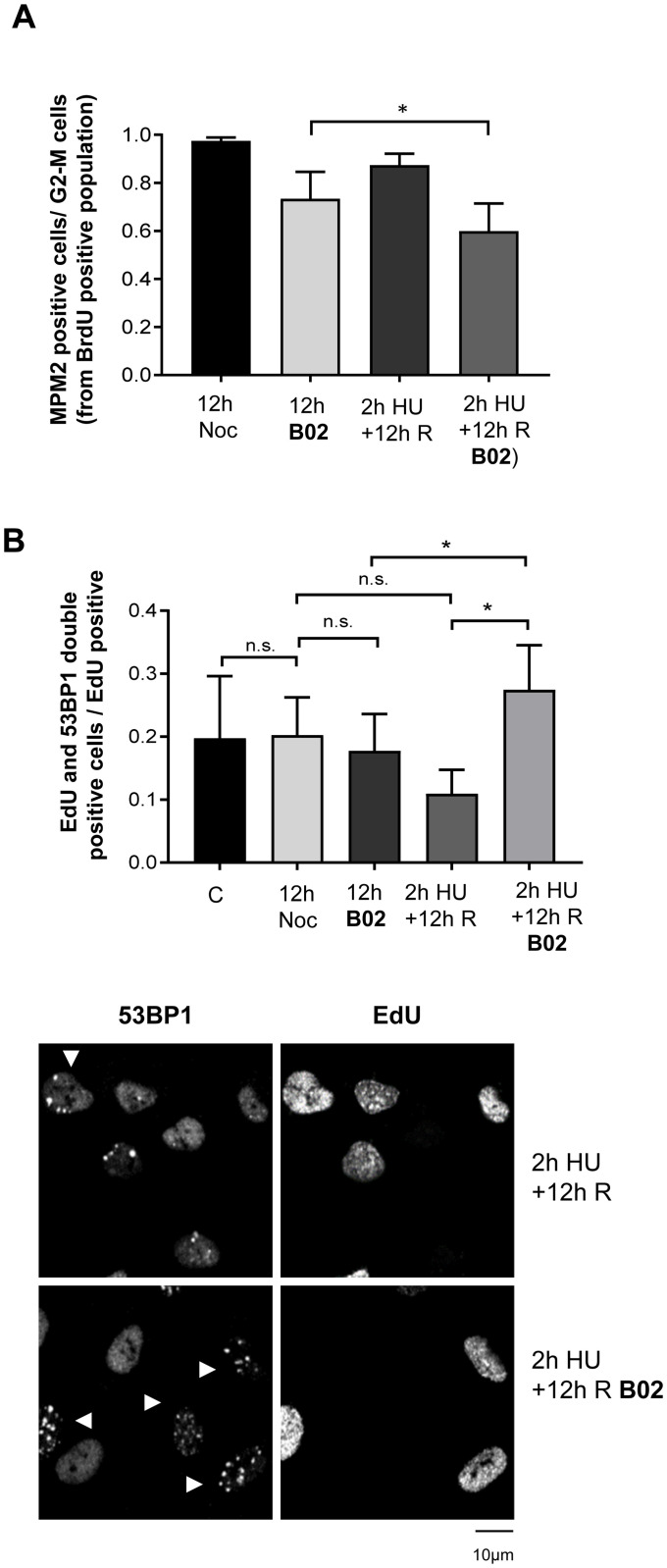
Solving the problems that replication forks encounter when synthesizing DNA is essential to prevent genomic instability. Besides their role in DNA repair in the G2 phase, several homologous recombination proteins, specifically RAD51, have prominent roles in the S phase. Using different cellular models, RAD51 has been shown not only to be present at ongoing and arrested replication forks but also to be involved in nascent DNA protection and replication fork restart. Through pharmacological inhibition, here we study the specific role of RAD51 in the S phase. RAD51 inhibition in non-transformed cell lines did not have a significant effect on replication fork progression under non-perturbed conditions, but when the same cells were subjected to replication stress, RAD51 became necessary to maintain replication fork progression. Notably, the inhibition or depletion of RAD51 did not compromise fork integrity when subjected to hydroxyurea treatment. RAD51 inhibition also did not decrease the ability to restart, but rather compromised fork progression during reinitiation. In agreement with the presence of basal replication stress in human colorectal cancer cells, RAD51 inhibition reduced replication fork speed in these cells and increased γH2Ax foci under control conditions. These alterations could have resulted from the reduced association of DNA polymerase α to chromatin, as observed when inhibiting RAD51. It may be possible to exploit the differential dependence of non-transformed cells versus colorectal cancer cells on RAD51 activity under basal conditions to design new therapies that specifically target cancer cells.
解决复制叉在合成 DNA 时遇到的问题对于防止基因组不稳定性至关重要。除了在 G2 期在 DNA 修复中的作用外,几种同源重组蛋白,特别是 RAD51,在 S 期也具有重要作用。使用不同的细胞模型,RAD51 不仅存在于正在进行和停滞的复制叉中,而且还参与新生 DNA 的保护和复制叉的重新启动。通过药理学抑制,我们在这里研究 RAD51 在 S 期的特定作用。在非转化细胞系中抑制 RAD51 在非扰情况下对复制叉进展没有显著影响,但当相同的细胞受到复制压力时,RAD51 对于维持复制叉进展是必需的。值得注意的是,当用羟基脲处理时,抑制或耗尽 RAD51 并不破坏叉的完整性。RAD51 抑制也不会降低重新启动的能力,而是在重新启动期间损害叉的进展。与人类结直肠癌细胞中存在基础复制应激一致,RAD51 抑制降低了这些细胞中的复制叉速度,并在对照条件下增加了 γH2Ax 焦点。这些改变可能是由于抑制 RAD51 时观察到的 DNA 聚合酶 α与染色质的结合减少所致。可能可以利用非转化细胞与结直肠癌细胞在基础条件下对 RAD51 活性的不同依赖性来设计专门针对癌细胞的新疗法。