She Kelin, Yu Shaoqi, He Shushuai, Wang Wen, Chen Biao
Department of Thoracic Surgery, Hunan Provincial People's Hospital, The First Affiliated Hospital of Hunan Nomal University, Changsha, Hunan, 410005, China.
Cancer Research Institute, Central South University, Changsha, 410078, Hunan, China.
Biomark Res. 2022 Aug 16;10(1):61. doi: 10.1186/s40364-022-00407-y.
Circular RNAs (circRNAs) are important regulators of the development and progression of non-small-cell lung cancer (NSCLC) and many other malignancies. The functional importance of circ_0009043 in NSCLC, however, has yet to be established.
The expression of circ_0009043, miR-148a-3p, and DnaJ heat shock protein family (Hsp40) member B4 (DNAJB4) in NSCLC cells was assessed via qPCR. The proliferative activity of these cells was examined through EdU uptake and CCK-8 assays, while flow cytometry approaches were used to examine apoptotic cell death rates. Protein expression was measured through Western immunoblotting. Interactions between miR-148a-3p and circ_0009043 or DNAJB4 were detected through RNA immunoprecipitation (RIP) and dual-luciferase reporter assays. The in vivo importance of circ_0009043 as a regulator of oncogenic activity was assessed using murine xenograft models.
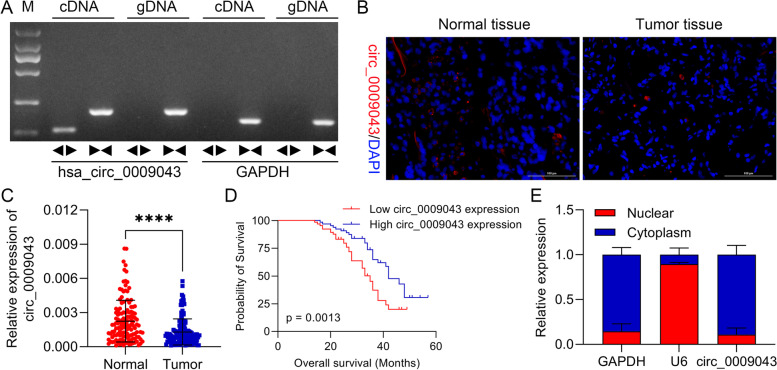
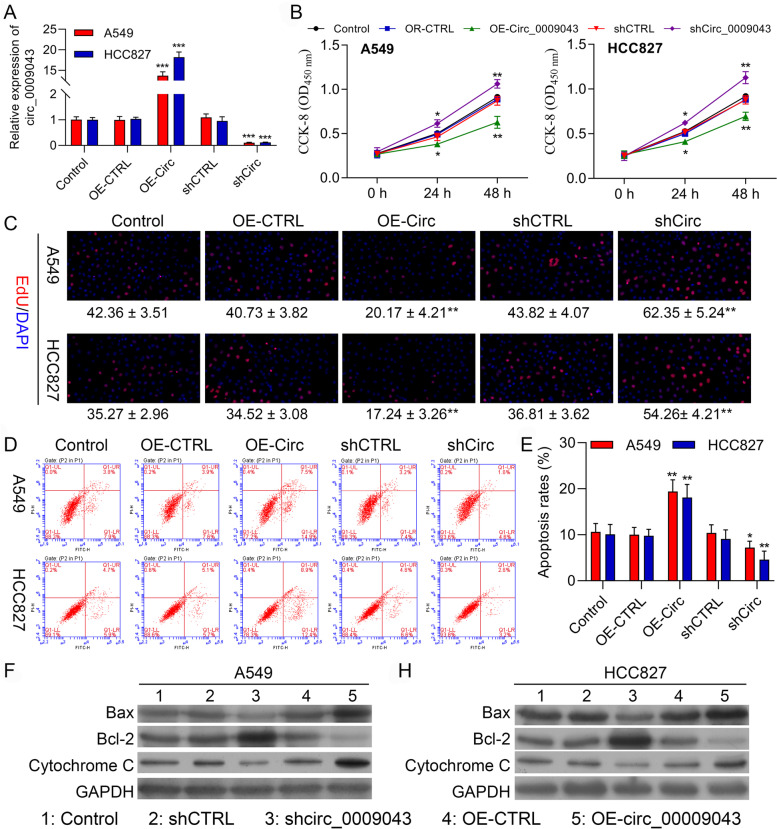
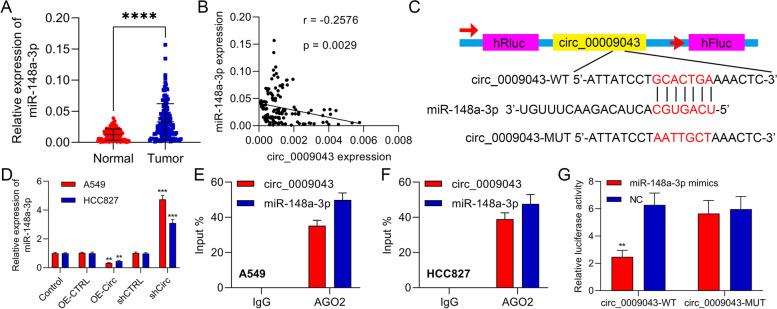
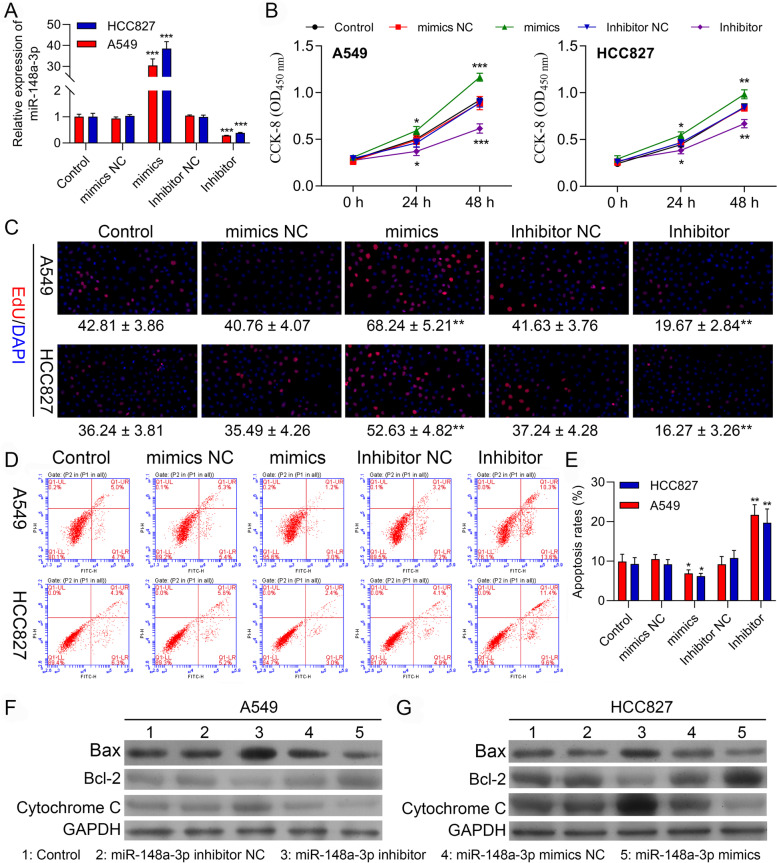
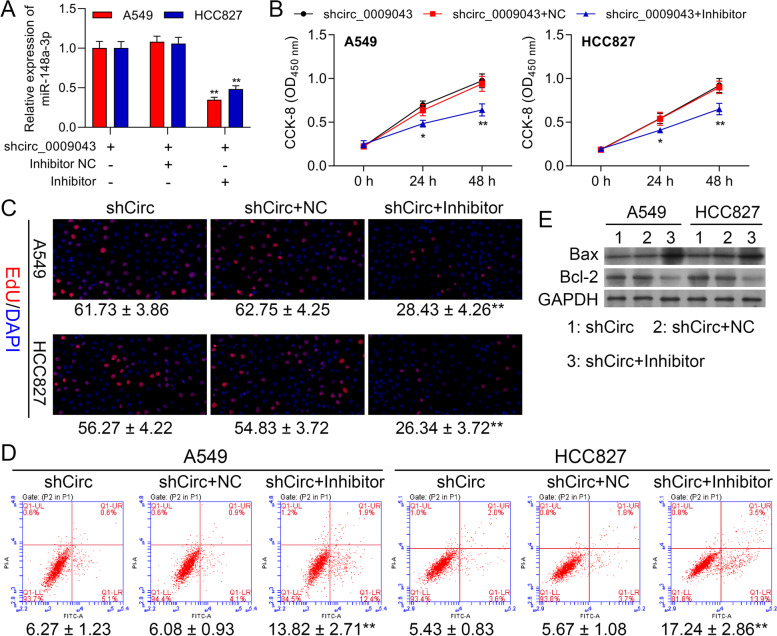
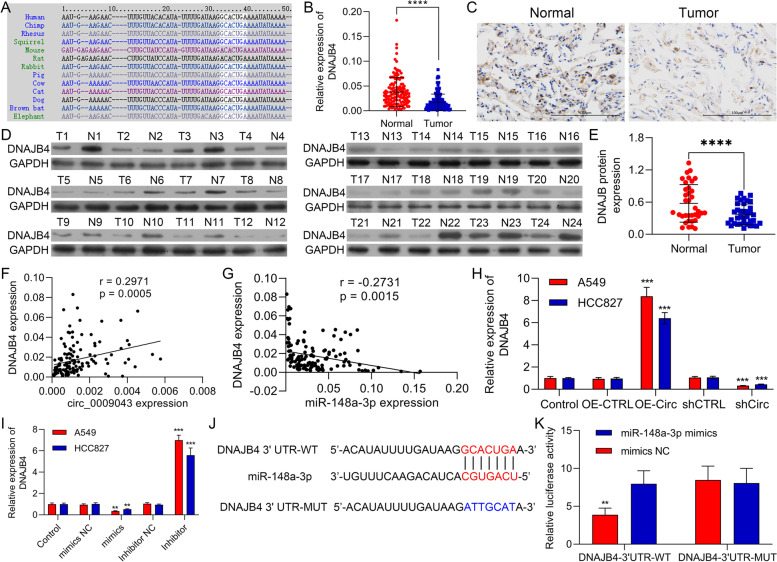
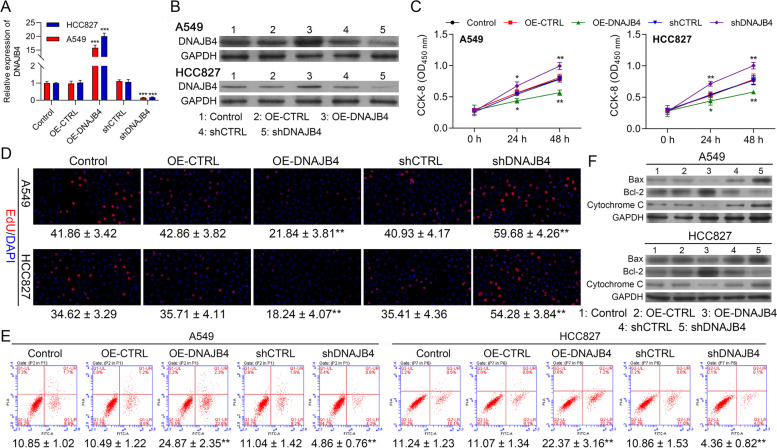
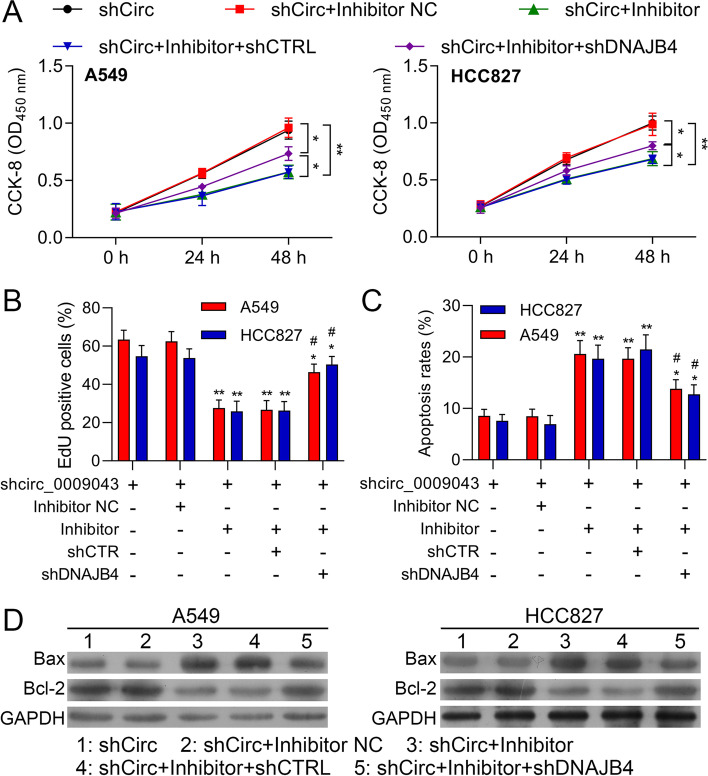
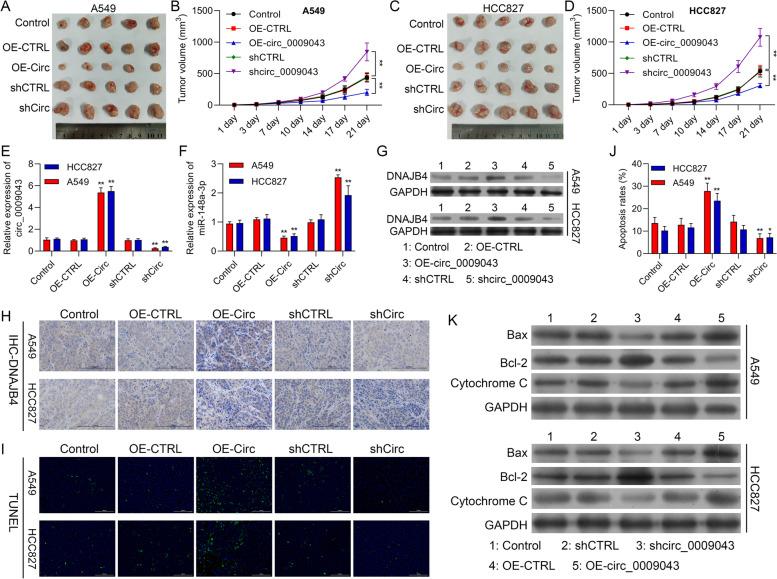
Both NSCLC cells and tissue samples were found to exhibit circ_0009043 upregulation, and lower circ_0009043 expression levels were found to be related to poorer NSCLC patient overall survival. Knocking down circ_0009043 resulted in the enhancement of NSCLC cell proliferative activity and the suppression of apoptotic tumor cell death in vitro, while also driving more rapid in vivo tumorigenesis. Mechanistically, circ_0009043 was found to function as a molecular sponge that sequestered miR-148a-3p, which was in turn able to directly suppress DNAJB4 expression. When miR-148a-3p was overexpressed, this reversed the impact of knocking down circ_0009043 on the apoptotic death and proliferation of NSCLC cells. Conversely, miR-148a-3p inhibition resulted in the suppression of NSCLC cell apoptosis and the enhancement of tumor cell growth, while the downregulation of DNAJB4 reversed these changes.
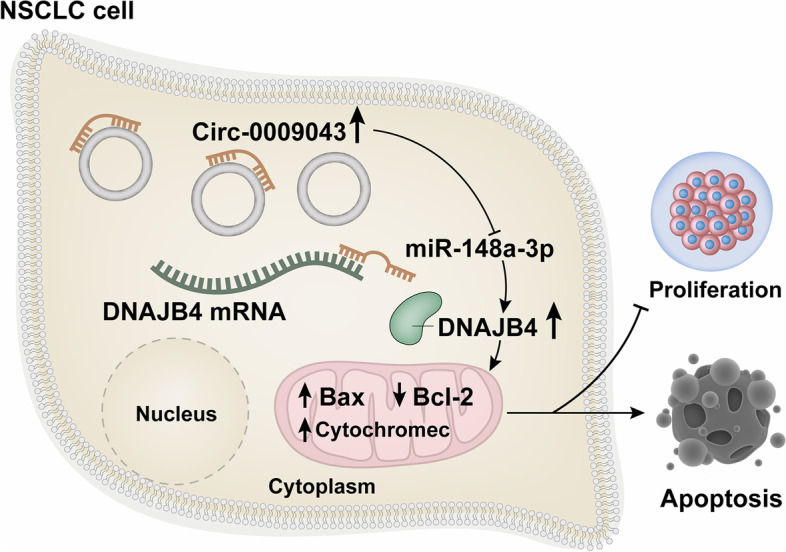
Circ_0009043 acts as a tumor suppressor in NSCLC cells, promoting DNAJB4 upregulation via the sequestration of miR-148a-3p.
环状RNA(circRNAs)是非小细胞肺癌(NSCLC)及许多其他恶性肿瘤发生发展的重要调节因子。然而,circ_0009043在NSCLC中的功能重要性尚未明确。
通过qPCR评估circ_0009043、miR-148a-3p和DnaJ热休克蛋白家族(Hsp40)成员B4(DNAJB4)在NSCLC细胞中的表达。通过EdU摄取和CCK-8试验检测这些细胞的增殖活性,同时采用流式细胞术检测凋亡细胞死亡率。通过蛋白质免疫印迹法检测蛋白质表达。通过RNA免疫沉淀(RIP)和双荧光素酶报告基因试验检测miR-148a-3p与circ_0009043或DNAJB4之间的相互作用。使用小鼠异种移植模型评估circ_0009043作为致癌活性调节因子在体内的重要性。
发现NSCLC细胞和组织样本均表现出circ_0009043上调,且较低的circ_0009043表达水平与NSCLC患者较差的总生存期相关。敲低circ_0009043导致NSCLC细胞增殖活性增强,体外凋亡肿瘤细胞死亡受到抑制,同时也促进体内肿瘤发生更快。从机制上讲,发现circ_0009043作为分子海绵隔离miR-148a-3p,而miR-148a-3p又能够直接抑制DNAJB4表达。当miR-148a-3p过表达时,这逆转了敲低circ_0009043对NSCLC细胞凋亡死亡和增殖的影响。相反,抑制miR-148a-3p导致NSCLC细胞凋亡受到抑制,肿瘤细胞生长增强,而DNAJB4的下调逆转了这些变化。
Circ_0009043在NSCLC细胞中起肿瘤抑制作用,通过隔离miR-148a-3p促进DNAJB4上调。