Department of Urology, National Cheng Kung University Hospital, College of Medicine, National Cheng Kung University, No. 1, University Road, Tainan, 701, Taiwan.
Department of Occupational Therapy, Asia University, Taichung, 413, Taiwan.
BMC Urol. 2022 Aug 20;22(1):126. doi: 10.1186/s12894-022-01084-7.
To explore the dynamic changes and effects of radical cystectomy on quality of life in muscle-invasive bladder cancer survivors.
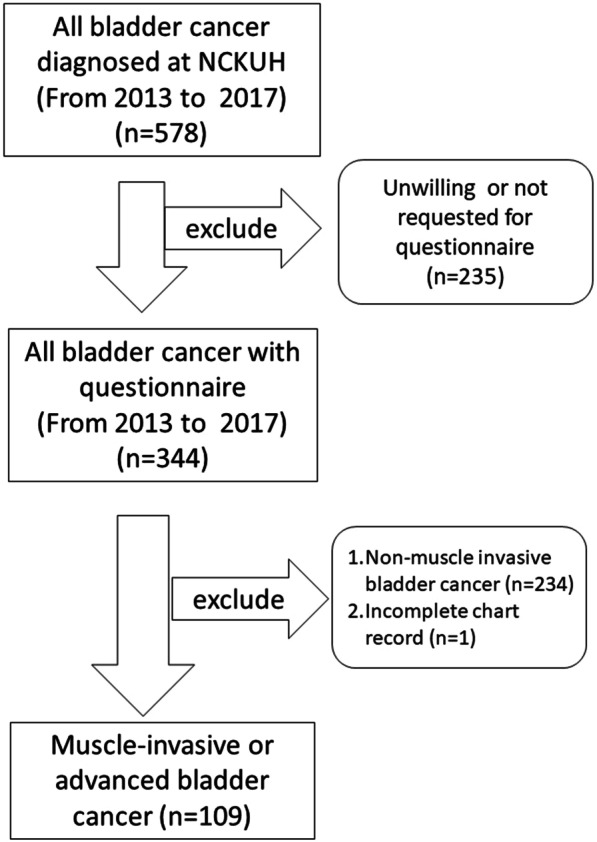
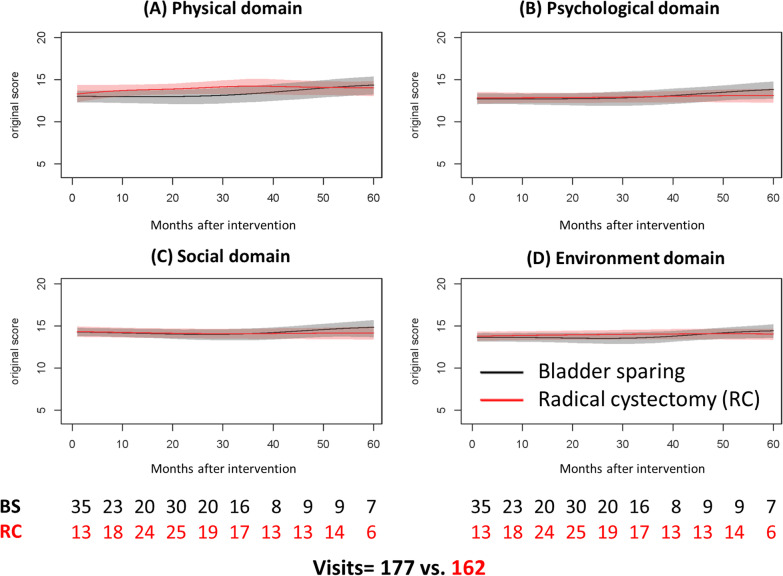
Patients with muscle-invasive bladder cancer were randomly recruited in this study. We used the World Health Organization Quality of Life-Brief questionnaire to assess consecutive patients' quality of life. We applied kernel smoothing to illustrate the dynamic changes of the domain and item scores after treatment. Mixed-effects models were constructed to determine the effects of radical cystectomy on the scores of each item and domain of the World Health Organization Quality of Life-Brief questionnaire after controlling demographic and clinical factors.
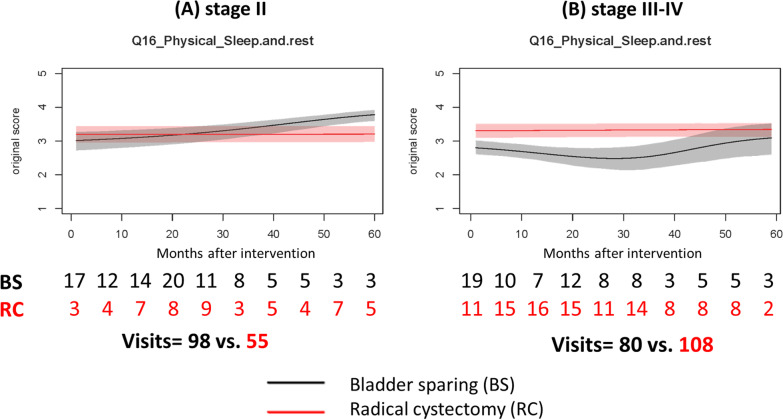
We collected 397 repeated measurements of the World Health Organization Quality of Life-Brief questionnaire from 109 muscle-invasive bladder cancer patients. Forty-two of them received radical cystectomy. Patients with radical cystectomy exhibited higher levels of education, less co-morbidities (i.e., diabetes and heart diseases), but were associated with more malignancies. Construction of mixed-effects models showed patients with radical cystectomy and those with bladder sparing had similar scores in the three main domains and their items, except that of certain items of physical domain. By applying kernel smoothing method, we found that stage III-IV patients consistently showed higher scores on sleep and rest after radical cystectomy for more than 5 years. In contrast, stage II patients receiving radical cystectomy did not show a higher score on the "sleep and rest" item compared with those with bladder sparing operation.
Radical cystectomy may result in sound sleep and rest, especially in those with stage III-IV bladder cancer.
探讨浸润性膀胱癌患者根治性膀胱切除术对生活质量的动态变化和影响。
本研究随机招募浸润性膀胱癌患者。我们使用世界卫生组织生活质量简表评估连续患者的生活质量。我们应用核平滑法说明治疗后各领域和项目评分的动态变化。在控制人口统计学和临床因素后,构建混合效应模型来确定根治性膀胱切除术对世界卫生组织生活质量简表各项目和领域评分的影响。
我们从 109 例浸润性膀胱癌患者中收集了 397 次世界卫生组织生活质量简表的重复测量。其中 42 例接受了根治性膀胱切除术。接受根治性膀胱切除术的患者受教育程度较高,合并症较少(即糖尿病和心脏病),但恶性肿瘤较多。混合效应模型的构建表明,接受根治性膀胱切除术和保留膀胱的患者在三个主要领域及其项目中的评分相似,除了某些物理领域项目的评分外。通过应用核平滑法,我们发现,根治性膀胱切除术后 5 年以上的 III 期和 IV 期患者在睡眠和休息方面始终表现出较高的评分。相比之下,接受根治性膀胱切除术的 II 期患者在“睡眠和休息”项目上的评分并不高于保留膀胱手术的患者。
根治性膀胱切除术可能导致良好的睡眠和休息,特别是对于 III 期和 IV 期膀胱癌患者。