Department of Bioengineering, University of California, 9500 Gilman Drive, San Diego, La Jolla, CA 92093-0412, USA.
Philos Trans R Soc Lond B Biol Sci. 2022 Oct 10;377(1861):20210236. doi: 10.1098/rstb.2021.0236. Epub 2022 Aug 22.
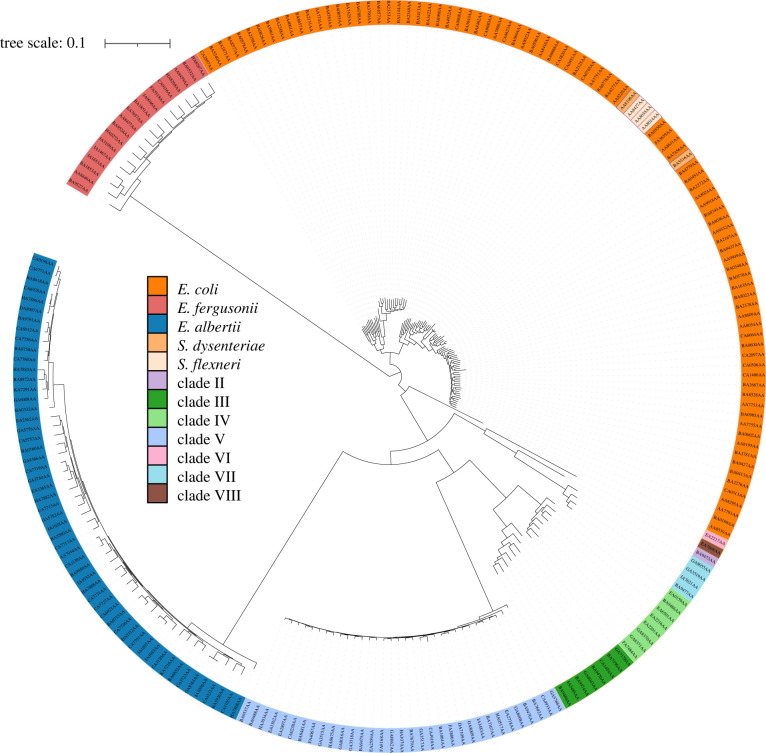
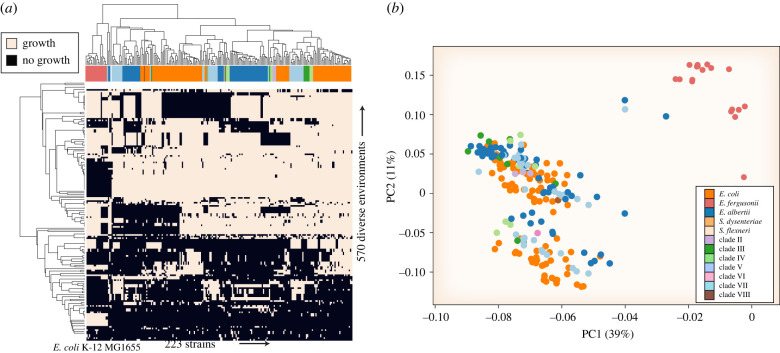
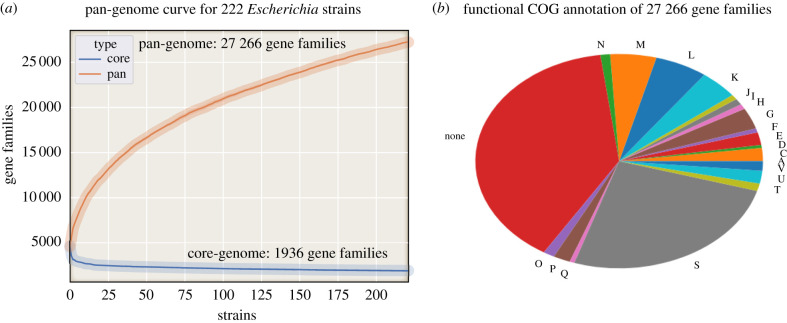
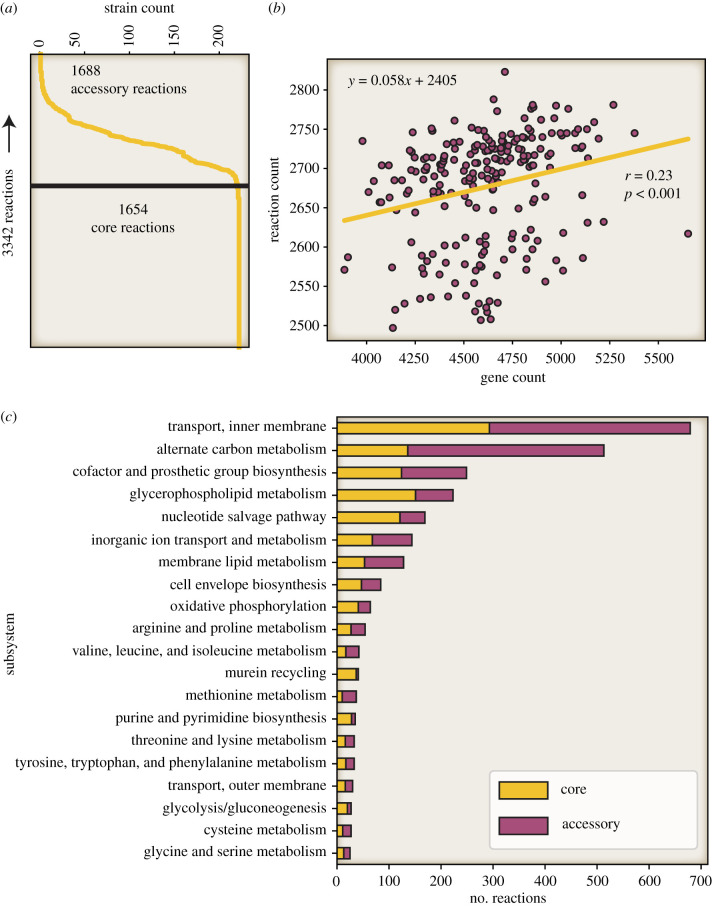
Bottom-up approaches to systems biology rely on constructing a mechanistic basis for the biochemical and genetic processes that underlie cellular functions. Genome-scale network reconstructions of metabolism are built from all known metabolic reactions and metabolic genes in a target organism. A network reconstruction can be converted into a mathematical format and thus lend itself to mathematical analysis. Genome-scale models (GEMs) of metabolism enable a systems approach to characterize the pan and core metabolic capabilities of the genus. In this work, GEMs were constructed for 222 representative strains of across HC1100 levels spanning the known phylogeny. The models were used to study metabolic diversity and speciation on a large scale. The results show that unique strain-specific metabolic capabilities correspond to different species and nutrient niches. This work is a first step towards a curated reconstruction of pan- metabolism. This article is part of a discussion meeting issue 'Genomic population structures of microbial pathogens'.
自下而上的系统生物学方法依赖于构建细胞功能所必需的生化和遗传过程的机制基础。代谢的基因组规模网络重建是基于目标生物中所有已知的代谢反应和代谢基因构建的。网络重建可以转换为数学格式,因此可以进行数学分析。代谢的基因组规模模型 (GEM) 使我们能够采用系统方法来描述属的泛和核心代谢能力。在这项工作中,为横跨 HC1100 水平的已知系统发育范围内的 222 个代表菌株构建了 GEM。这些模型被用于大规模研究代谢多样性和物种形成。结果表明,独特的菌株特异性代谢能力对应于不同的物种和营养小生境。这项工作是对泛代谢进行精心重建的第一步。本文是“微生物病原体的基因组群体结构”讨论会议议题的一部分。