Habib Gul, Mahmood Khalid, Gul Haji, Tariq Muhammad, Ain Qurat Ul, Hayat Azam, Rehman Mujaddad Ur
Department of Microbiology, Abbottabad University of Science and Technology, Havelian, Abbottabad 22010, Pakistan.
National Institute of Virology, Dr. Panjwani Center for Molecular Medicine and Drug Research, International Center for Chemical and Biological Sciences, University of Karachi, Karachi 75850, Pakistan.
Pathophysiology. 2022 Jul 27;29(3):405-413. doi: 10.3390/pathophysiology29030032.
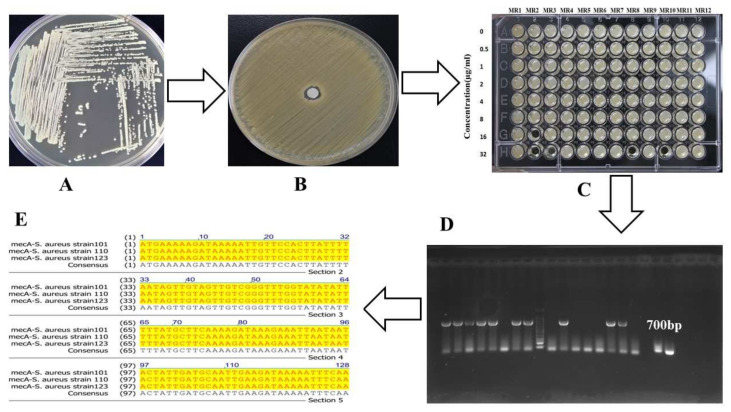
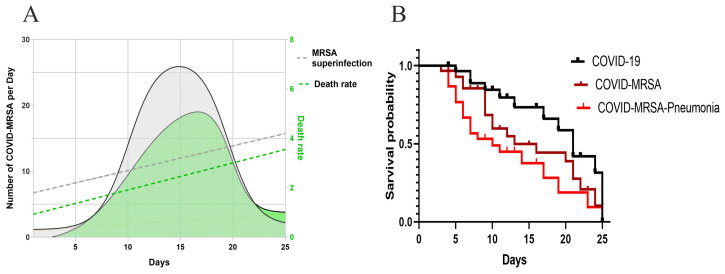
The global spread of the coronavirus disease 2019 (COVID-19), caused by severe acute respiratory syndrome coronavirus-2 (SARS-CoV-2), has infected humans in all age groups, deteriorated host immune responses, and caused millions of deaths. The reasons for individuals succumbing to COVID-19 were not only the SARS-CoV-2 infection but also associated bacterial infections. Antibiotics were largely used to prevent bacterial infections during COVID-19 illness, and many bacteria became resistant to conventional antibiotics. Although COVID-19 was considered the main culprit behind the millions of deaths, bacterial coinfections and superinfections were the major factors that increased the mortality rate in hospitalized patients. In the present study, we assessed the pathophysiology of methicillin-resistant Staphylococcus aureus (MRSA) superinfection in COVID-19 patients in Pakistan. A total of 3492 COVID-19 hospitalized patients were screened among which 224 strain were resistant to methicillin; 110 strains were tazobactam-resistant; 53 strains were ciprofloxacin-resistant; 23 strains were gentamicin-resistant; 11 strains were azithromycin-resistant; 3 strains were vancomycin-resistant. A high frequency of MRSA was detected in patients aged ≥50 with a prevalence of 7.33%, followed by patients aged >65 with a prevalence of 5.48% and a 5.10% prevalence in patients aged <50. In addition, pneumonia was detected in the COVID-19-associated MRSA (COVID-MRSA) that showed decreased levels of lymphocytes and albumin and increased the mortality rate from 2.3% to 25.23%. Collectively, an MRSA superinfection was associated with increased mortality in COVID-19 after 12 to 18 days of hospitalization. The study assessed the prevalence of MRSA, mortality rate, pneumonia, and the emergence of antibiotic resistance as the main outcomes. The study summarized that COVID-MRSA aggravated the treatment and recovery of patients and suggested testing MRSA as critical for hospitalized patients.
由严重急性呼吸综合征冠状病毒2(SARS-CoV-2)引起的2019冠状病毒病(COVID-19)在全球范围内传播,感染了所有年龄组的人群,使宿主免疫反应恶化,并导致数百万人死亡。个体死于COVID-19的原因不仅是SARS-CoV-2感染,还包括相关的细菌感染。在COVID-19患病期间,抗生素被大量用于预防细菌感染,许多细菌对传统抗生素产生了耐药性。尽管COVID-19被认为是数百万人死亡的主要原因,但细菌合并感染和重叠感染是导致住院患者死亡率上升的主要因素。在本研究中,我们评估了巴基斯坦COVID-19患者中耐甲氧西林金黄色葡萄球菌(MRSA)重叠感染的病理生理学。共筛查了3492例住院的COVID-19患者,其中224株对甲氧西林耐药;110株对他唑巴坦耐药;53株对环丙沙星耐药;23株对庆大霉素耐药;11株对阿奇霉素耐药;3株对万古霉素耐药。在≥50岁的患者中检测到高频率的MRSA,患病率为7.33%,其次是>65岁的患者,患病率为5.48%,<50岁的患者患病率为5.10%。此外,在与COVID-19相关的MRSA(COVID-MRSA)中检测到肺炎,其淋巴细胞和白蛋白水平降低,死亡率从2.3%上升至25.23%。总体而言,MRSA重叠感染与COVID-19患者住院12至18天后死亡率增加有关。该研究评估了MRSA的患病率、死亡率、肺炎以及抗生素耐药性的出现作为主要结果。该研究总结称,COVID-MRSA加重了患者的治疗和康复,并建议对住院患者进行MRSA检测至关重要。