Department of Electrical Engineering, Center for Biomedical Engineering, Chang Gung University, Tao-Yuan 33302, Taiwan.
Division of Cardiology, Department of Internal Medicine, Linkou Chang Gung Memorial Hospital, Tao-Yuan 33305, Taiwan.
Biosensors (Basel). 2022 Aug 5;12(8):605. doi: 10.3390/bios12080605.
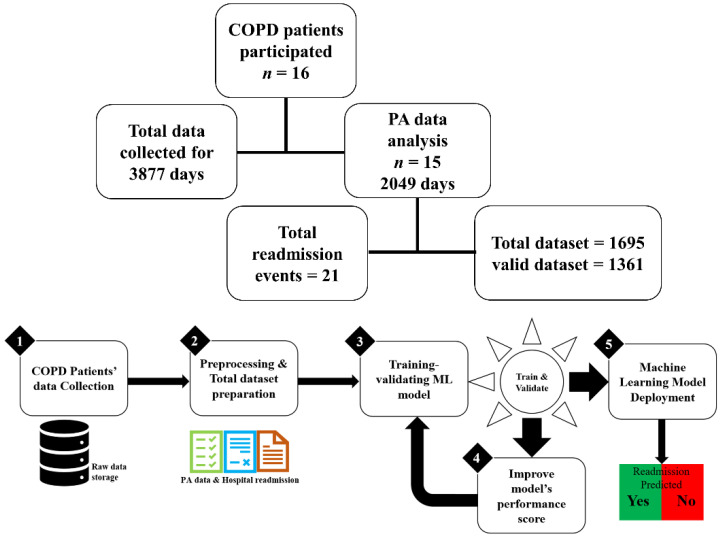
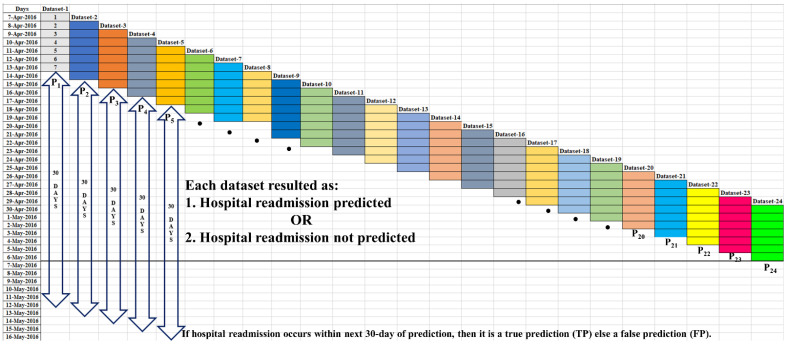
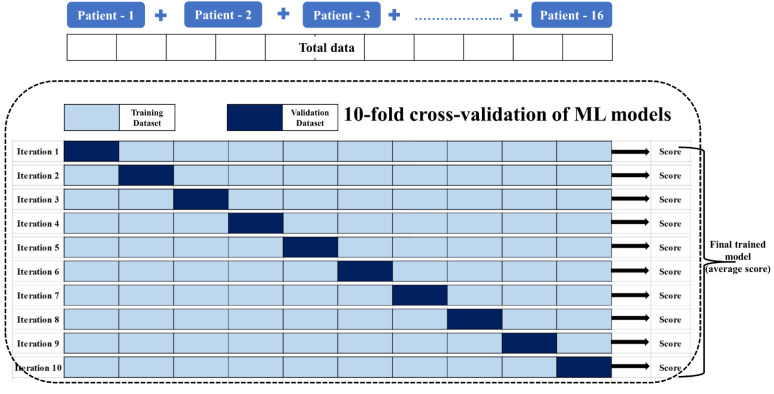
Chronic obstructive pulmonary disease (COPD) is a significantly concerning disease, and is ranked highest in terms of 30-day hospital readmission. Generally, physical activity (PA) of daily living reflects the health status and is proposed as a strong indicator of 30-day hospital readmission for patients with COPD. This study attempted to predict 30-day hospital readmission by analyzing continuous PA data using machine learning (ML) methods. Data were collected from 16 patients with COPD over 3877 days, and clinical information extracted from the patients' hospital records. Activity-based parameters were conceptualized and evaluated, and ML models were trained and validated to retrospectively analyze the PA data, identify the nonlinear classification characteristics of different risk factors, and predict hospital readmissions. Overall, this study predicted 30-day hospital readmission and prediction performance is summarized as two distinct approaches: prediction-based performance and event-based performance. In a prediction-based performance analysis, readmissions predicted with 70.35% accuracy; and in an event-based performance analysis, the total 30-day readmissions were predicted with a precision of 72.73%. PA data reflect the health status; thus, PA data can be used to predict hospital readmissions. Predicting readmissions will improve patient care, reduce the burden of medical costs burden, and can assist in staging suitable interventions, such as promoting PA, alternate treatment plans, or changes in lifestyle to prevent readmissions.
慢性阻塞性肺疾病(COPD)是一种严重的疾病,在 30 天内住院再入院率方面排名最高。一般来说,日常生活中的身体活动(PA)反映了健康状况,并被提议作为 COPD 患者 30 天内住院再入院的强有力指标。本研究试图通过使用机器学习(ML)方法分析连续 PA 数据来预测 30 天内的住院再入院率。从 16 名 COPD 患者中收集了 3877 天的数据,并从患者的住院记录中提取了临床信息。提出了基于活动的参数并对其进行了评估,并训练和验证了 ML 模型,以回顾性分析 PA 数据,识别不同风险因素的非线性分类特征,并预测住院再入院。总的来说,本研究预测了 30 天内的住院再入院率,并总结了两种不同的预测性能:基于预测的性能和基于事件的性能。在基于预测的性能分析中,再入院的预测准确率为 70.35%;而在基于事件的性能分析中,30 天内的总再入院率的预测精度为 72.73%。PA 数据反映了健康状况;因此,PA 数据可用于预测住院再入院率。预测再入院率将改善患者护理,减轻医疗费用负担,并有助于进行适当的干预,如促进 PA、替代治疗方案或改变生活方式以预防再入院。