Department of Cell Biology and Department of Cardiology of the Second Affiliated Hospital, Zhejiang University School of Medicine, Zhejiang University, Hangzhou 310058, China.
Department of Cell Biology and Department of Cardiology of the Second Affiliated Hospital, Zhejiang University School of Medicine, Zhejiang University, Hangzhou 310058, China; School of Biology and Engineering, Guizhou Medical University, Guiyang, China.
J Mol Biol. 2023 Jan 15;435(1):167800. doi: 10.1016/j.jmb.2022.167800. Epub 2022 Aug 22.
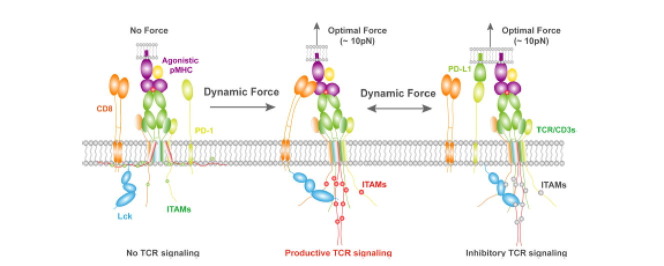
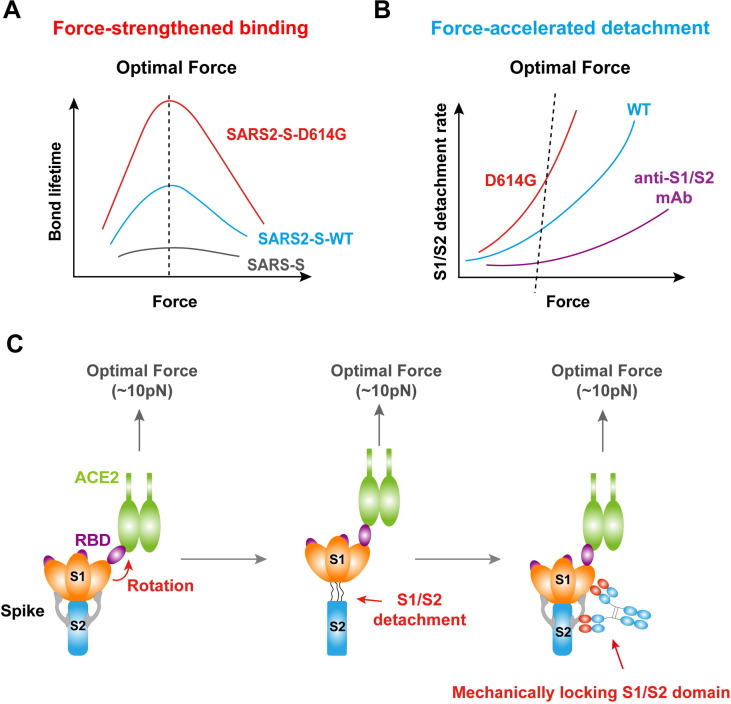
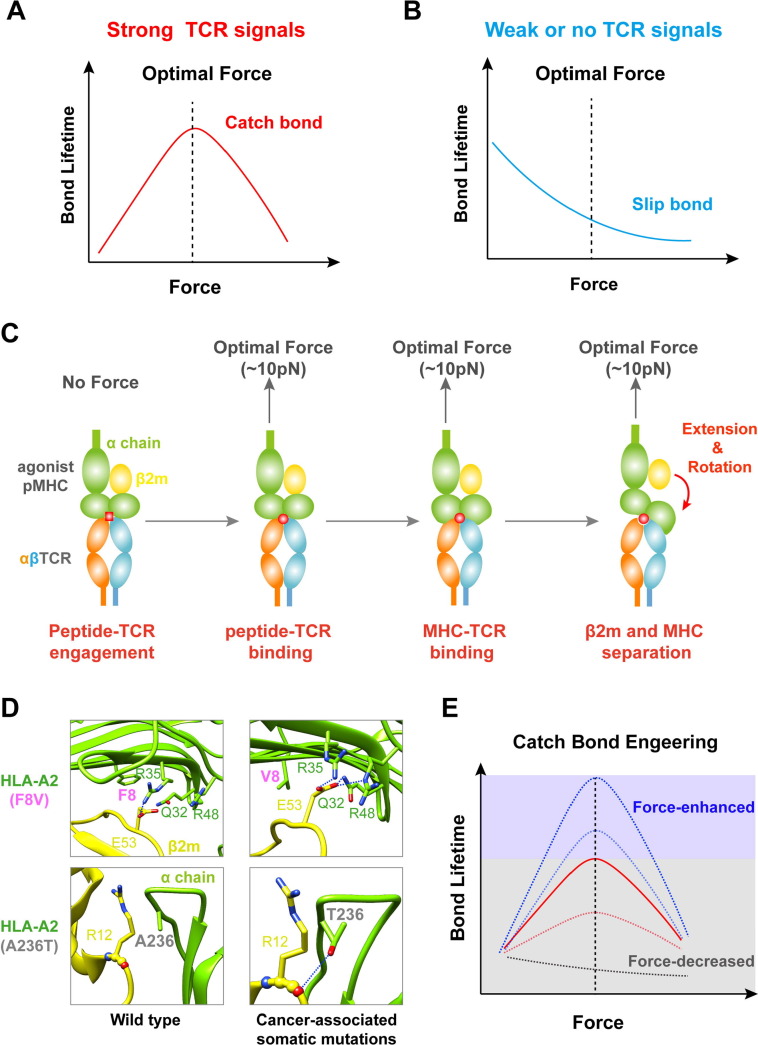
Mechanical cues dynamically regulate membrane receptors functions to trigger various physiological and pathological processes from viral invasion to immune defense. These cues mainly include various types of dynamic mechanical forces and the spatial confinement of plasma membrane. However, the molecular mechanisms of how they couple with biochemical cues in regulating membrane receptors functions still remain mysterious. Here, we review recent advances in methodologies of single-molecule biomechanical techniques and in novel biomechanical regulatory mechanisms of critical ligand recognition of viral and immune receptors including SARS-CoV-2 spike protein, T cell receptor (TCR) and other co-stimulatory immune receptors. Furthermore, we provide our perspectives of the general principle of how force-dependent kinetics determine the dynamic functions of membrane receptors and of biomechanical-mechanism-driven SARS-CoV-2 neutralizing antibody design and TCR engineering for T-cell-based therapies.
机械线索动态调节膜受体功能,从病毒入侵到免疫防御,触发各种生理和病理过程。这些线索主要包括各种类型的动态机械力和质膜的空间限制。然而,它们与生化线索如何偶联调节膜受体功能的分子机制仍然神秘。在这里,我们综述了单分子生物力学技术的最新进展,以及病毒和免疫受体(包括 SARS-CoV-2 刺突蛋白、T 细胞受体 (TCR) 和其他共刺激免疫受体)关键配体识别的新型生物力学调节机制。此外,我们还提供了我们对力依赖性动力学如何决定膜受体动态功能的一般原理的看法,以及基于生物力学机制的 SARS-CoV-2 中和抗体设计和 TCR 工程用于基于 T 细胞的治疗的看法。