Department of Basic Sciences, Touro University College of Medicine, Henderson, NV 89014, USA.
Department of Biomedicine, Neurosciences and Advanced Diagnostics, University of Palermo, 90133 Palermo, Italy.
Cells. 2022 Aug 10;11(16):2474. doi: 10.3390/cells11162474.
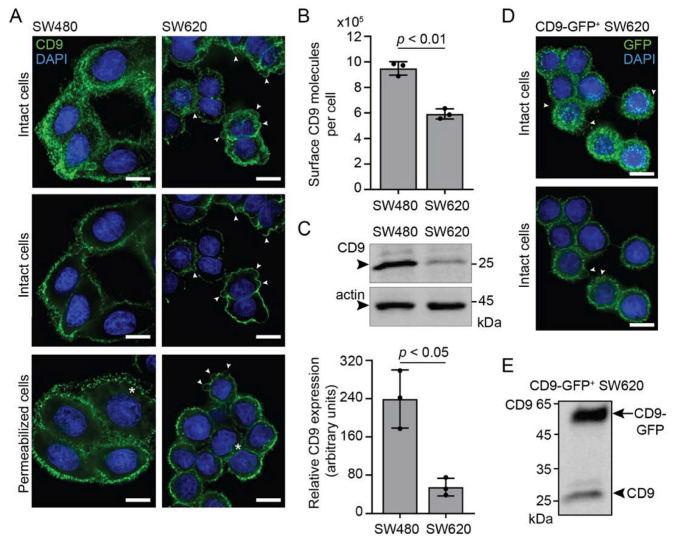
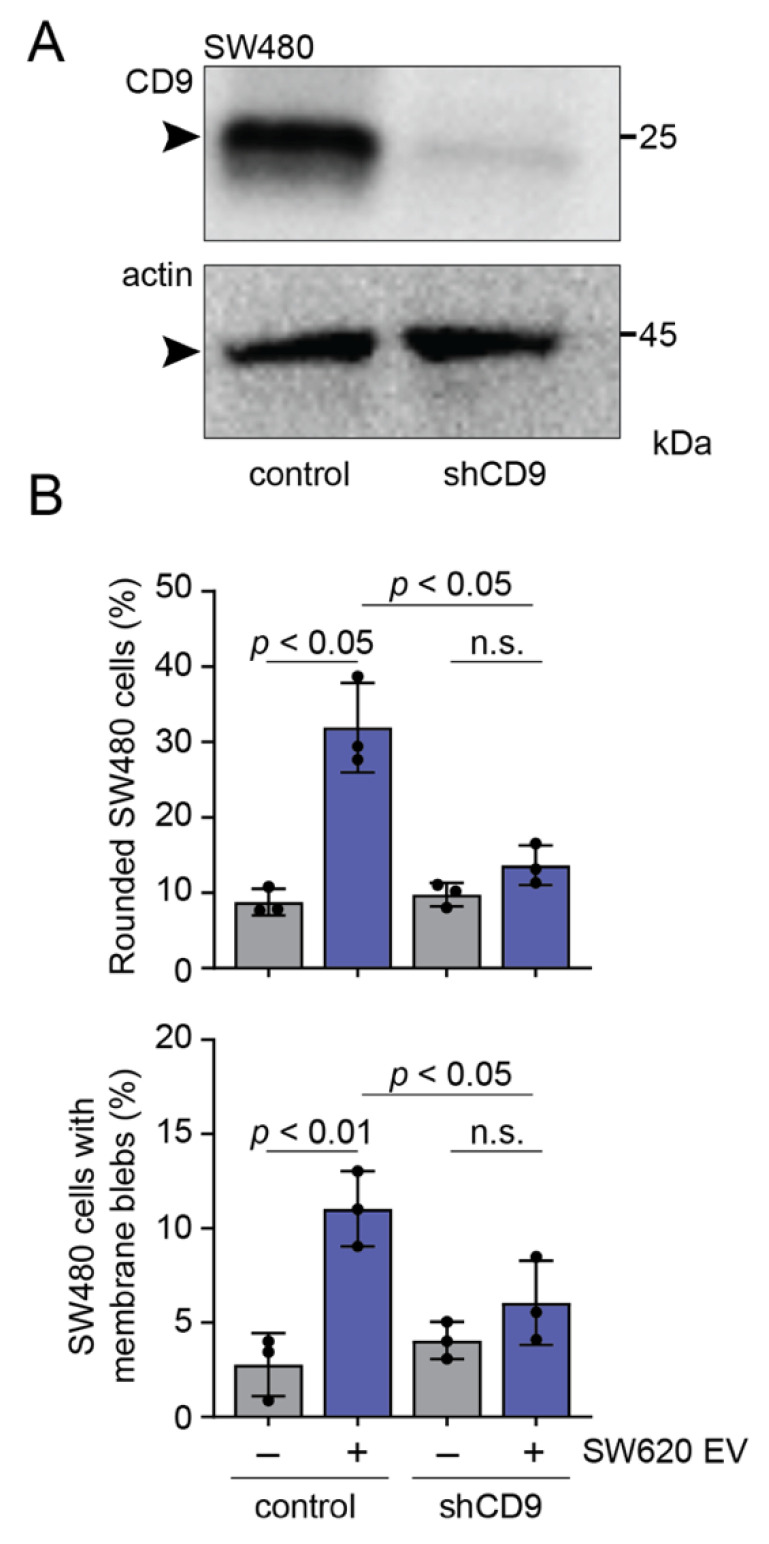
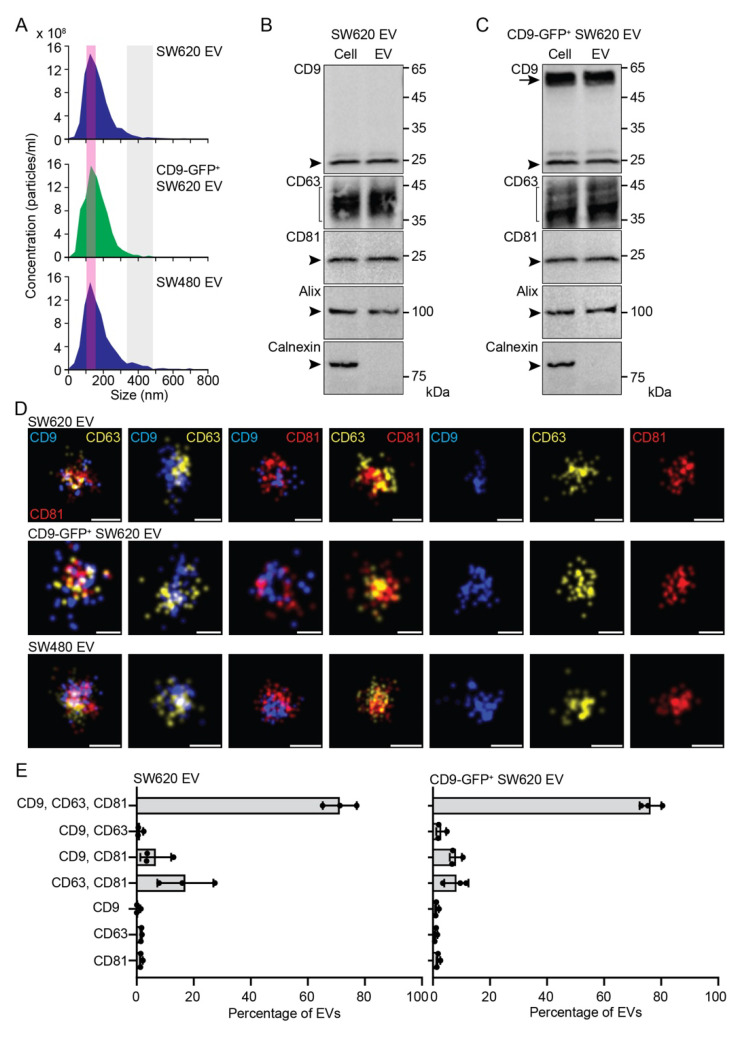
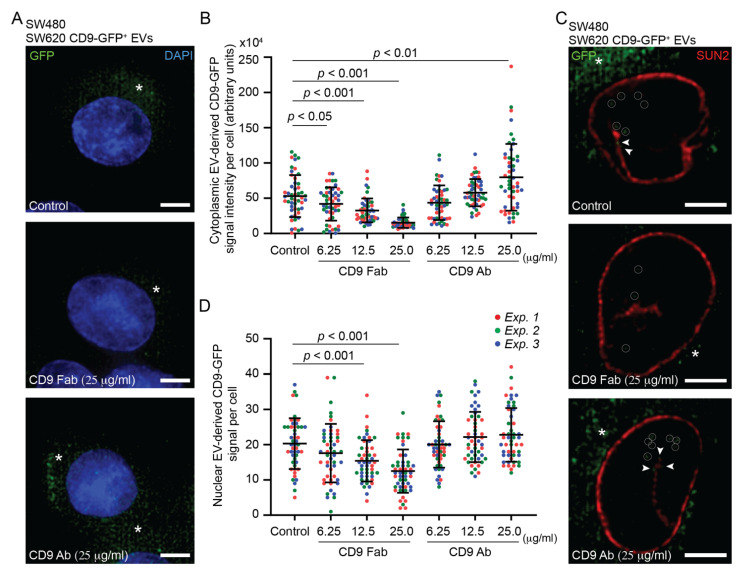
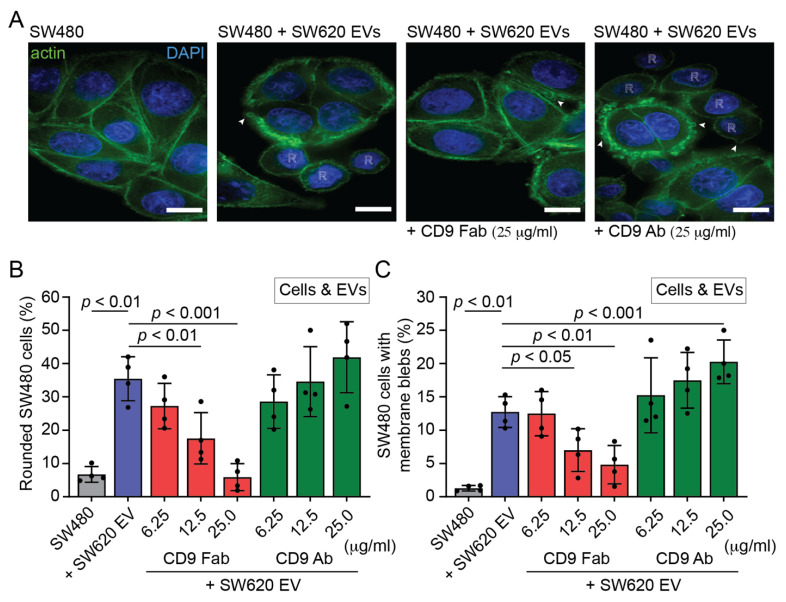
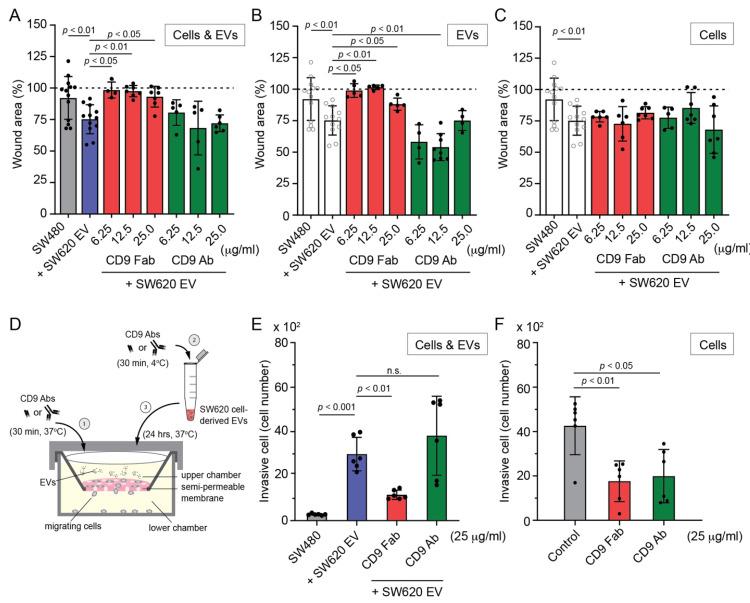
Intercellular communication between cancer cells themselves or with healthy cells in the tumor microenvironment and/or pre-metastatic sites plays an important role in cancer progression and metastasis. In addition to ligand-receptor signaling complexes, extracellular vesicles (EVs) are emerging as novel mediators of intercellular communication both in tissue homeostasis and in diseases such as cancer. EV-mediated transfer of molecular activities impacting morphological features and cell motility from highly metastatic SW620 cells to non-metastatic SW480 cells is a good in vitro example to illustrate the increased malignancy of colorectal cancer leading to its transformation and aggressive behavior. In an attempt to intercept the intercellular communication promoted by EVs, we recently developed a monovalent Fab fragment antibody directed against human CD9 tetraspanin and showed its effectiveness in blocking the internalization of melanoma cell-derived EVs and the nuclear transfer of their cargo proteins into recipient cells. Here, we employed the SW480/SW620 model to investigate the anti-cancer potential of the anti-CD9 Fab antibody. We first demonstrated that most EVs derived from SW620 cells contain CD9, making them potential targets. We then found that the anti-CD9 Fab antibody, but not the corresponding divalent antibody, prevented internalization of EVs from SW620 cells into SW480 cells, thereby inhibiting their phenotypic transformation, i.e., the change from a mesenchymal-like morphology to a rounded amoeboid-like shape with membrane blebbing, and thus preventing increased cell migration. Intercepting EV-mediated intercellular communication in the tumor niche with an anti-CD9 Fab antibody, combined with direct targeting of cancer cells, could lead to the development of new anti-cancer therapeutic strategies.
癌细胞之间或与肿瘤微环境和/或前转移部位的健康细胞之间的细胞间通讯在癌症进展和转移中发挥重要作用。除配体-受体信号复合物外,细胞外囊泡(EVs)作为细胞间通讯的新介质,在组织稳态和癌症等疾病中都有出现。EV 介导的分子活性从高转移性 SW620 细胞转移到非转移性 SW480 细胞,影响形态特征和细胞迁移性,这是一个很好的体外例子,说明了结直肠癌的恶性程度增加导致其转化和侵袭行为。为了阻断 EV 促进的细胞间通讯,我们最近开发了一种针对人 CD9 四跨膜蛋白的单价 Fab 片段抗体,并证明其在阻断黑色素瘤细胞衍生的 EV 的内化及其货物蛋白向受体细胞的核转移方面有效。在这里,我们使用 SW480/SW620 模型来研究抗 CD9 Fab 抗体的抗癌潜力。我们首先证明,SW620 细胞来源的大多数 EV 都含有 CD9,使其成为潜在的靶点。然后,我们发现抗 CD9 Fab 抗体,但不是相应的二价抗体,可阻止 SW620 细胞来源的 EV 进入 SW480 细胞,从而抑制其表型转化,即从间充质样形态转变为圆形阿米巴样形态,伴有细胞膜起泡,并因此抑制细胞迁移增加。用抗 CD9 Fab 抗体阻断肿瘤微环境中的 EV 介导的细胞间通讯,并与直接靶向癌细胞相结合,可能会导致新的抗癌治疗策略的发展。