Kozłowska Bogna, Sochanowicz Barbara, Kraj Leszek, Palusińska Małgorzata, Kołsut Piotr, Szymański Łukasz, Lewicki Sławomir, Kruszewski Marcin, Załęska-Kocięcka Marta, Leszek Przemysław
Department of Heart Failure and Transplantology, The Cardinal Stefan Wyszyński National Institute of Cardiology, Alpejska 42, 04-628 Warsaw, Poland.
Center of Radiobiology and Biological Dosimetry, Institute of Nuclear Chemistry and Technology, Dorodna 16, 03-195 Warsaw, Poland.
Life (Basel). 2022 Aug 8;12(8):1203. doi: 10.3390/life12081203.
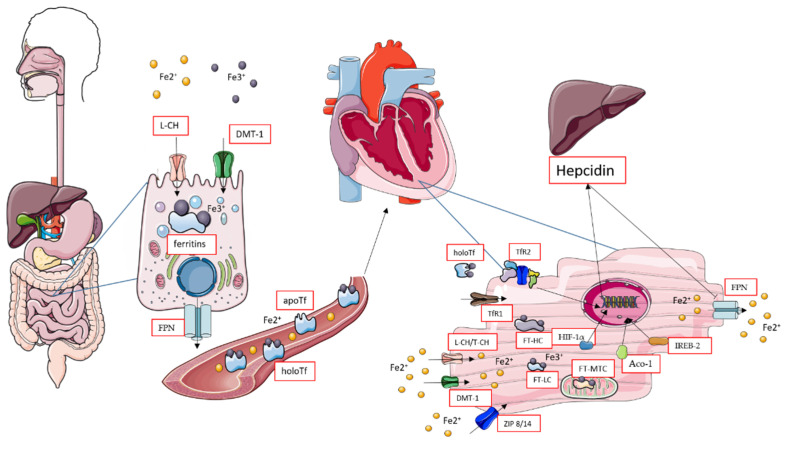
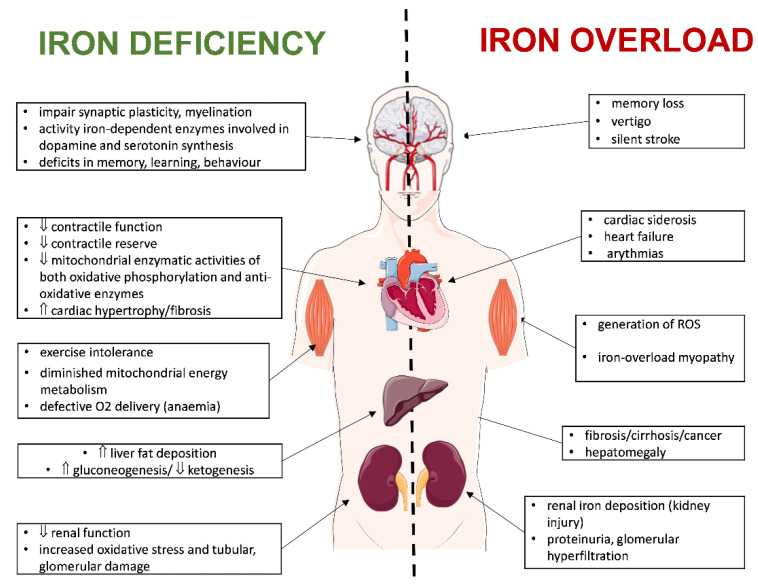
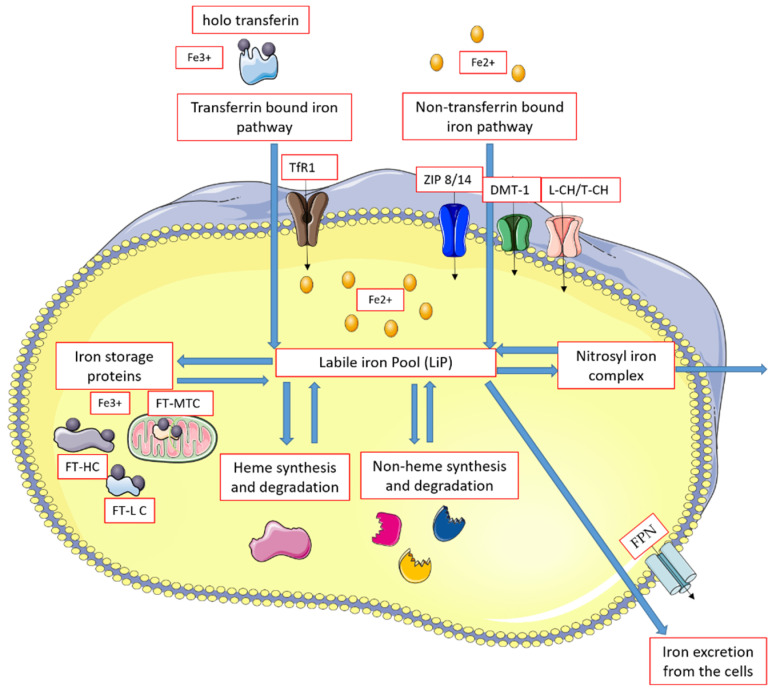
Heart failure (HF) is a common disease that causes significant limitations on the organism's capacity and, in extreme cases, leads to death. Clinically, iron deficiency (ID) plays an essential role in heart failure by deteriorating the patient's condition and is a prognostic marker indicating poor clinical outcomes. Therefore, in HF patients, supplementation of iron is recommended. However, iron treatment may cause adverse effects by increasing iron-related apoptosis and the production of oxygen radicals, which may cause additional heart damage. Furthermore, many knowledge gaps exist regarding the complex interplay between iron deficiency and heart failure. Here, we describe the current, comprehensive knowledge about the role of the proteins involved in iron metabolism. We will focus on the molecular and clinical aspects of iron deficiency in HF. We believe that summarizing the new advances in the translational and clinical research regarding iron deficiency in heart failure should broaden clinicians' awareness of this comorbidity.
心力衰竭(HF)是一种常见疾病,会严重限制机体功能,在极端情况下可导致死亡。临床上,缺铁(ID)通过使患者病情恶化在心力衰竭中起重要作用,并且是提示临床预后不良的一个预后指标。因此,对于心力衰竭患者,建议补充铁剂。然而,铁剂治疗可能通过增加铁相关的细胞凋亡和氧自由基的产生而引起不良反应,这可能会造成额外的心脏损害。此外,关于缺铁与心力衰竭之间复杂的相互作用,仍存在许多知识空白。在此,我们描述了目前有关参与铁代谢的蛋白质作用的全面知识。我们将重点关注心力衰竭中铁缺乏的分子和临床方面。我们认为,总结心力衰竭中铁缺乏的转化和临床研究的新进展应能提高临床医生对这种合并症的认识。