Parajuli D, Murali N, K C Devendra, Karki Bhishma, Samatha K, Kim Allison A, Park Mira, Pant Bishweshwar
Research Center for Applied Science and Technology, Tribhuvan University, Kathmandu 44618, Nepal.
Department of Physics, Tri-Chandra Multiple Campus, Ghantaghar, Kathmandu 44605, Nepal.
Polymers (Basel). 2022 Aug 22;14(16):3433. doi: 10.3390/polym14163433.
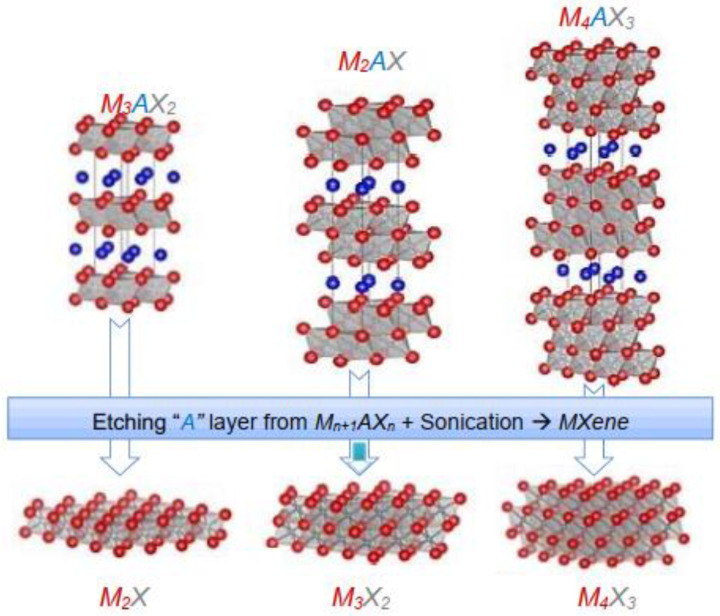
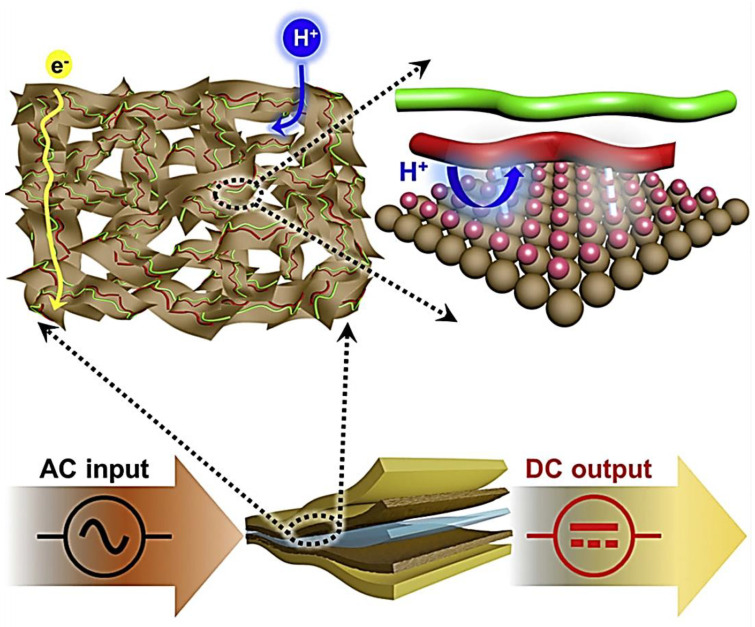
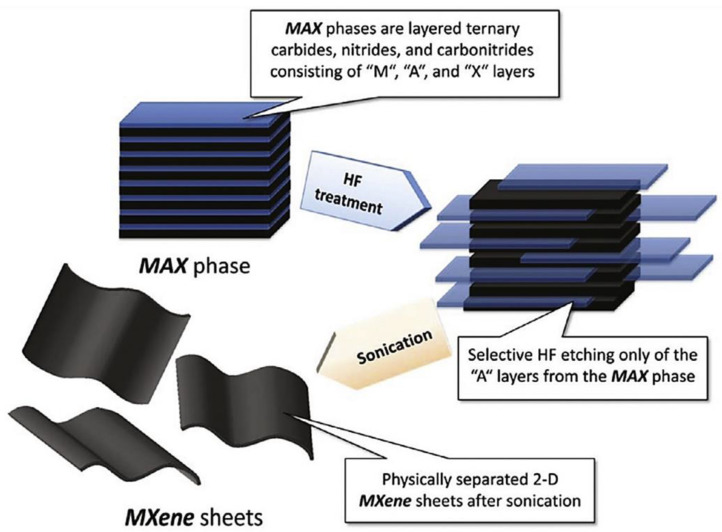
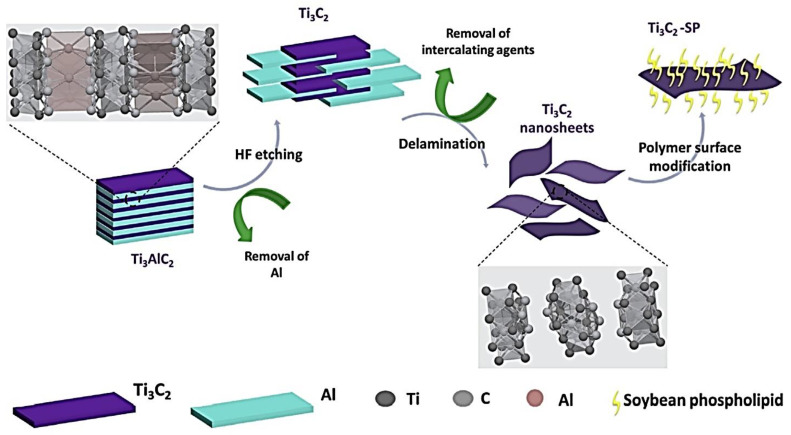
MXenes are 2D ceramic materials, especially carbides, nitrides, and carbonitrides derived from their parent 'MAX' phases by the etching out of 'A' and are famous due to their conducting, hydrophilic, biocompatible, and tunable properties. However, they are hardly stable in the outer environment, have low biodegradability, and have difficulty in drug release, etc., which are overcome by MXene/Polymer nanocomposites. The MXenes terminations on MXene transferred to the polymer after composite formation makes it more functional. With this, there is an increment in photothermal conversion efficiency for cancer therapy, higher antibacterial activity, biosensors, selectivity, bone regeneration, etc. The hydrophilic surfaces become conducting in the metallic range after the composite formation. MXenes can effectively be mixed with other materials like ceramics, metals, and polymers in the form of nanocomposites to get improved properties suitable for advanced applications. In this paper, we review different properties like electrical and mechanical, including capacitances, dielectric losses, etc., of nanocomposites more than those like TiCT/polymer, TiC/UHMWPE, MXene/PVA-KOH, TiCT/PVA, etc. along with their applications mainly in energy storing and biomedical fields. Further, we have tried to enlist the MXene-based nanocomposites and compare them with conducting polymers and other nanocomposites. The performance under the NIR absorption seems more effective. The MXene-based nanocomposites are more significant in most cases than other nanocomposites for the antimicrobial agent, anticancer activity, drug delivery, bio-imaging, biosensors, micro-supercapacitors, etc. The limitations of the nanocomposites, along with possible solutions, are mentioned.
MXenes是二维陶瓷材料,特别是碳化物、氮化物和碳氮化物,它们通过蚀刻掉“A”元素从其母体“MAX”相衍生而来,因其具有导电性、亲水性、生物相容性和可调节性而闻名。然而,它们在外部环境中很难稳定,生物降解性低,药物释放困难等,而MXene/聚合物纳米复合材料克服了这些问题。复合材料形成后,MXene上的端基转移到聚合物上,使其功能更强。由此,癌症治疗的光热转换效率提高,抗菌活性、生物传感器、选择性、骨再生等方面也有所提升。复合材料形成后,亲水性表面在金属范围内变得具有导电性。MXene可以有效地与陶瓷、金属和聚合物等其他材料以纳米复合材料的形式混合,以获得适合先进应用的改进性能。在本文中,我们综述了TiCT/聚合物、TiC/超高分子量聚乙烯、MXene/PVA-KOH、TiCT/PVA等纳米复合材料的电学和力学等不同性能,包括电容、介电损耗等,以及它们主要在储能和生物医学领域的应用。此外,我们试图列出基于MXene的纳米复合材料,并将它们与导电聚合物和其他纳米复合材料进行比较。近红外吸收下的性能似乎更有效。在大多数情况下,基于MXene的纳米复合材料在抗菌剂、抗癌活性、药物递送、生物成像、生物传感器、微型超级电容器等方面比其他纳米复合材料更具优势。文中提到了纳米复合材料的局限性以及可能的解决方案。