Mayerberger Elisa A, Street Reva M, McDaniel Riki M, Barsoum Michel W, Schauer Caroline L
Department of Materials Science and Engineering, Drexel University Philadelphia PA 19104 USA
RSC Adv. 2018 Oct 15;8(62):35386-35394. doi: 10.1039/c8ra06274a.
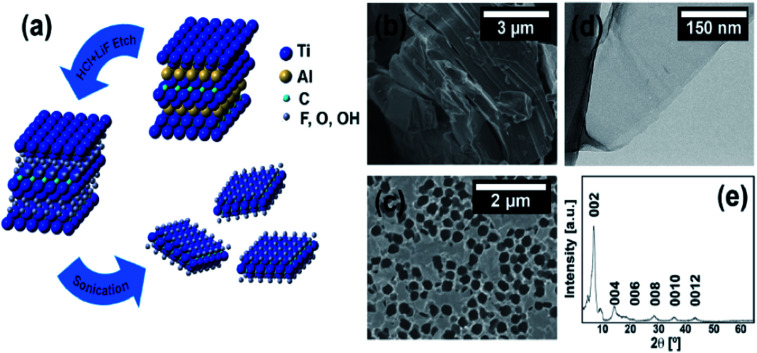
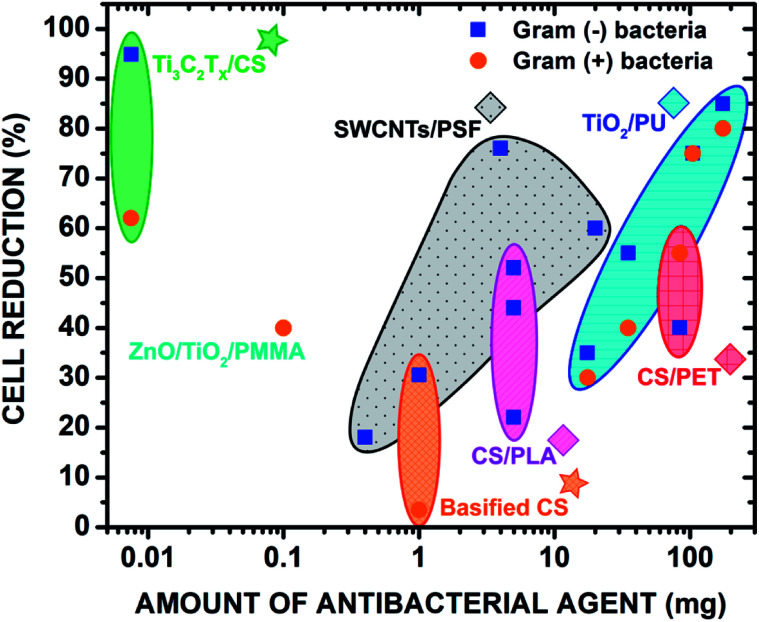
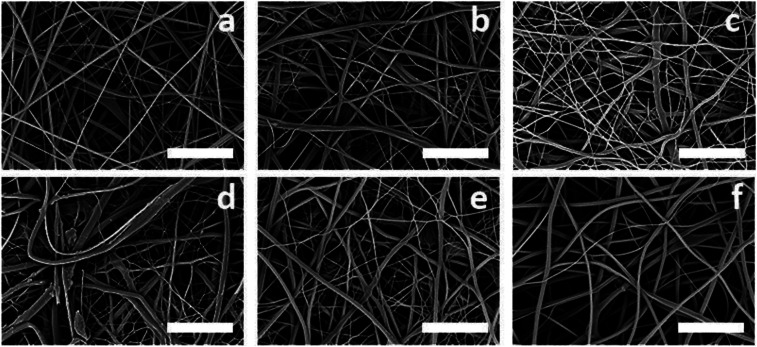
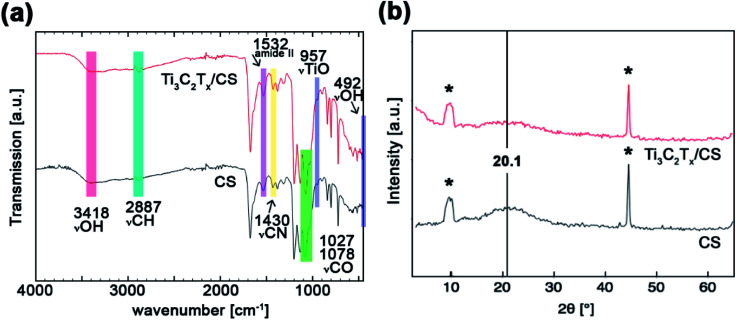
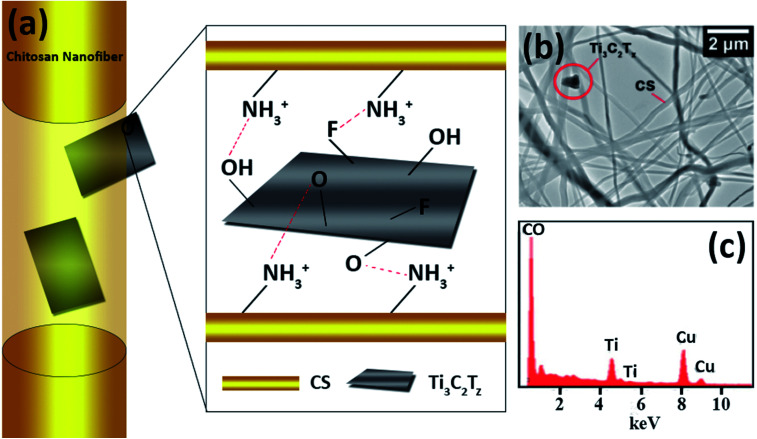
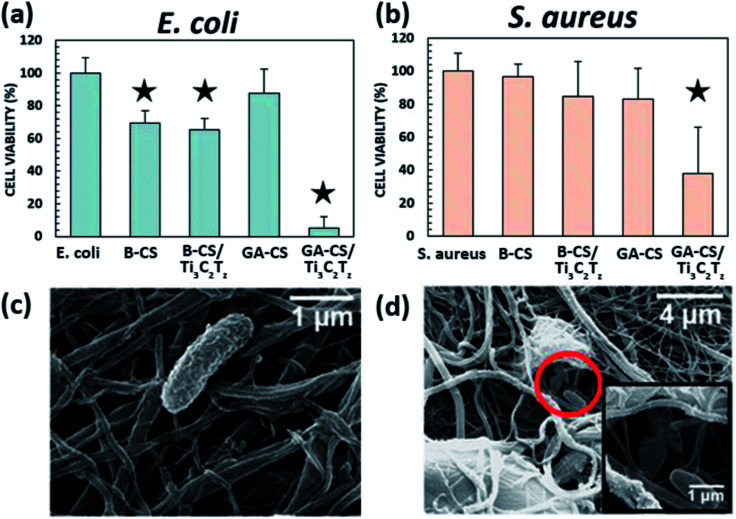
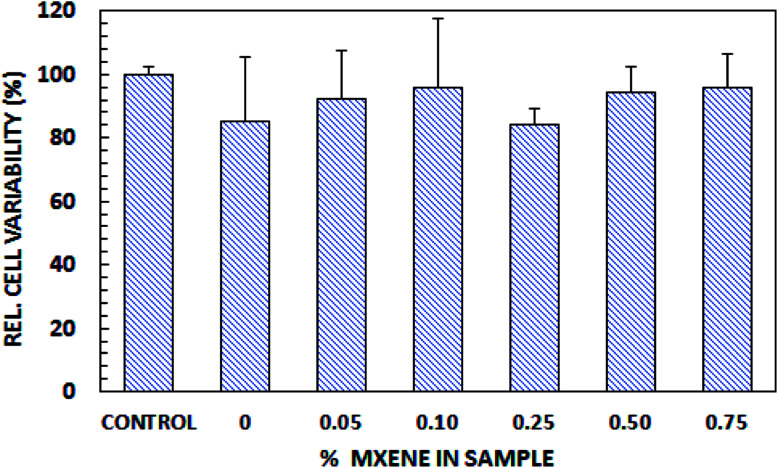
Electrospun natural polymeric bandages are highly desirable due to their low-cost, biodegradability, non-toxicity and antimicrobial properties. Functionalization of these nanofibrous mats with two-dimensional nanomaterials is an attractive strategy to enhance the antibacterial effects. Herein, we demonstrate an electrospinning process to produce encapsulated delaminated TiCT (MXene) flakes within chitosan nanofibers for passive antibacterial wound dressing applications. antibacterial studies were performed on crosslinked TiCT /chitosan composite fibers against Gram-negative () and Gram-positive () - demonstrating a 95% and 62% reduction in colony forming units, respectively, following 4 h of treatment with the 0.75 wt% TiCT - loaded nanofibers. Cytotoxicity studies to determine biocompatibility of the nanofibers indicated the antibacterial MXene/chitosan nanofibers are non-toxic. The incorporation of TiCT single flakes on fiber morphology was analyzed by scanning electron microscopy (SEM) and transmission electron microscopy equipped with an energy-dispersive detector (TEM-EDS). Our results suggest that the electrospun TiCT /chitosan nanofibers are a promising candidate material in wound healing applications.
静电纺丝天然聚合物绷带因其低成本、可生物降解、无毒和抗菌性能而备受青睐。用二维纳米材料对这些纳米纤维垫进行功能化是增强抗菌效果的一种有吸引力的策略。在此,我们展示了一种静电纺丝工艺,用于在壳聚糖纳米纤维中制备包裹分层的TiCT (MXene)薄片,用于被动抗菌伤口敷料应用。对交联的TiCT /壳聚糖复合纤维进行了针对革兰氏阴性菌()和革兰氏阳性菌()的抗菌研究,结果表明,在用负载0.75 wt% TiCT 的纳米纤维处理4小时后,菌落形成单位分别减少了95%和62%。为确定纳米纤维生物相容性而进行的细胞毒性研究表明,抗菌的MXene/壳聚糖纳米纤维无毒。通过扫描电子显微镜(SEM)和配备能量色散探测器的透射电子显微镜(TEM-EDS)分析了TiCT 单薄片对纤维形态的影响。我们的结果表明,静电纺丝的TiCT /壳聚糖纳米纤维是伤口愈合应用中一种很有前景的候选材料。