School of Life and Environmental Sciences, University of Tsukuba, Tsukuba, Japan.
Elife. 2022 Aug 26;11:e76846. doi: 10.7554/eLife.76846.
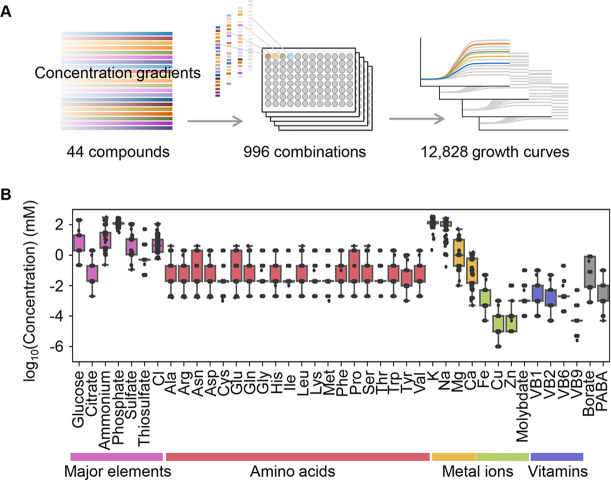
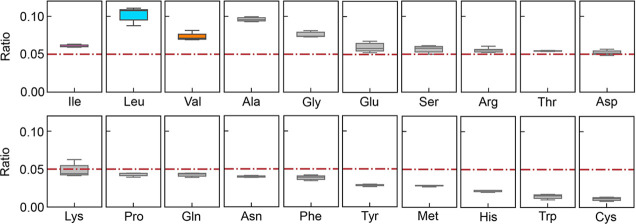
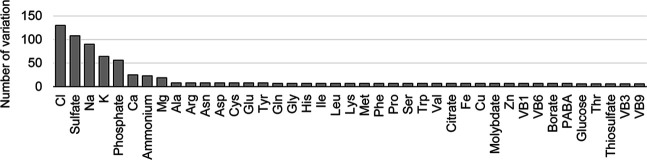
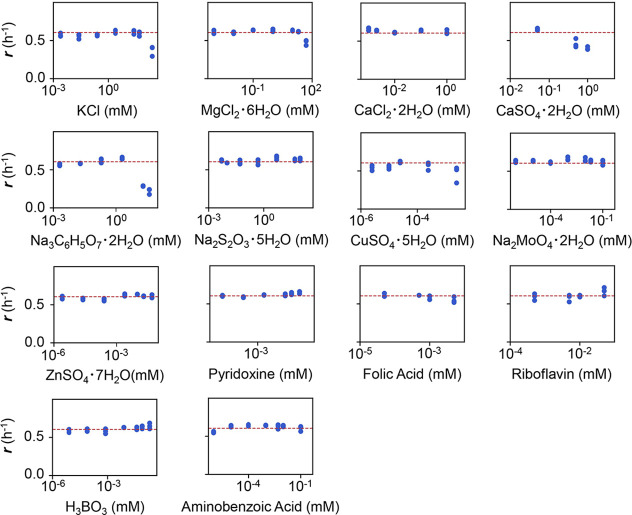
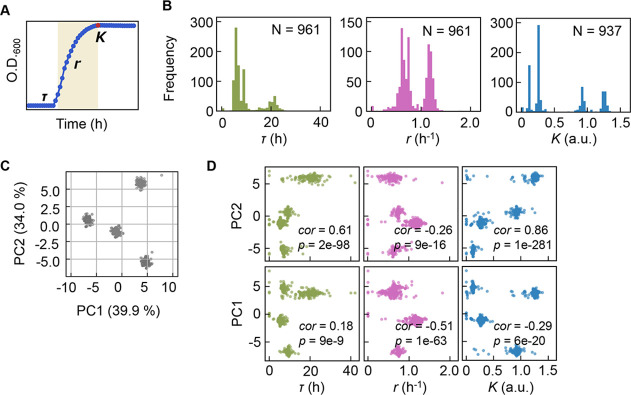
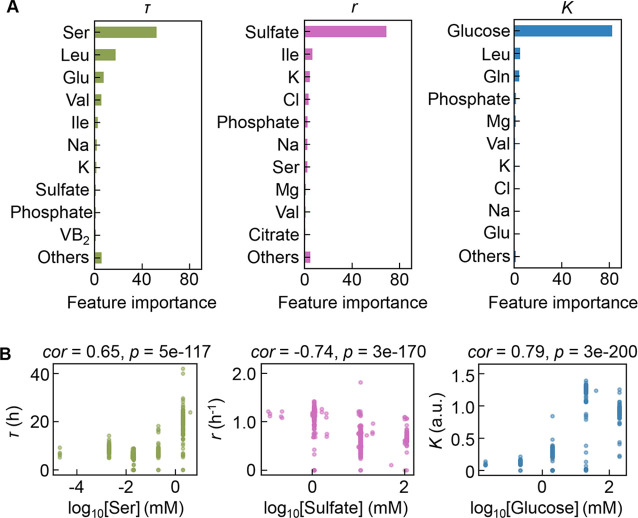
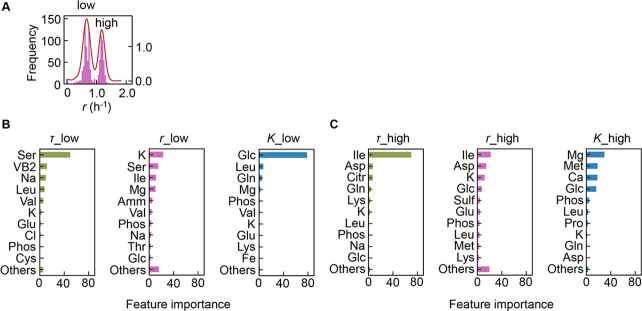
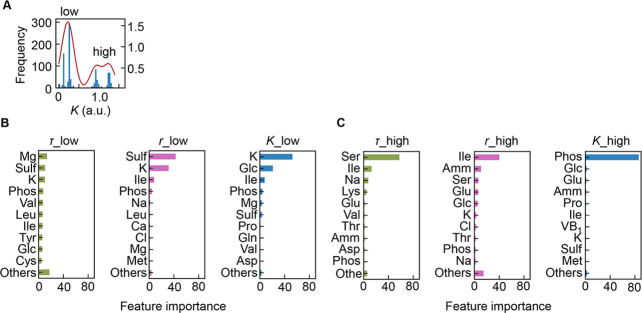
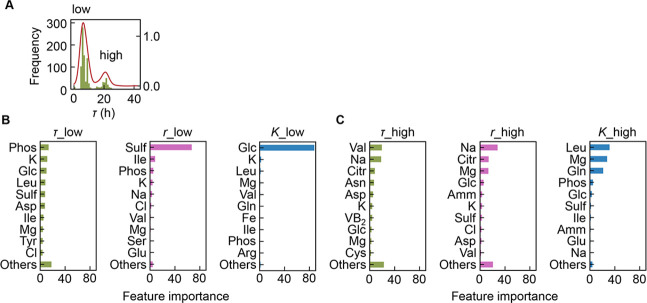
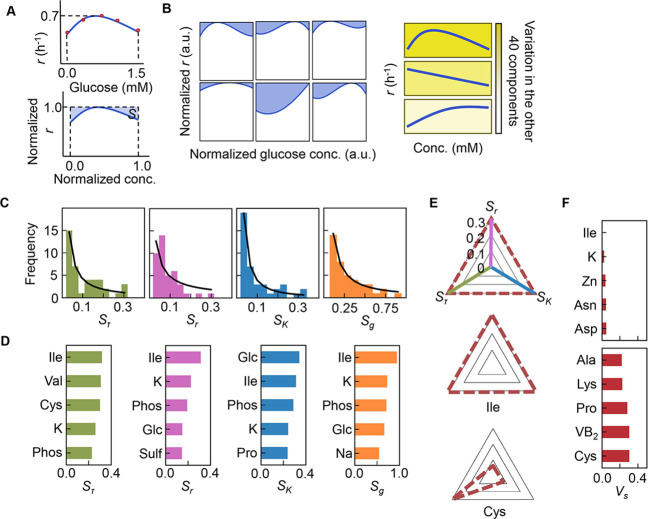
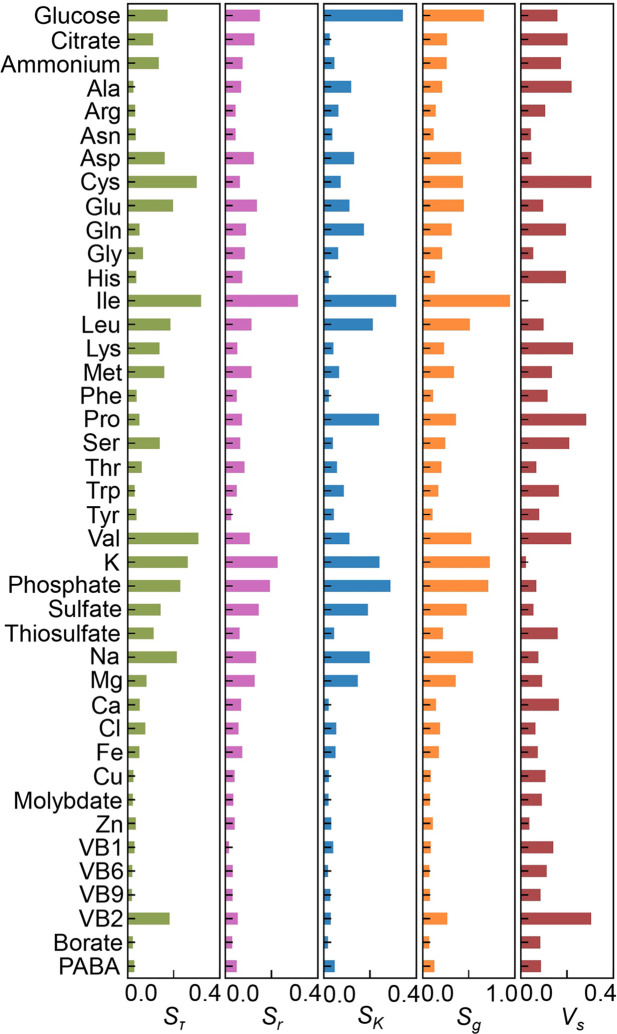
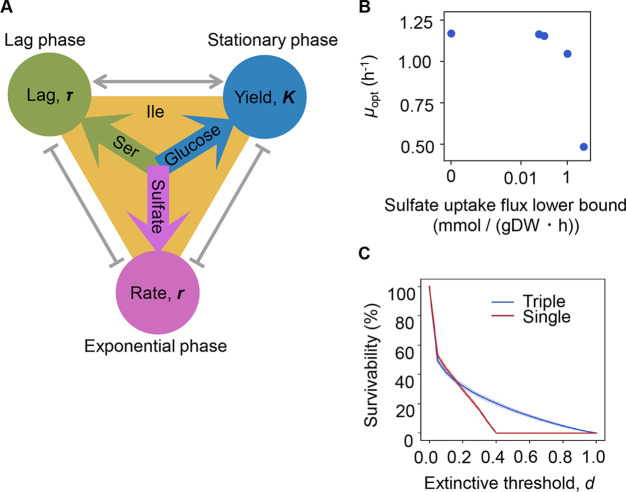
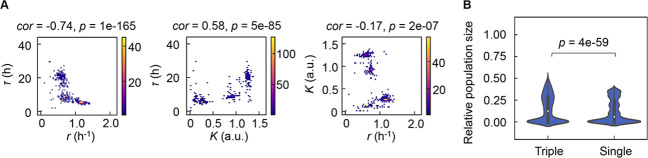
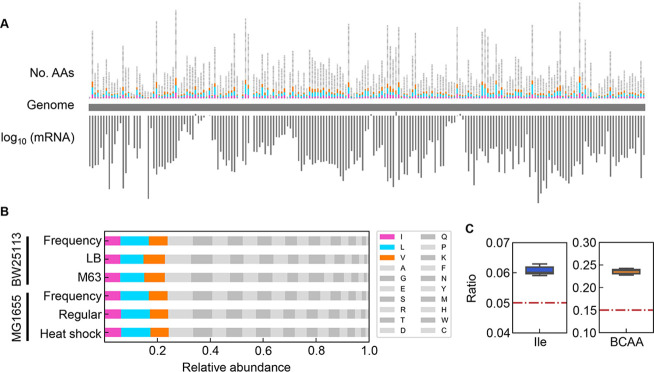
Microorganisms growing in their habitat constitute a complex system. How the individual constituents of the environment contribute to microbial growth remains largely unknown. The present study focused on the contribution of environmental constituents to population dynamics via a high-throughput assay and data-driven analysis of a wild-type strain. A large dataset constituting a total of 12,828 bacterial growth curves with 966 medium combinations, which were composed of 44 pure chemical compounds, was acquired. Machine learning analysis of the big data relating the growth parameters to the medium combinations revealed that the decision-making components for bacterial growth were distinct among various growth phases, e.g., glucose, sulfate, and serine for maximum growth, growth rate, and growth delay, respectively. Further analyses and simulations indicated that branched-chain amino acids functioned as global coordinators for population dynamics, as well as a survival strategy of risk diversification to prevent the bacterial population from undergoing extinction.
在其栖息地生长的微生物构成了一个复杂的系统。环境的各个组成部分如何促进微生物生长在很大程度上仍是未知的。本研究通过高通量测定和对野生型菌株的基于数据驱动的分析,重点研究了环境组成部分对种群动态的贡献。获得了一个由总共 12828 条细菌生长曲线和 966 种培养基组合组成的大型数据集,这些培养基组合由 44 种纯化学化合物组成。将与培养基组合相关的生长参数与大数据进行机器学习分析表明,细菌生长的决策成分在各个生长阶段之间是不同的,例如葡萄糖、硫酸盐和丝氨酸分别是最大生长、生长速度和生长延迟的决定因素。进一步的分析和模拟表明,支链氨基酸作为群体动态的全局协调因子,以及风险多样化的生存策略,以防止细菌群体灭绝。